Best Travel Pillows
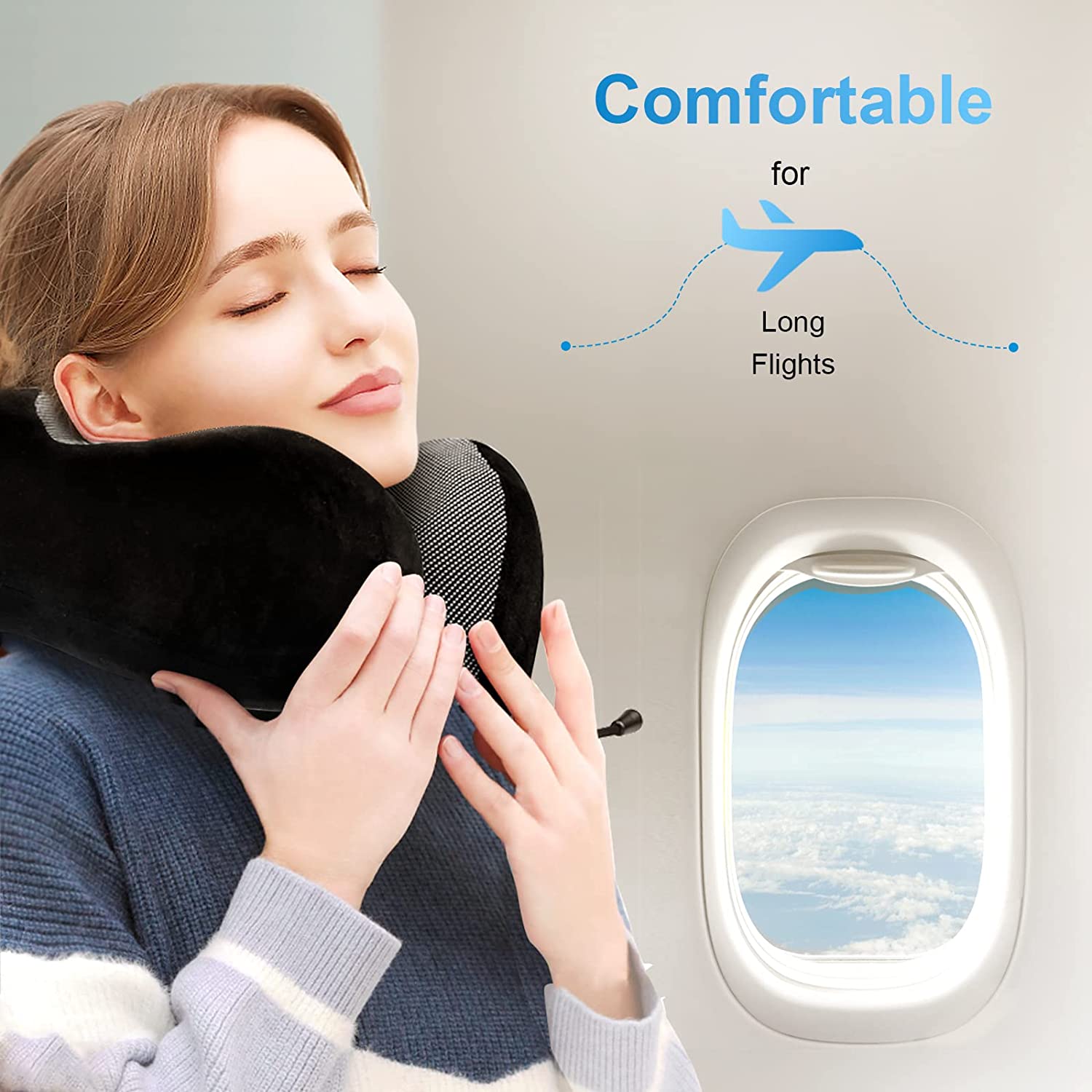
Most people who buy a travel pillow buy the wrong type. The shape that suits you depends on how your head moves when you fall asleep in a seat: forward, sideways onto a window, or down towards a tray table. Get that right and the brand matters much less.
This guide sorts the main designs by sleeping position, flight length and packing space, using manufacturer specs and retailer listings. Prices change often, so treat the figures below as typical UK ranges and check the listing before you buy.
Types of Travel Pillows
There are four main designs. Which one you need depends on how you sleep, not on which looks nicest in a product photo.
Memory Foam (U-shaped)
The classic design: a U-shaped cushion of memory foam that wraps around your neck and cradles your head when you lean to the side. The foam softens with body heat and moulds to your neck over the first few minutes.
It suits side sleepers, window-seat travellers and anyone who finds structured pillows uncomfortable. It is the most familiar style and comes at every price, from budget generics to premium models. The downsides are bulk, since even a compressed foam pillow takes real carry-on space, and the fact that it does nothing to stop your head dropping forward.
Inflatable
Inflatables pack down to almost nothing and blow up in under a minute. Some models, such as the Purefly, have a built-in press pump so you don’t have to inflate them by mouth.
They suit ultralight packers and anyone on several connecting flights. You can set the firmness by how much air you put in. They are less comfortable than foam, some lose air slowly during the night, and the plastic bladder can feel cold against bare skin.
Structured Support (Scarf-style)
Pillows like the Trtl use a hidden internal frame instead of cushioning. A fleece scarf wraps around your neck and a plastic insert props your head at an angle so it doesn’t fall forward.
This style suits upright sleepers, economy passengers who want the smallest option, and people whose U-pillows slip off as they doze. It is much smaller than a foam pillow and stops forward head drop, which is where standard U-pillows fail. It takes some getting used to, and it is less helpful if you like to lean sideways.
Wraparound and Chin-Support Designs
These add a chin-support element to deal with the main weakness of U-pillows. The BCOZZY has two soft arms that overlap under the chin, the J-Pillow has a J-shaped extension, and some designs use a 360-degree wrap.
They suit anyone whose head drops forward and jolts them awake. They give chin support without the rigidity of a scarf-style frame, but they are bulkier than plain U-pillows and can get in the way of over-ear headphones.
Our Top Picks
These picks are based on design, materials and price, drawn from manufacturer specs and retailer listings. We have not tested them on flights ourselves.
Best Overall: Trtl Pillow
The Trtl’s scarf-and-frame design keeps your head upright without the bulk of foam, which makes it the strongest choice for long flights in economy. Take the internal support out and the cover goes in the washing machine on a cold (30°C) cycle. The Trtl Pillow Plus adds dials at each end of the support so you can adjust its height.
Best for: Economy class seats, compact packing, upright sleepers
Price: Varies by version. The Trtl Pillow Plus lists at £74.99 on Trtl’s UK site and was on sale at £52.49 in November 2026.
Best Memory Foam: SNUGL Travel Pillow
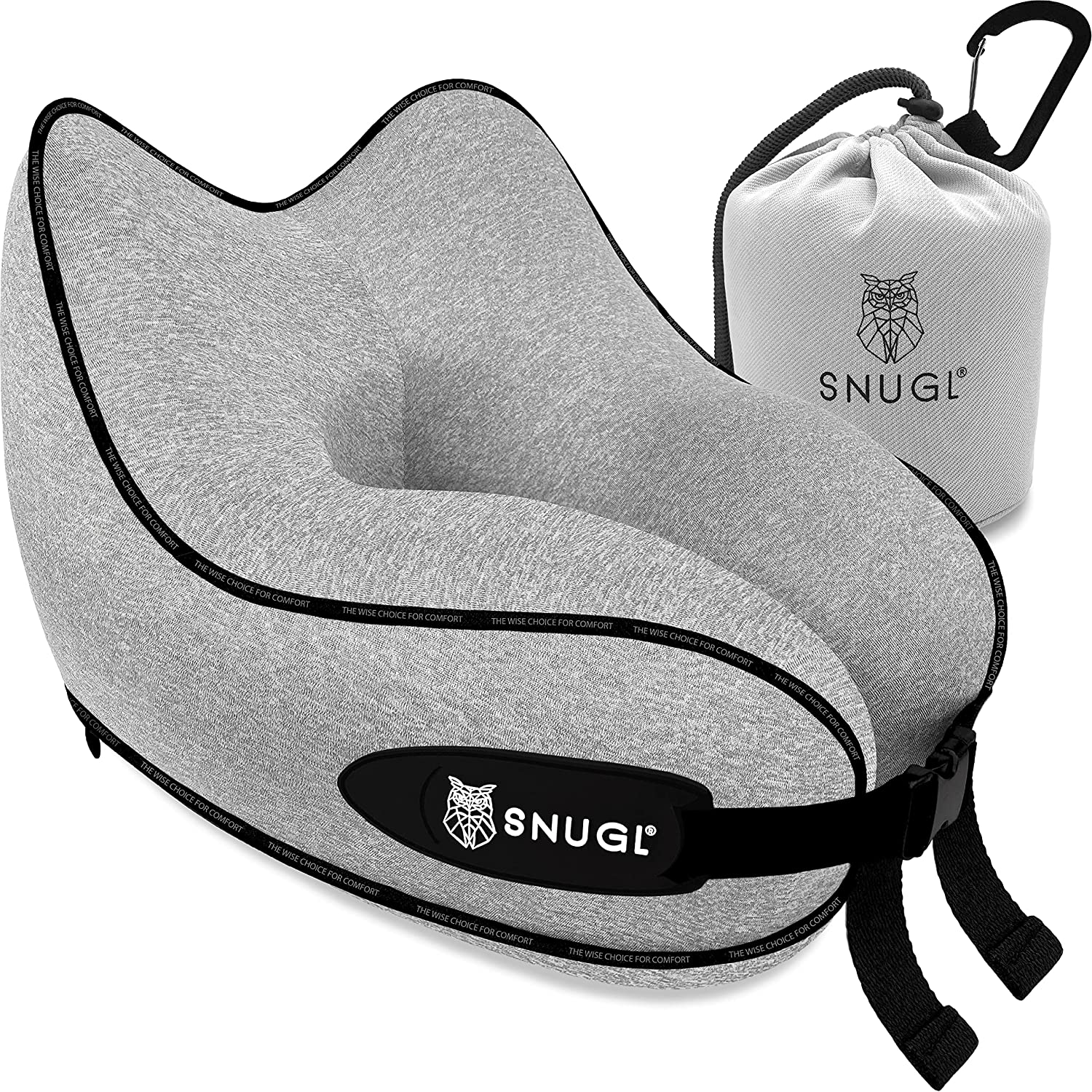
For people who find structured pillows too rigid, the SNUGL is a good memory foam option. Listings describe 70D visco-elastic foam, adjustable straps to stop it shifting, and a cover that comes off for machine washing (the foam itself shouldn’t go in the washer). It is bulkier than the Trtl but softer, and better if you lean sideways.
Best for: Those who prefer traditional pillow feel, side sleepers, headphone users
Price: Typically £20–30
Best Chin Support: J-Pillow
The J-shape supports the neck, chin and side of the head at once, which a standard U-pillow can’t do. It was invented by Gemma Jensen, a former Virgin Atlantic flight attendant, and won the 2012 British Invention of the Year award.
Best for: Preventing forward head drop, side sleepers leaning towards the window
Price: Typically £35–45
Best Inflatable: Travelrest Ultimate
The Travelrest is worn diagonally across the body, messenger-bag style, instead of around the neck. That gives you something to lean on sideways, which helps most in an aisle seat with no window. Deflated, it packs very small.
Best for: Side sleepers, aisle-seat passengers, ultralight packers
Price: Typically £25–35
Best Wraparound Design: BCOZZY Travel Pillow
Two arms overlap under your chin to stop your head dropping forward, with no rigid frame. The filling is soft polyester fibre, not memory foam, so it feels lighter and less structured, and the whole pillow is machine washable. It is bulkier than scarf-style options but works in more sleeping positions.
Best for: Chin support without rigidity, soft-pillow preference
Price: Around £40
Best Budget: BUYUE Travel Pillow
A 360-degree design with a micro-velvet cover and PP cotton filling. The kit includes a contoured eye mask, earplugs and a storage bag. It is less compact than an inflatable and less refined than the Trtl, but good value if you only fly long-haul now and then.
Best for: Budget-conscious travellers, those who forget to pack an eye mask
Price: Typically £20–25 including accessories
Choosing by Sleeping Position
Buyers overlook this more than anything else, and the wrong pillow for your sleep style can be worse than none.
If you sleep upright (head balanced above shoulders)
You need something that stops your head dropping in any direction. The Trtl is the strongest option because the internal frame does the work. The BCOZZY and BUYUE chin-support designs are softer alternatives. Standard U-pillows do nothing about forward head drop, so they suit upright sleepers badly.
If you lean against the window
A memory foam U-pillow works well here, cushioning the side of your neck as you lean in. The SNUGL and the portable memory foam option are both solid. For full upper-body support from the side, look at the Travelrest.
If you lean on your tray table or forward
This is hard to solve with a neck pillow. The adjustable support on the Trtl Plus helps more than most. Some travellers add a small lumbar cushion behind their back to shift the load. Our guide on how to sleep on a plane covers positions in more detail.
If you’re a side sleeper on long-haul flights
Side sleepers need lateral support as well as neck cushioning. The J-Pillow handles this well, and the Travelrest supports the whole upper body. See our dedicated guide to the best travel pillows for side sleepers.
Long-Haul vs Short-Haul: Does It Matter?
Yes. On a two-hour flight almost any pillow will do, because you’re only trying to ease neck strain during a nap. A budget memory foam pillow or an inflatable is fine for anything under about four hours.
On an overnight flight of eight hours or more, the wrong choice can leave you sore for the first day of your trip. Pick the Trtl or J-Pillow if you sleep upright, the SNUGL or Travelrest if you sleep on your side. The few pounds between an airport-shop pillow and a better one are easy to justify on a flight that long.
For more on flight length, read our guide to the best travel pillows for long-haul flights.
Memory Foam vs Inflatable: The Quick Version
If packing space is your main concern, go inflatable. If comfort comes first and you have room in your carry-on, go memory foam. Our memory foam vs inflatable travel pillow guide compares materials and construction in full.
Budget Guide
Travel pillow prices vary widely. Roughly, this is what each tier gets you:
Under £15 (Aidapt, budget generics): Basic memory foam with a removable cover. Functional and firm, with no extras. A cheap way to find out whether a travel pillow works for you. The Aidapt review shows what to expect.
£15–30 (SNUGL, BUYUE, Purefly): Better foam or inflatables with washable covers, carry bags and sometimes extra accessories. This is where most travellers should look.
£30–50 (J-Pillow, BCOZZY, Cabeau): Designs built around support systems, not just cushioning. Worth it if you fly long-haul several times a year.
£50+ (Trtl Pillow Plus): The Trtl Plus lists at £74.99, though it is often discounted. Above about £40 the gains get smaller unless you have specific support needs.
Comparison Table
| Pillow | Type | Price (UK) | Best For | Chin Support | Packs Small |
|---|---|---|---|---|---|
| Trtl Pillow | Scarf/frame | Varies by version (Plus £52–75) | Upright sleepers, compact packing | Yes (frame) | Yes |
| SNUGL | Memory foam | £20–30 | Traditional comfort, side leaning | No | Medium |
| J-Pillow | Soft chin support | £35–45 | Side sleepers, chin support | Yes | Medium |
| Travelrest | Inflatable body | £25–35 | Aisle seats, side sleepers | No | Yes |
| BCOZZY | Wraparound | Around £40 | Soft chin support | Yes | No |
| BUYUE | 360° wrap | £20–25 | Budget, full kit included | Yes | Medium |
| Purefly | Inflatable (pump) | £15–25 | No-fuss inflation | No | Yes |
| Aidapt | Memory foam | £8–12 | Budget testing | No | Medium |
Prices are typical UK ranges and move often. Check the retailer before buying.
Packing and Size: What Fits in Your Carry-On
If you travel with only a carry-on bag, size matters as much as comfort.
The most compact options are inflatables such as the Travelrest and Purefly, which deflate to a small roll, and scarf-style pillows like the Trtl, which fold almost flat. Memory foam U-pillows with compression bags sit in the middle; if they won’t fit inside your bag, most clip to the outside. Wraparound designs like the BCOZZY and J-Pillow compress least, so you’ll probably clip them on.
Our travel pillow size guide has sizing details and cabin-bag compatibility.
What to Look For When Buying
Sleeping position: This decides the design type more than anything else. Upright sleepers need chin or frame support; side sleepers need cushioning at the side.
Flight length: Budget options are fine for short-haul. Long-haul justifies spending £30 or more.
Carry-on space: If you travel light, choose an inflatable or scarf-style pillow. If you always check a bag or carry a larger cabin case, memory foam is more comfortable.
Washability: Pillows pick up sweat and grime from airline seats, so a removable, machine-washable cover matters if you fly often.
Glasses and headphones: Frame pillows can press against over-ear headphones and the arms of glasses. If you wear either, try the pillow at home before a long trip or choose a softer design.
Frequently Asked Questions
What is the best travel pillow for long flights?
For flights over eight hours, memory foam or structured support pillows work best. The Trtl keeps your head upright without bulk, and the J-Pillow stops your head dropping forward and waking you. Both pack smaller than a traditional U-shaped pillow. More in our long-haul flight pillow guide.
Are inflatable travel pillows worth it?
They pack smallest and let you set the firmness, which suits travellers short on bag space. They are less comfortable than memory foam and can lose air during a flight, so they work best for occasional use or as a backup. The Purefly’s built-in pump means you don’t have to blow it up in a crowded cabin.
How do I choose between memory foam and inflatable?
Choose memory foam if comfort is your priority and you have bag space, and inflatable if space is tight or you want adjustable firmness. Memory foam is warmer and feels more like a real pillow; inflatables stay cooler and pack much smaller. Full comparison: memory foam vs inflatable travel pillow.
Can I wash my travel pillow?
Most travel pillows have removable, machine-washable covers. For the Trtl, take out the internal support and wash the rest on a cold cycle. Foam inserts generally shouldn’t go in the machine, so check the care label. Wash the cover every few trips, since pillows used on planes get dirty quickly.
Do travel pillows work in economy class?
Yes, but seat space affects which type works best. Scarf-style pillows like the Trtl suit tight seats because they add almost no bulk. Traditional U-shaped pillows can feel cramped in economy. A window seat gives you more room to lean whatever pillow you use.
Are there good travel pillows for children?
Yes. Trtl makes a Junior version designed for children aged 8 and up, and the BUYUE comes in a Small size for narrower necks. Adult pillows are often too big for younger children and can restrict movement more than they support it. See our guide to travel pillows for kids for age-appropriate options.
Is a travel pillow allowed in hand luggage?
Yes, travel pillows are allowed in the cabin. Whether one counts towards your personal item or hand luggage allowance depends on the airline, so check its rules if your bag is already at the limit. A deflated inflatable takes up almost no space, and a foam pillow can clip to the outside of your bag.
Related Guides
Individual Pillow Reviews
- Trtl Pillow Review
- SNUGL Travel Pillow Review
- BCOZZY Travel Pillow Review
- J-Pillow Review
- Buyue Travel Neck Pillow
- Ergonomad Memory Foam Pillow
- Martian Luxury Neck Pillow
- Aidapt Travel Pillow Review
- Portable Travel Pillow Review
- Purefly Travel Pillow Review
- Trekology Camping Pillow Review
Buying Guides and How-Tos
- Best Travel Pillow for Long-Haul Flights
- Best Travel Pillow for Side Sleepers
- Memory Foam vs Inflatable Travel Pillow
- How to Sleep on a Plane
- Travel Pillow for Kids
- Travel Pillow Size Guide