India

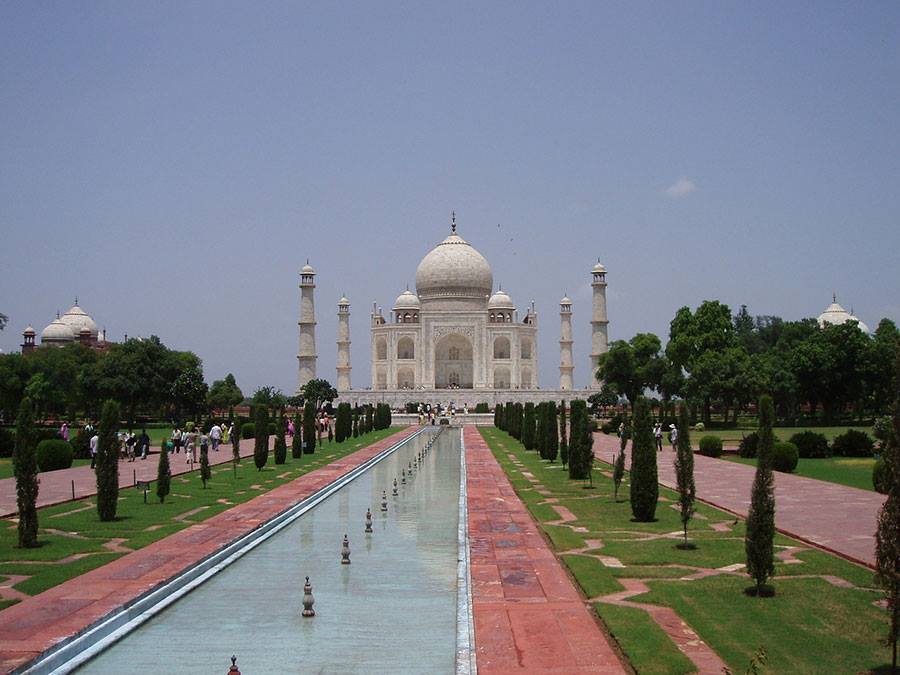
The Taj Mahal in India

The places to visit in India do not do half measures. My first morning in Delhi, I stepped out of the hotel into a wall of sound, smell, and motion that I was completely unprepared for. Rickshaws dodging cows, chai wallahs calling from their stalls, incense mixing with diesel, colours everywhere. Within an hour I was overwhelmed, exhilarated, and hooked.

I spent six weeks travelling from Delhi through Rajasthan to Kerala, and by the end I understood why people either love India or cannot wait to leave. It demands everything from you – patience, flexibility, openness to chaos. In return, it offers experiences you simply cannot have anywhere else. The Taj Mahal at sunrise. Watching cremations on the Ganges at Varanasi. Floating through Kerala’s backwaters in near-silence. India is not a country you visit; it is a country that happens to you.

The Golden Triangle

The classic first-timer route connects Delhi, Agra, and Jaipur in a rough triangle covering about 700 kilometres. A week is enough for the main sights; ten days lets you breathe.

Delhi

India’s capital is actually two cities awkwardly joined. Old Delhi, founded by Mughal emperors, is a dense maze of narrow lanes, crumbling havelis, and overwhelming sensory input. New Delhi, built by the British, has wide boulevards, government buildings, and colonial monuments. Both deserve time.

Old Delhi highlights:

Red Fort – The Mughal emperor Shah Jahan’s sandstone fortress, now a UNESCO World Heritage Site. The scale impresses more than the interiors, which were stripped by various invaders. Best combined with a walk through the surrounding chaos.

Jama Masjid – One of India’s largest mosques, with space for 25,000 worshippers. Climb the minaret for views over Old Delhi’s rooftops. Dress modestly; women may need to wear a provided robe.

Chandni Chowk – The main artery of Old Delhi, a sensory assault of shops, food stalls, motorbikes, and humanity. Walk the side lanes for spice markets, silver dealers, and ancient havelis hidden behind crumbling facades. The parathas at Paranthe Wali Gali (the paratha lane) are legendary.

New Delhi highlights:

Humayun’s Tomb – The Mughal tomb that inspired the Taj Mahal. Gardens, symmetry, and fewer crowds than Agra. Best at sunset.

India Gate – The war memorial at the heart of New Delhi’s ceremonial axis. Come in the evening when families gather and vendors sell snacks.

Lotus Temple – A striking Baha’i temple shaped like a lotus flower. Peaceful inside despite the crowds.

Budget two to three days for Delhi – rushing through misses the point.

Agra and the Taj Mahal

Most people come to Agra for one reason, and the Taj Mahal delivers. Even after seeing a thousand photos, standing in front of it at dawn, watching the marble shift from pink to white as the sun rises, is genuinely moving. Shah Jahan built it as a tomb for his wife Mumtaz Mahal in the 17th century, and the craftsmanship is extraordinary – inlaid semi-precious stones, carved marble screens, perfect symmetry.

Practical tips:

  • Go at sunrise. The light is best, the crowds are smaller, and the experience is incomparably more powerful than midday
  • Buy tickets online the day before to skip queues (₹1,100 / £11 for foreigners including ADA fee)
  • The Taj is closed on Fridays
  • Photography is allowed outside but not inside the mausoleum
  • Hire a guide at the gate for context – the stories add meaning

Beyond the Taj, Agra Fort is worth a half-day. This Mughal fortress contains palaces, gardens, and the spot where Shah Jahan was imprisoned by his son, supposedly staring at the Taj Mahal until he died. The views of the Taj from across the river are excellent.

Most visitors stay one night in Agra. The town itself is not charming, and the touts can be relentless.

Jaipur

The capital of Rajasthan, known as the Pink City for the terracotta colour of its old town buildings. Jaipur has the best combination of accessibility and Rajasthani culture – forts, palaces, bazaars, and relative ease of navigation.

What to see:

Amber Fort – A short drive outside the city, this hilltop fort complex combines Hindu and Mughal architecture. The Sheesh Mahal (Mirror Palace) is stunning – thousands of mirror fragments covering walls and ceilings. Arrive early to avoid tour groups.

City Palace – Still partially occupied by the royal family, with museums, courtyards, and ornate rooms. The textile and armour collections are impressive.

Hawa Mahal – The “Palace of Winds” with its iconic honeycomb facade. Built so royal women could observe street life without being seen. Best photographed from the café across the street; the inside is less interesting than the outside.

Nahargarh Fort – On the hills above the city, with panoramic views. Come at sunset for the light across Jaipur.

The bazaars of Jaipur are excellent for shopping – textiles, block prints, jewellery, and blue pottery. Johari Bazaar and Bapu Bazaar are the main strips. Bargain hard; starting prices for tourists are typically triple what locals pay.

Rajasthan: The Desert State

Beyond Jaipur, Rajasthan offers India’s most romantic landscapes – hilltop forts, ornate palaces, desert sunsets, and a warrior culture that survived centuries of invasion. Each major town has its own character.

Udaipur

The “City of Lakes” is Rajasthan’s most beautiful city. White marble palaces reflect in Lake Pichola, narrow lanes wind through the old town, and the pace is gentler than elsewhere. This is where many people fall in love with Rajasthan.

City Palace – A massive complex overlooking the lake, part museum, part luxury hotel. The views from the upper terraces are spectacular.

Lake Pichola – Take a boat at sunset for views of the palaces and the Jag Mandir island. The Lake Palace hotel (formerly a maharaja’s summer palace) is photogenic even if you cannot afford to stay.

Jagdish Temple – An active Hindu temple in the heart of the old town, with intricate carvings and a sense of genuine devotion rather than tourism.

Udaipur is a good place to slow down – wander the old town, eat at rooftop restaurants overlooking the lake, and escape the intensity of northern India.

Jodhpur

The “Blue City” is dramatic from the moment you see it. Mehrangarh Fort rises 125 metres above the old town, which is painted blue (originally to signify Brahmin households, now traditional). The contrast of the red sandstone fort against the blue houses is extraordinary.

Mehrangarh Fort – One of India’s most impressive forts, still controlled by the royal family. The museum inside contains palanquins, howdahs (elephant seats), royal cradles, and weaponry. The audio guide, narrated by the current maharaja, adds excellent context.

The blue city below – Hire a guide to walk through the narrow lanes. The colour is real and the atmosphere is authentic – this is not a tourist creation.

Jaisalmer

The “Golden City” sits in the Thar Desert near the Pakistan border, built from yellow sandstone that glows at sunset. The fort is unique in Rajasthan – it is a living fort, with homes, shops, and hotels inside its walls.

The Fort – Walking through the gates into the medieval lanes feels like time travel. The Jain temples inside have extraordinary carved ceilings. Stay inside the fort if you can – though conservation concerns mean this is controversial.

Camel safaris – Jaisalmer is the gateway to Thar Desert excursions. Overnight trips involve riding camels to dunes, sleeping under stars, and experiencing the silence of the desert. Quality varies – research operators before booking.

Sam Sand Dunes – The famous dunes 40km from town, with sunset camel rides and tourist camps. Beautiful but commercialised.

Kerala: South India

Kerala is a different India. Tropical, green, literate, and relatively relaxed. The backwaters, beaches, and hill stations offer a break from the intensity of the north.

The Backwaters

A network of lagoons, lakes, and canals stretching along the coast, lined with palm trees and rice paddies. The classic experience is a houseboat cruise – traditional kettuvallam rice barges converted for tourists, with bedrooms, kitchens, and crews who cook Kerala cuisine as you drift through the landscape.

Alleppey (Alappuzha) is the main departure point. Day cruises cost around ₹1,500-2,500 (£15-25) per person; overnight houseboats range from ₹8,000-20,000 (£80-200) for the whole boat depending on quality. The more basic boats are fine; the luxury versions add air conditioning and better food.

The busiest routes can feel like a houseboat traffic jam. Ask for quieter canals if you want solitude.

Kochi (Cochin)

A historic port city with layers of Portuguese, Dutch, and British colonial history. Fort Kochi, the old town, has narrow streets, colonial churches, Chinese fishing nets (more photogenic than practical), and art galleries. The Jew Town area has antique shops and the 16th-century Paradesi Synagogue.

Kochi is good for a couple of days – walk the waterfront, watch Kathakali (traditional dance-drama) performances, and eat fresh seafood.

Munnar

A hill station in the Western Ghats, surrounded by tea plantations. Cool air, mist-covered mountains, and endless green. Good for walking, visiting tea estates, and recovering from the heat of the plains.

Varanasi: The Holy City

Varanasi is not for everyone, but for those who can handle it, there is nothing like it in the world. This is Hinduism’s holiest city, where pilgrims come to bathe in the Ganges, and where the faithful hope to die and be cremated, breaking the cycle of rebirth.

The ghats (stepped riverbanks) are the centre of activity. Pilgrims perform morning ablutions at dawn, bodies burn day and night at the cremation ghats (Manikarnika and Harishchandra), and the evening Ganga Aarti ceremony draws thousands of worshippers and tourists.

What to expect:

  • Dawn boat ride – Hire a rowboat before sunrise to drift past the ghats as the city wakes. Pilgrims bathing, sadhus meditating, bodies burning – all happening simultaneously
  • Cremations – They are not hidden or private; death is part of daily life here. Watching is accepted if you are respectful; photography is not
  • Ganga Aarti – The evening ceremony at Dashashwamedh Ghat is spectacular – priests with flaming lamps, bells, chanting. Arrive early for a seat

Varanasi is chaotic, intense, and can be upsetting. It is also profound. Allow two nights to absorb it.

Practical Information

Visas

UK citizens need an e-Visa, applied for online at indianvisaonline.gov.in. The 30-day tourist e-Visa costs about $25; the one-year multiple-entry e-Visa is $40. Processing takes 3-5 business days. Apply before you travel – visa on arrival is not available.

Health

Stomach issues are common. Assume you will get sick at some point; bring rehydration salts and Imodium. Eat at busy places with high turnover. Avoid salads, unpeeled fruit, and ice. Drink only bottled water (check seals are intact).

Vaccinations for hepatitis A, typhoid, and tetanus are recommended. Malaria risk exists in some areas – consult a travel clinic.

Money

Indian Rupee (₹). Roughly ₹105 to £1. ATMs are widespread in cities; international cards work but sometimes get blocked (inform your bank before travelling). Many smaller businesses are cash-only.

India is cheap. Budget travellers can manage on ₹2,000-3,000 (£20-30) per day with guesthouses, street food, and trains. Mid-range comfort runs ₹5,000-8,000 (£50-80) per day.

Transport

Trains – India’s railway network is vast and atmospheric. Classes range from unreserved (crowded, cheap) to AC First (comfortable, expensive). Book through IRCTC (irctc.co.in) or apps like ixigo. Popular routes book out weeks ahead – plan early. Sleeper class (non-AC) is fine for shorter journeys; AC2 tier offers the best balance of comfort and price for overnight travel.

Domestic flights – IndiGo, SpiceJet, and Air India connect major cities cheaply if booked ahead. Delhi to Kochi by train takes 40+ hours; by flight, 3 hours and often under £50.

Taxis and rickshaws – Auto-rickshaws for city travel; negotiate the price before getting in or insist on the meter. Uber and Ola work in major cities. For day trips, hiring a car with driver is common and affordable (₹2,000-3,000 / £20-30 per day).

When to Visit

October to March – The best time for most of India. Cool, dry, and pleasant. Peak tourist season and prices.

April to June – Brutally hot across most of the country (40°C+). Only the hill stations and Himalayas are bearable.

July to September – Monsoon. Heavy rain, especially on the west coast. Kerala and Rajasthan are less affected. Lush landscapes if you can handle the wet.

Etiquette and Safety

Dress modestly – Cover shoulders and knees, especially at religious sites. Women should consider loose-fitting clothes. This is practical as well as respectful.

Remove shoes – Before entering temples, mosques, and many homes.

Haggling – Expected in markets and with rickshaw drivers. Start at 40-50% of the asking price and work up.

Scams – Tourist scams are common: fake guides, gem shops, “my shop is just around the corner,” taxi drivers with commission deals. Be polite but firm. If an approach feels wrong, walk away.

Women travelling solo – India has a difficult reputation. Exercise normal caution – avoid deserted areas at night, trust your instincts, dress conservatively. Most interactions are positive, but unwanted attention is common.

Power

India uses Type C, D, and M plugs. Voltage is 230V. UK plugs often fit Type M sockets; a universal adapter is recommended. See our Voltage in India guide for details.

Is It Worth the Challenge?

India is not easy. The poverty is confronting, the hassle can be exhausting, and the sensory overload never stops. Some people arrive with dreams and leave disillusioned.

But for those who meet it on its terms, India offers experiences that exist nowhere else. The depth of history, the intensity of religious devotion, the quality of the food, the warmth beneath the chaos. It changes how you see the world.

Come with patience, flexibility, and low expectations for comfort. Come ready to be frustrated and amazed, often simultaneously. And come with an open heart – India rewards those who let it in.

Previous articleLondon Hotels
Next articleLondon Hotels in Mayfair
Travel writer, dog-friendly travel expert, author of Dog-Friendly Weekends & Dog Days Out Brightwell-Cum-Sotwell, England, United Kingdom