Notre Dame Cathedral Visitor Guide
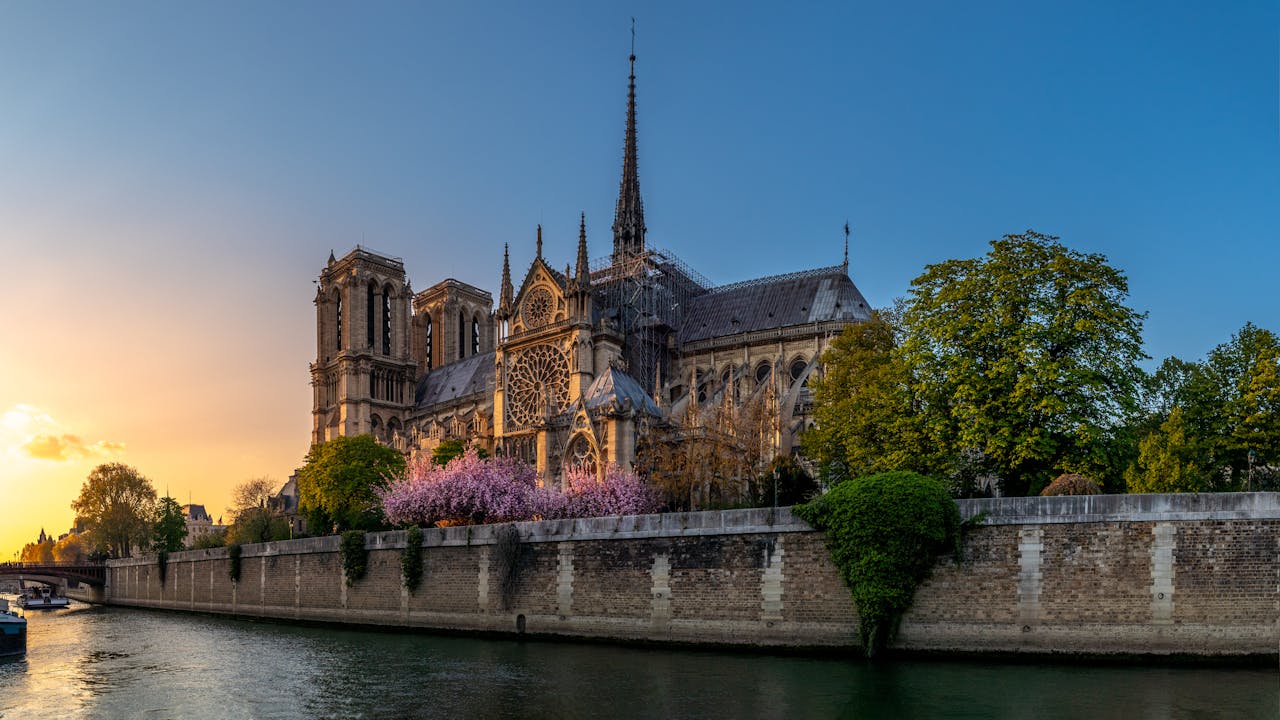
I visited Notre Dame three times before the 2019 fire, and each time I noticed something new in the stonework, the rose windows, or the chapels along the sides. Watching the spire collapse on live television that April evening felt like losing an old friend. When I returned in early 2025 after the restoration, I was unprepared for how clean and bright everything looked – eight centuries of candle soot had been washed away, revealing colours in the stone I had never seen. The new spire matches the old perfectly, and the crowds are enormous now that everyone wants to see what was almost lost.
Notre Dame is Paris’s most famous cathedral, sitting on an island in the Seine at the heart of the city. After a devastating fire in 2019 destroyed the spire and roof, the cathedral reopened in December 2024 following a remarkable five-year restoration.
Visiting Information
Address: 6 Parvis Notre-Dame, Place Jean-Paul II, 75004 Paris
Hours (as of December 2024):
- Monday to Friday: 7:50am – 7:00pm
- Thursday: 7:50am – 10:00pm (extended hours)
- Saturday, Sunday: 8:15am – 7:30pm
Entry: Free (registration required online)
Treasury: €12 entry, separate hours (Mon-Sat 9:30am-6pm, Thu until 9pm, Sun 1pm-5:30pm)
Tower access: Reopening September 20, 2025 (Heritage Days)
Book free entry at the official Notre Dame website. Suitcases not permitted.
What to See
The Façade
The western front facing the plaza is a masterpiece of Gothic architecture. Two towers rise 69 metres, flanking three ornate doorways covered in 13th-century carvings depicting biblical scenes. The central rose window dates from about 1220.
Rose Windows
Notre Dame has three great rose windows. The north and south transept windows are the largest, measuring about 13 metres in diameter. The north window retains much of its original 13th-century glass – rare for medieval stained glass.
Interior
The nave stretches 128 metres with columns rising 35 metres to the vaulted ceiling. Flying buttresses (visible from outside) allowed these thin walls and large windows – a Gothic innovation pioneered here.
The apse mosaic and high altar sit at the eastern end. Chapels line the side aisles.
Crown of Thorns
The cathedral’s most important relic – believed to be the crown placed on Christ’s head at the crucifixion – returned after the restoration. It’s displayed for public veneration on Fridays (3pm-5pm).
The Spire
The new spire, rebuilt to match the 19th-century design by Viollet-le-Duc, rises 96 metres above the crossing. A small rooster at the top contains relics.
Great Organ
The organ dates to 1403 and has over 8,000 pipes. It survived the 2019 fire but required extensive cleaning and restoration. It plays for services and occasional concerts.
History
Construction began in 1163 under Bishop Maurice de Sully. The choir was finished by 1182, the nave by 1200, the towers by 1250. The cathedral was formally completed in 1345 after nearly 200 years of work.
Notable events:
- 1431: Henry VI of England crowned King of France
- 1804: Napoleon crowned himself Emperor here
- 1831: Victor Hugo’s novel renewed public interest in the deteriorating building
- 1844-1864: Major restoration by Viollet-le-Duc, including new spire
- 1944: Liberation of Paris celebrated with a special mass
- 2019: Fire destroyed spire and roof (April 15)
- 2024: Reopened after restoration (December 8)
The 2019 Fire and Restoration
The fire started during renovation work on April 15, 2019. The spire collapsed and the oak roof framework burned, but the main structure survived. The façade, towers, and most stained glass were saved.
Restoration involved:
- Rebuilding the oak roof frame using traditional methods
- Reconstructing the spire to the original Viollet-le-Duc design
- Cleaning and restoring stonework, stained glass, and artwork
- Installing new liturgical furniture
The project involved 2,000 craftspeople and cost over €700 million, funded by donations from around the world.
Getting There
Metro: Cité (Line 4) or Saint-Michel-Notre-Dame (Line B/C RER)
Bus: Lines 21, 24, 27, 38, 47, 85, 96
The cathedral sits on Île de la Cité. Cross from the Left Bank via Pont Saint-Michel or from the Right Bank via Pont Notre-Dame.
Tips
- Book ahead: Free registration is required and popular time slots fill up
- Best time: Early morning or late afternoon for smaller crowds
- Photography: Check current rules on entry
- Dress code: Respectful attire expected (shoulders and knees covered)
- Accessibility: Accessible entrance available, but tower access is by stairs only
Nearby
Walk from Notre Dame to explore more of Île de la Cité:
- Sainte-Chapelle: Gothic chapel with spectacular stained glass (10 minutes)
- Conciergerie: Medieval palace, later a revolutionary prison
- Latin Quarter: Across the bridge, bookshops and cafes
- Shakespeare and Company: Famous English bookshop (5 minutes)
Frequently Asked Questions
Is Notre Dame Cathedral open to visitors after the 2019 fire?
Yes, Notre Dame reopened in December 2024 after a five-year restoration. The cathedral is open for visits but requires free online registration in advance. Opening hours are Monday-Friday 7:50am-7pm (Thursday until 10pm), and weekends 8:15am-7:30pm.
How much does it cost to visit Notre Dame?
Entry to the cathedral is free, but you must book a time slot online in advance. The Treasury has a separate €12 entry fee. Tower access will cost €16 when it reopens in September 2025.
Can I climb the Notre Dame towers?
The towers are scheduled to reopen on September 20, 2025 during Heritage Days weekend, with free admission that weekend. After the opening weekend, tower access will cost €16 per person.
What is the Crown of Thorns at Notre Dame?
The Crown of Thorns is the cathedral’s most important relic, believed to be the crown placed on Christ’s head during the crucifixion. It survived the 2019 fire and is displayed for public veneration on Fridays from 3pm-5pm.
How do I get to Notre Dame Cathedral?
Take Metro Line 4 to Cite or RER Line B/C to Saint-Michel-Notre-Dame. Several buses serve the area including lines 21, 24, 27, 38, 47, 85, and 96. The cathedral is located on Ile de la Cite in the centre of Paris.
What survived the 2019 fire at Notre Dame?
The main structure, façade, towers, and most stained glass windows survived. The famous rose windows were saved, as was the Crown of Thorns relic. The oak roof framework and the 19th-century spire were destroyed but have been rebuilt using traditional methods.