Best Travel Pillow for Kids (2026)
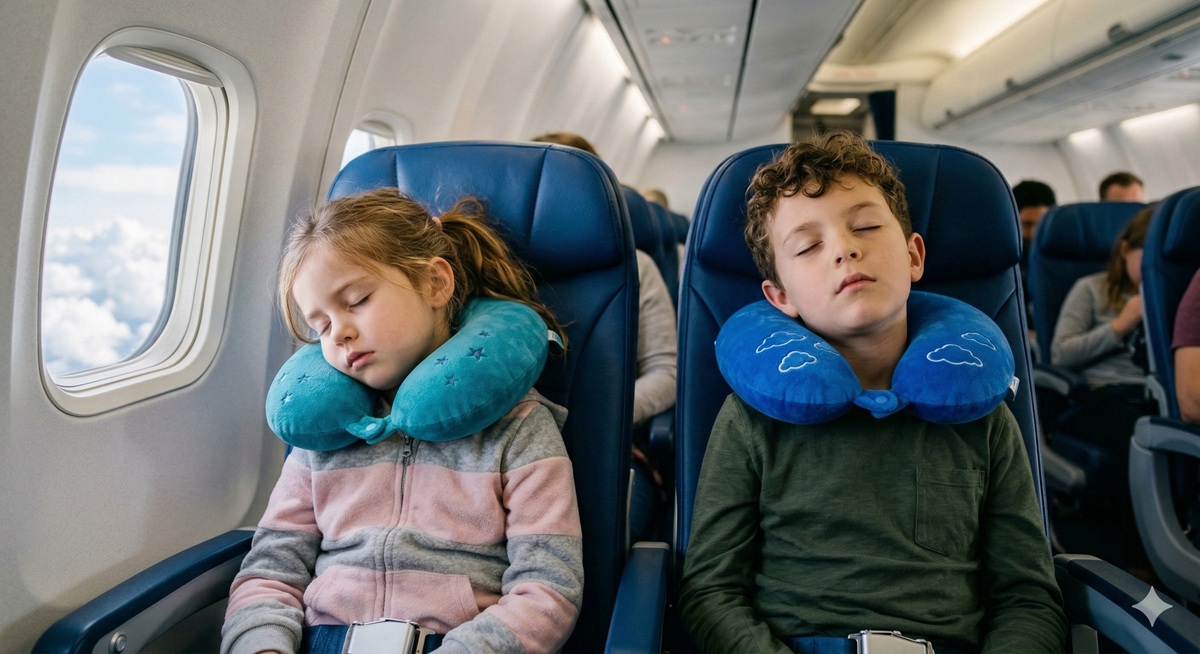
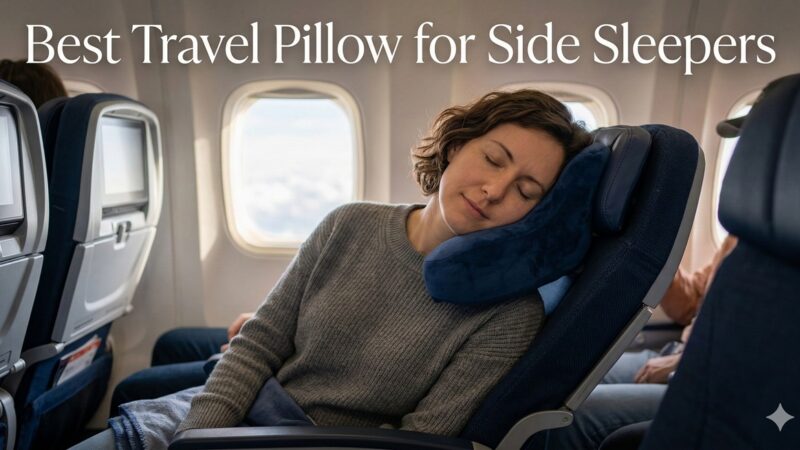
Adult travel pillows rarely fit children. A U-shaped neck pillow made for an adult is too wide and too bulky for a child’s frame, so it tends to sit up around their ears or rest on their shoulders instead of supporting the neck. A child can end up less comfortable with it than without it.
Children’s travel pillows are smaller and lighter, and some are shaped for the way children actually sleep on a plane, which is rarely bolt upright. What suits a child changes a lot with age, so this guide works through it age group by age group. We haven’t tested these pillows ourselves; product details come from the manufacturers’ own listings.
Age Groups: What Each Needs
Under 3 (Toddlers)
Toddlers on long-haul flights usually sleep across a parent’s lap or, for babies, in a bassinet. Bassinets have age and weight limits and limited availability, so check with your airline when you book. Structured neck pillows aren’t designed for this age group. A small soft cushion or a rolled blanket to fill the gap between a car seat and the window is more use.
A familiar blanket or comforter from home often helps more than anything you can buy, because the smell and feel are familiar.
Ages 3–7
Children this age can manage a small neck pillow, but they seldom sleep sitting up. Hooded travel pillows and lap pillows tend to work better: soft pillows that give a child somewhere to rest their head sideways on a parent’s lap or on the tray table.
Buy something machine washable. Young children are messy travellers, and a pillow you can’t put through the wash after a flight won’t last long.
Ages 7–12
From around this age a properly sized kids’ neck pillow starts to make sense. Children can sleep upright or leaning to one side, and a pillow that fits helps on a long flight. Adult pillows are still usually too big, so check the sizing against your child’s neck before you buy.
Ages 12+
Many older children can move on to adult pillows. Scarf-style designs like the Trtl Pillow Junior also suit teenagers with slimmer necks; Trtl says it works for petite adults too. Standard adult memory foam U-pillows can still be too large for younger teenagers, so measure your child’s neck and compare it with the product’s size guide.
Top Picks by Age
Best for Ages 3–7: Kids’ Lap or Hooded Travel Pillow
A child who sleeps lying down rather than sitting up gets more from a plush hooded pillow than from a neck pillow, since they don’t have to hold their head up. The hood also blocks light, which helps with young children who won’t keep a sleep mask on.
Look for a machine-washable cover, a soft synthetic fill rather than firm memory foam, and something that packs down small. Avoid designs where the hood is fixed to a neck pillow in one position: children this age shift around constantly, and a rigid design gets in the way.
Best for Ages 7–12: Trtl Pillow Junior
The Trtl Pillow Junior is the children’s version of the Trtl Pillow: the same scarf-style fleece wrap with an internal support, in a smaller size. Trtl designs it for children aged 8 and over. It measures 18 x 22 x 9 cm and weighs 111 g, the fleece is hypoallergenic, and once you take out the internal support the wrap goes in the washing machine on a cold (30°C) cycle.
The support is meant to hold the head upright and stop it dropping forward, which is the usual problem when a child falls asleep sitting up. You fasten it around the neck with a hook-and-loop strap, so it can be adjusted tighter or looser.
Price: UK RRP £39.99 on Trtl’s UK site, often discounted (£31.99 in the November 2026 sale). Check Amazon too.
Best for: Ages 8–12, children who sleep upright
Not ideal for: Children under 8, and children who prefer a very soft pillow
Best Budget for Children: BUYUE Small Size
The BUYUE travel pillow comes in a Small size for necks up to 12.5 inches (about 32 cm), which may fit older children; measure first. It was about £25 on Amazon UK in November 2026 and comes with a 3D contoured eye mask, earplugs and a storage bag, so a child heading off on their first long-haul flight gets the whole kit in one purchase.
It wraps around the head, neck and chin to stop the head falling forward, using soft padding instead of a rigid support. The cover is micro-velvet. Check the eye mask fits your child’s face; if it’s too big, buy a separate children’s sleep mask.
Price: About £25, including the accessories
Best for: Older children, parents on a budget, anyone wanting mask and earplugs included
Not ideal for: Young children, or children who need firmer support
Check price: BUYUE travel neck pillow on Amazon UK
Best Memory Foam for Children: Scaled-Down U-Pillow
Children aged 10 and over who like softer cushioning may get on better with a small memory foam U-pillow. Choose one sold as a children’s or small size rather than a standard adult pillow, and look for a light pillow with a removable, washable cover.
What to Look for When Buying
Correct neck sizing. Measure your child’s neck before you buy and compare it with the size guide. A pillow that’s too big sits on the shoulders and gives no useful support.
Machine washable. A children’s travel pillow needs regular washing, so a spot-clean-only pillow isn’t practical.
Hypoallergenic fill. If your child has a dust mite allergy or sensitive skin, avoid natural fills such as down and wool. Synthetic fills and memory foam are the usual alternatives.
Weight and bulk. Children often insist on carrying their own bag, until they don’t. A bulky pillow clipped to a backpack soon becomes something to complain about. Scarf-style and inflatable pillows pack smallest; foam U-pillows take up the most room.
Safety. Avoid pillows with rigid parts that stick out or have hard edges. Any internal support should be fully enclosed.
Seat Setup for Children on Long-Haul
How a child is sitting matters as much as the pillow.
Book a window seat for a child who will sleep. It gives them something to lean against and keeps them away from passengers climbing past to the aisle, which matters most on an overnight flight.
Check the rules before packing a footrest. Some parents pack a small inflatable footrest so a child can stretch their legs out, with a folded blanket on the tray table as a pillow. Many airlines restrict these devices, especially anything that blocks the aisle or another passenger’s exit, so check your airline’s policy first.
Dress for sleep. Comfortable, slightly warm clothes in layers that can come off, since cabin temperature changes during the flight.
Bring their favourite thing. A small soft toy, a particular blanket or a familiar toy often helps a child settle somewhere unfamiliar more than any pillow does.
Managing Sleep Timing for Children
On an overnight long-haul flight, the aim is to shift a child’s sleep roughly towards destination time. In practice, children excited about a holiday will fight sleep whatever the time zone.
What tends to help:
- Keep them active in the airport and during boarding
- Let them watch a film or use a device for the first hour or two
- Dim the screen and bring out the sleep kit (pillow, mask, blanket) once the meal service ends
- Don’t force sleep; set up the conditions for it and let tiredness do the rest
Routes with more than one night of travel, such as Europe to Australia, need more planning than this. For a single overnight flight, the routine above is a reasonable starting point for most children over five.
Long-Haul Routes with Children
For destination planning and logistics on popular long-haul family trips:
- Thailand holidays, a popular long-haul family destination from the UK
- Bali, usually reached from the UK with a connection via Singapore, Kuala Lumpur or the Gulf
- Maldives
Our how to sleep on a plane guide covers in-flight sleep in more detail, and most of the adult advice works for children with small adjustments.
Frequently Asked Questions
What age is a travel pillow suitable for?
It depends on the pillow, so check the manufacturer’s age guidance. Structured neck pillows aren’t designed for children under 3. From about 3 to 7, hooded or lap pillows are usually more useful than neck pillows, and from around 8, a properly sized kids’ neck pillow works well. The Trtl Pillow Junior, for example, is designed for children aged 8 and over.
Can my child use my travel pillow?
Usually not well. Adult U-pillows tend to sit on a child’s shoulders instead of around the neck. The Trtl Pillow Junior is one of the few structured pillows made in a children’s size, for ages 8 and up.
Is the Trtl Pillow safe for children?
The Trtl Pillow Junior is designed for children aged 8 and over. Its plastic support sits inside the fleece wrap and comes out for washing. Buy the Junior rather than the standard adult Trtl, which is too large for most children.
Do children’s travel pillows go in hand luggage?
Most airlines let you take a travel pillow into the cabin. If you’re on a fare that only allows a single small personal item, check your airline’s hand-luggage rules. Scarf-style and inflatable pillows take up the least space; foam pillows can clip to the outside of a child’s backpack.