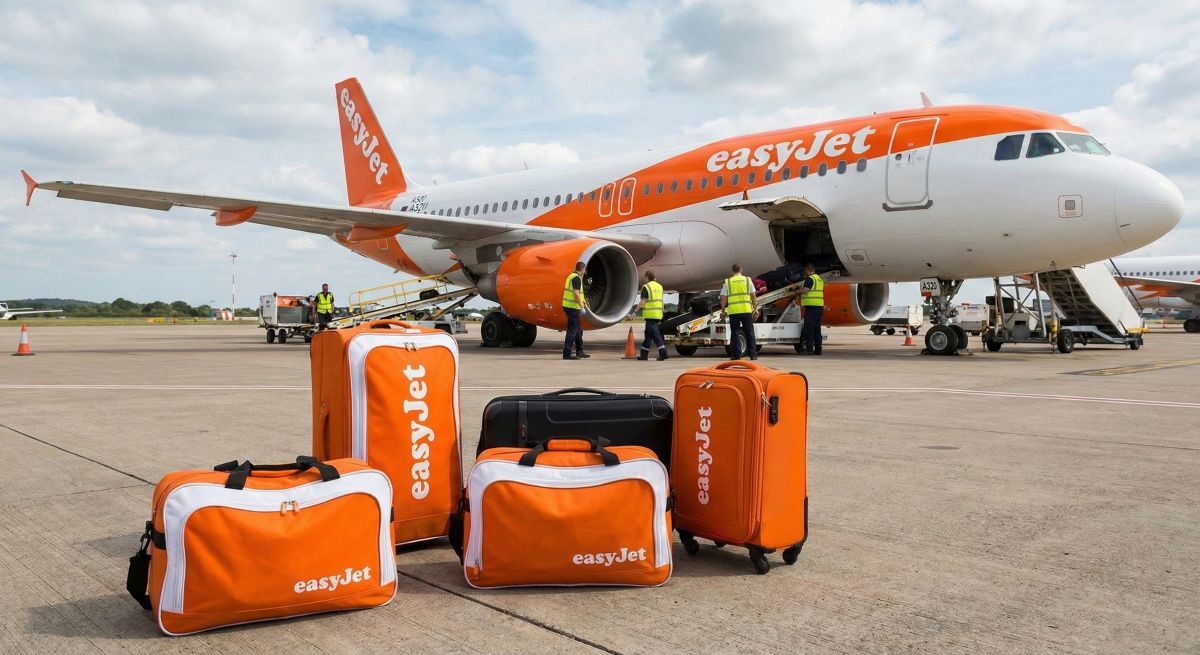
I have flown easyJet from Gatwick, Luton, Bristol, and Manchester at least three times a year for the last decade — mostly to Spain, France, and Italy. easyJet is the airline that gets the price-versus-painlessness balance closest to right for most UK travellers: a proper underseat bag included on every fare, no Ryanair-style brutality on bag sizing, and routes from every major UK airport. This page is the central guide: bags, fares, hold bag prices, Speedy Boarding, seat selection, your rights when things go wrong, and the gear that actually fits the gate sizers.
Quick answer for the bag question — checked October 2026
What Size Weight Cost Free small cabin bag (under-seat) 45 x 36 x 20 cm 15 kg Included on every fare Large cabin bag (overhead) 56 x 45 x 25 cm 15 kg From £5.99 at booking (varies by route and date), £60 at the gate Hold bag — small 15 kg 15 kg From £6.99 online, £60 at the airport Hold bag — medium 23 kg 23 kg From £9.49 online, £60 at the airport Hold bag — heavier Up to 32 kg 32 kg Add extra weight to a 23 kg bag online Important: easyJet does not publish a price range for the large cabin bag — it starts from £5.99 and varies by route and date, so add it when you book. If you wait until the airport, it costs £60 at the gate and the bag goes in the hold.
Jump to a section
- Baggage rules and bag sizes
- Fares and what each one includes
- Booking and check-in
- Speedy Boarding and seat selection
- easyJet Plus membership
- Hold bag prices and what to add
- Cabin bags and luggage that fits easyJet
- Your rights: cancellations, delays, refunds
- easyJet vs other UK airlines
- Frequently asked questions
Baggage rules and bag sizes
easyJet’s baggage rules are simpler than Ryanair’s but still catch people out, mostly around the large cabin bag. Every fare includes a 45 x 36 x 20 cm underseat bag (15 kg). The 56 x 45 x 25 cm large cabin bag is a paid add-on except on Inclusive Plus fares (formerly FLEXI) and easyJet Plus membership. Up Front and Extra Legroom seats no longer include the large cabin bag — that benefit was removed in June 2023.
For the full breakdown including weight enforcement, gate-check policy, and what does and does not count toward your allowance:
- easyJet Cabin Bag Size and Hand Luggage Rules 2026 — the full size guide, all fares
- easyJet Baggage Allowance 2026: Sizes, Prices and Rules — the full pricing guide
Fares and what each one includes
easyJet sells one fare on its own website and app: Standard. It includes the flight and the 45 x 36 x 20 cm underseat bag, and everything else is an add-on. The bundled fare that used to be called FLEXI has been renamed Inclusive Plus, and easyJet now sells it only through travel agents and other trade partners, within three months of travel.
| Fare | Underseat bag | Large cabin bag | Hold bag | Speedy Boarding | Seat selection |
|---|---|---|---|---|---|
| Standard | Yes (free) | No (paid add-on) | No (paid add-on) | Only with the large cabin bag add-on | No (paid add-on) |
| Inclusive Plus (formerly FLEXI) | Yes (free) | Yes (subject to locker space) | Yes (23 kg) | Yes | Free Up Front seat |
Inclusive Plus also adds Fast Track security at most major airports, the dedicated bag drop, free date changes within a day either side of your flight, a CAFE. meal deal on board and up to three hours of lounge access at selected airports.
The cheapest fare is genuinely the cheapest — but only if you do not need a large cabin bag, hold luggage, or a chosen seat.
Booking and check-in
Online check-in opens 30 days before departure for FLEXI passengers and 24 hours before departure for Standard fares. Check-in is free online and in the easyJet app. easyJet does not currently charge for airport check-in, but you must check in before arriving at the airport.
easyJet’s Hands Free service (where staff would take your bag at check-in for a fee) was discontinued in November 2021. If you see guides still mentioning Hands Free, they are out of date.
Speedy Boarding and seat selection
Speedy Boarding lets you board first, which means first access to the overhead lockers. You get it with the large cabin bag add-on, the Smart+ bundle, Inclusive Plus fares (formerly FLEXI) and easyJet Plus membership. easyJet does not sell it on its own.
Seat selection is paid on Standard fares. Front rows (rows 1-3) are around £15-20 each way. Up Front and Extra Legroom seats from the same rows are £25-35. Standard window/aisle picks elsewhere are £4-12.
easyJet Plus membership
easyJet Plus is an annual subscription (£249/year for the main member, £215 for a partner) that includes the large cabin bag, Speedy Boarding, free seat selection, fast track security at major UK airports, and a dedicated bag drop. For travellers who fly easyJet four or more times a year — typical of anyone with a holiday home or who flies for work — it pays for itself.
For occasional travellers (one or two flights a year), pay-as-you-go add-ons work out cheaper.
Hold bag prices and what to add
Hold bags come in 15 kg and 23 kg options, and you can add extra weight to a bag up to 32 kg. easyJet does not publish an online price range — it varies by route, season, and how far in advance you book. What is fixed for 2026:
| Bag | Online | At the airport bag drop |
|---|---|---|
| 15 kg | From £6.99 | £60 |
| 23 kg | From £9.49 | £60 |
If your bag is heavier than you booked, the excess is £12 per kg at the airport, and nothing over 32 kg is accepted.
The price gap between online and airport is substantial — always add bags when you book. The full breakdown including overweight fees and sports equipment is on the easyJet baggage allowance guide.
Cabin bags and luggage that fits easyJet
The single most useful piece of luggage for easyJet is a soft bag designed for the 45 x 36 x 20 cm underseat allowance — that gives you 32 litres of usable space and stays well clear of the gate sizers. For a 56 x 45 x 25 cm large cabin bag, a lightweight soft-shell case beats a rigid hard-shell because it compresses if you have packed close to the limits.
A good fit for the free 45 x 36 x 20 cm underseat bag:

For now, see our broader guides:
Dedicated easyJet buyer’s guides coming soon:
Your rights: cancellations, delays, refunds
UK passengers flying easyJet are still covered by UK261 (the post-Brexit version of the EU261 regulation) on flights departing the UK, and by EU261 on flights departing the EU back to the UK. Compensation thresholds and amounts are the same — up to £520 (€600 equivalent) for a long-haul flight delayed by more than four hours, with shorter distances paying less. easyJet flies short and medium-haul only, so the typical compensation tier is £220-350 per passenger for delays over three hours.
easyJet vs other UK airlines
How easyJet stacks up against the four other airlines UK travellers fly most. For the full breakdown, see the UK airline baggage allowance comparison.
| Airline | Free cabin bag (every fare) | Large overhead bag option | Hold bag from | Free seat selection |
|---|---|---|---|---|
| easyJet | 45 x 36 x 20 cm under-seat | Add-on from £5.99 (£60 at gate) | £6.99 (15 kg) | No |
| Ryanair | 40 x 30 x 20 cm under-seat | Priority add-on £12.49–36 | from £10.49 (10 kg) | No |
| Jet2 | 56 x 45 x 25 cm cabin bag + personal item | Included | Paid (or free with package) | Some fares |
| British Airways | 56 x 45 x 25 cm cabin bag + personal item, no published weight limit | Included | Fare-dependent | Most fares |
| TUI | 55 x 40 x 20 cm cabin bag + personal item | Included | Free with packages | Yes |
easyJet’s free underseat bag is the largest of any UK budget airline — 32 litres, versus Ryanair’s 24 litres. The trade-off is that the large overhead bag is a paid add-on rather than included.
Frequently asked questions
What is the easyJet cabin bag size for 2026?
The free underseat bag is 45 x 36 x 20 cm with a 15 kg weight limit. Every easyJet fare includes this. The large cabin bag is 56 x 45 x 25 cm at 15 kg, goes in the overhead locker, and is a paid add-on (from £5.99 at booking, varying by route and date) except on Inclusive Plus fares (formerly FLEXI) and easyJet Plus.
Can I take a handbag and a cabin bag on easyJet?
On a Standard fare, no — you get one bag, the 45 x 36 x 20 cm underseat bag. A handbag counts as your underseat bag. With the large cabin bag add-on (or an Inclusive Plus fare / easyJet Plus) you get both: the underseat bag plus the 56 x 45 x 25 cm overhead bag.
Do I need to pay for a large cabin bag on easyJet?
Yes, unless you are on an Inclusive Plus fare (formerly FLEXI) or hold easyJet Plus membership. Standard fares, Up Front seats, and Extra Legroom seats all require the large cabin bag as a separate add-on. Up Front and Extra Legroom stopped including the large cabin bag in June 2023.
What happens if my easyJet bag is too big at the gate?
If your bag fails the gate sizer, easyJet charges £60 and the bag is checked into the hold. That is what a large cabin bag costs if you wait until the airport, against from £5.99 when you add it online. The only options at the gate are pay the £60 or repack so the bag fits the underseat sizer.
How strict is easyJet with cabin bag size?
Stricter than they used to be. easyJet has tightened gate-sizer enforcement at busy departures (especially summer routes to Spain, Italy, and Greece) since 2024. The sizers are exact. A 21 cm-deep bag fails. Soft bags compress better than rigid cases.
Does easyJet Hands Free still exist?
No. easyJet discontinued Hands Free in November 2021. If older guides still mention it, they are out of date.
Is easyJet Plus worth it?
For four or more flights a year, yes. The £249 annual fee covers itself in saved large cabin bag fees. For one or two flights a year, pay-as-you-go works out cheaper.
Does easyJet fly from Stansted?
No. easyJet’s UK bases are Gatwick (largest), Luton, Manchester, Bristol, Birmingham, Edinburgh, Glasgow, Belfast, Liverpool, and Newcastle. Stansted is Ryanair’s main hub.
What is easyJet’s cancellation refund policy?
If easyJet cancels your flight, you are entitled to a full refund or a re-route at no extra cost under UK261/EU261, plus compensation if the cancellation was within 14 days of departure and not due to “extraordinary circumstances” like extreme weather or air traffic control strikes. If you cancel, you usually only get back government taxes, not the fare.
Can I get compensation for an easyJet delay?
Yes, under UK261 (UK departures) and EU261 (EU departures back to the UK) if the delay is more than three hours at arrival and easyJet is at fault. Compensation ranges from £220 for short flights to £350 for medium-haul. File the claim through easyJet directly first; if they refuse, escalate to the CAA (UK) or relevant national authority.
Do duty-free purchases count toward my easyJet cabin bag allowance?
No. easyJet allows duty-free bags in the original shop carrier on top of any fare allowance. Buy what you need after security.
What changes in 2027
The EU rewrote its air passenger rights rules in 2026. Parliament confirmed the deal on 7 July 2026 by 646 votes to 12, and the Council gave it final clearance on 13 July 2026. Two parts of it matter if you fly hand luggage only.
A free personal item becomes a right. The new rules include the right to carry one personal item on board — a small bag or backpack — with no additional fee.
Fares have to be shown with carry-on included. Airlines, booking sites and comparison portals will have to display the fare inclusive of carry-on luggage from the start of the booking process, so you can compare two airlines on the same basis. Airlines can still sell a cheaper fare to passengers who choose to travel without hand luggage.
What the rules do not do is guarantee a free full-size overhead bag. A second free bag with combined dimensions up to 100 cm was in Parliament’s opening position, but it is not what the final agreement grants. Any guide telling you the EU has made wheelie cases free is running ahead of the text.
Nothing changes yet. The rules enter into force 20 days after publication in the EU’s Official Journal and apply a year after that, so 2027 at the earliest. This is EU legislation and the UK runs its own passenger rights regime, so how it lands on UK–EU routes is worth watching. Until then, easyJet’s allowance is unchanged: 45 x 36 x 20 cm free under the seat, with the larger overhead bag paid or bundled into an Inclusive Plus fare or easyJet Plus.
Tested on the routes I actually fly
I have flown easyJet from Gatwick, Luton, Bristol, and Manchester on Standard, Standard Plus, FLEXI, and large-cabin-bag-add-on fares. The pricing here is what I have actually paid in 2025 and 2026. Where easyJet has changed a rule mid-year (Up Front/Extra Legroom losing the large cabin bag in June 2023; FLEXI being renamed Inclusive Plus), this guide and the underlying cluster posts have been updated accordingly. The dates at the top of each linked article show when it was last verified.
— Clint Edgar, Travellon
Last updated: October 2026
Sources
Prices and allowances on this page are checked against easyJet’s own published rules. Fares move by route and date, so confirm the number in your own booking before you pay.
- easyJet cabin bags — the airline’s official baggage help pages
- UK Civil Aviation Authority: air passengers — the regulator’s guidance on delays, cancellations and complaints