Argentina Holidays: Buenos Aires & Patagonia
Argentina holidays took me across three weeks from the elegant streets of Buenos Aires to the thundering waters of Iguazu Falls and the vast silence of Patagonia. The country is immense – distances that look short on maps turn into full day journeys – but the rewards match the scale. Standing at the Perito Moreno Glacier watching ice the size of buildings calve into the lake, or sipping Malbec in Mendoza with the Andes filling the horizon, Argentina delivers experiences you cannot find anywhere else.
About Argentina
Tango is a good place to start. You can take a class with a professional couple – it’s more approachable than it looks, and Buenos Aires has schools to suit every level.
Beyond the obvious sights, the Line A subway in Buenos Aires runs original carriages from the early 1900s, which is a small but memorable detail. The Cementerio de la Recoleta is where past presidents and national heroes are buried – Eva Perón’s grave is there, and free tours of the cemetery are available.
For wine, the regions of Mendoza, Cafayate, and Maipú are the main destinations, with Malbec the standout variety. Good food to try alongside: Empanadas, Choripan, Milanesa, and Asado.
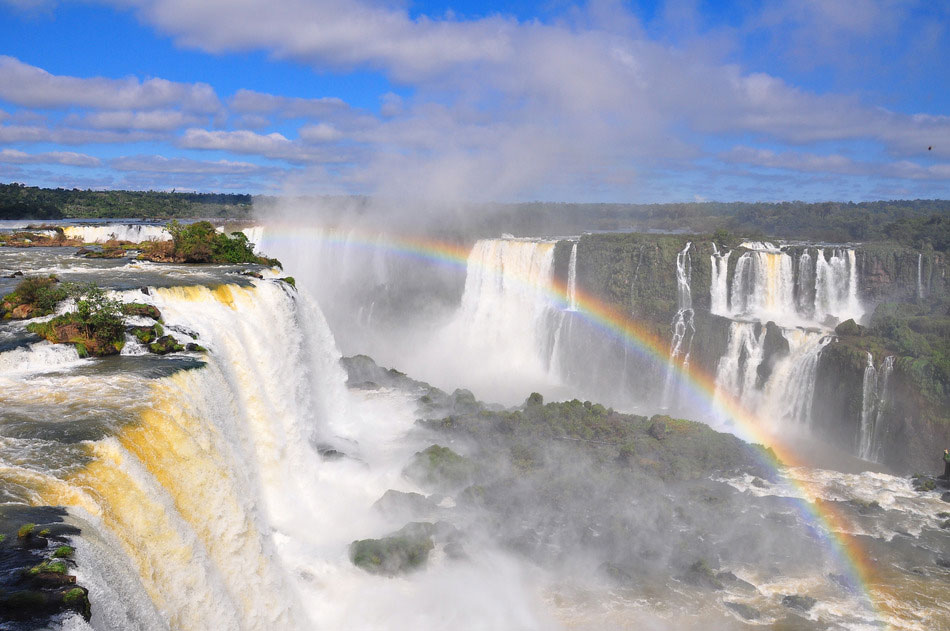
Rainbow in the mist at Iguazu Falls, on the border of Brazil and Argentina.
Things to do in Argentina
Iguazú falls
Within the Iguazú National Park is a 3 kilometre stretch of more than 200 waterfalls. Enjoy the sound of the crashing water and the sheer scale of the surroundings. Iguazú falls is split between Argentina and Brazil. These falls were voted as one of the Seven Wonders of the World and draw huge crowds from both sides of the border. The Iguazú falls are accessible from either Brazil or Argentina. Boat tours take you right up close to the falls. For a higher vantage point, helicopter rides are available.
Andes Mountains
The Andes Mountains is the longest mountain range in the world. The mountains consist of glaciers, volcanoes, lakes and forest. There is a variety of birds, bear and mountain lion to be spotted on your journey in the Andes. Blue lagoons appear as you make your way up the mountain: it’s possible to drive up about 5,000 metres and then walk for about 100 metres. Photos don’t really capture it. You’ll feel very close to the sky.
Cathedral of La Plata
One of the largest cathedrals in Latin America, this Gothic-style cathedral is worth a visit. Take the lifts to the front towers. The copper domes and the cathedral’s eight towers are impressive up close. The stained glass windows are remarkable. The cathedral is also the 58th tallest church in the world.
Teatro Colón
No matter where you sit in the Teatro Colón, the acoustics are exceptional. The opera house in Buenos Aires is considered one of the finest in the world. If you’re there when something is on, it’s worth booking a ticket.
Hill of Seven Colors
The Hills of Seven Colors gets its name from the various pigments of the minerals within the soil. The colours are most vivid in daylight and photographs rarely do it justice. The hill is easily accessible and makes for a straightforward walk.
Museum of Latin American Art of Buenos Aires (MALBA)
If you’re into art, MALBA is worth your time. The gallery is easy to navigate and houses European work alongside local artists and a solid collection of Latin American art. Guided tours are available.
Tierra de Fuego National Park
The park has good trails for family day trips and hikes along the rivers with solid scenery. There’s forest, a number of lakes, and decent bird life – bring binoculars. Pack a rain jacket and wear comfortable shoes. A full day here is well spent. Base yourself in Ushuaia and head out from there. Glacier Martial is probably the best hike in the park. Camping is an option if you want to stay overnight.
Cathedral of Salta
The Cathedral of Salta has a lot of detail on the walls and ceiling. It was completely destroyed in the 17th century, with reconstruction completed in 1882. Inside there’s a statue of the Virgin Mary, and the altar is a striking centrepiece. Side chapels are worth exploring too. It’s particularly impressive lit up at night.
Perito Moreno Glacier
The Perito Moreno Glacier in Los Glaciares National Park is unusual because it’s actually growing, not retreating. It’s one of the largest glaciers in South America and one of Argentina’s top attractions. Tours of the glacier are available, or you can take a boat cruise to view it from the water. The footbridge gives good close-up views and you can watch chunks of ice calving into the lake.
Plaza Dorrego
Plaza Dorrego is known for its Sunday street market, which has been running since 1970. Thousands of locals and tourists come here for souvenirs and antiques. There are bars and cafés around the square if you want to sit and watch the crowd, or just wander through the stalls. Good place to pick up something to take home.
Frequently Asked Questions
Do I need a visa to visit Argentina?
Visa requirements vary by nationality. UK, US, Canadian, EU, and Australian citizens do not need a visa for tourist stays up to 90 days. You need a valid passport with at least 6 months validity remaining. Check current requirements for your specific nationality before travel.
When is the best time to visit Argentina?
The best time depends on the region. For Buenos Aires and wine regions, spring (September-November) and fall (March-May) offer pleasant weather. Patagonia is best November-March (summer). Iguazu Falls can be visited year-round but is most impressive during wet season (November-March). Note that Argentina’s seasons are reversed from the Northern Hemisphere.
What currency is used in Argentina?
The Argentine Peso (ARS) is the official currency. US Dollars are widely accepted in tourist areas, and many hotels quote prices in USD. ATMs are available in cities but may have withdrawal limits. Credit cards are accepted in most establishments in major cities, but carry cash for smaller towns.
What language is spoken in Argentina?
Spanish is the official language. Argentine Spanish has a distinct accent and uses “vos” instead of “tu”. English is spoken in major tourist areas and upscale hotels, but learning basic Spanish phrases will greatly enhance your experience, especially outside Buenos Aires.
How expensive is Argentina?
Costs can vary significantly depending on the region and current exchange rates. Argentina has experienced currency fluctuations, so prices can change. Wine regions like Mendoza offer excellent value for wine tours and tastings. Patagonia tends to be more expensive. Budget for mid-range spending in major cities and higher costs in remote areas like Patagonia.
Is Argentina safe for tourists?
Argentina is generally safe for tourists, especially in main tourist areas. Exercise normal precautions in Buenos Aires: be aware of pickpockets in crowded areas, avoid displaying expensive items, and use official taxis or ride-sharing apps. Patagonia and other remote regions are very safe. Stay informed about current conditions in the areas you plan to visit.