Bali and Indonesia Plug Type: What UK Travellers Need
The first time I went to Indonesia I packed the universal travel adapter I had used in Thailand the previous month. It worked everywhere — Bali, Yogyakarta, Jakarta. Indonesia uses the same plug standards as most of mainland Europe, so any UK traveller already carrying an EU adapter for trips to France, Spain, or Germany already has the right kit.
This guide covers the Indonesia power plug type, voltage, and exactly what to buy if you do not already have an adapter.
What plug is used in Indonesia?
Indonesia uses Type C and Type F plugs, running at 230V and 50Hz. UK plugs (Type G — the familiar three rectangular pins) do not fit Indonesian sockets, so you will need a travel adapter.
Quick reference for anyone scanning this page:
- Plug type: Type C (Europlug) and Type F (Schuko)
- Voltage: 230 V — same as the UK
- Frequency: 50 Hz — same as the UK
- Voltage converter needed? No
- Plug adapter needed? Yes, a UK-to-EU (Type C/F) adapter
The voltage being identical to the UK means every device you bring from home runs at full power without any risk of damage.
What plug does Bali use?
Bali uses exactly the same plugs as the rest of Indonesia: Type C and Type F, at 230V and 50Hz. There is no Bali-specific adapter, and anything sold as a “Bali travel adapter” is a standard UK-to-EU plug adapter with a holiday name on the box.
So the Bali plugs question has a short answer for UK travellers. Pack a UK-to-European adapter, the same one you would take to Spain or France, and it will fit every socket in Seminyak, Ubud, Canggu, Uluwatu and Nusa Dua. Your chargers need nothing else, because Bali’s voltage matches home.
The Indonesia power plug type explained
Type C — the Europlug
Type C is the small two-pin Europlug. It fits the round-hole sockets you see in hotels, Airbnbs, restaurants, and homes across Indonesia. The pins are round and ungrounded (no third pin for earth), so it is rated for low-power devices: phone chargers, shavers, small lamps, USB plugs.
If your devices have a non-grounded two-pin Europlug already (rare for UK travellers, more common for some Apple chargers in EU markets), they may even fit directly into an Indonesian socket without an adapter. Most UK kit will need one.
Type F — the Schuko
Type F is the larger two-pin plug with side grounding clips. It is what hair dryers, kettles, laptops, and other higher-current appliances use across most of Europe — and it fits the same Indonesian sockets that accept Type C.
In practice, the Type C and Type F sockets are the same physical socket. A Type F plug fits into a Type C socket and grounds via the side clips. A Type C plug fits into a Type F socket and ignores the grounding entirely. Either way, both work.
Voltage in Indonesia
Mainland Indonesia runs at 230 V at 50 Hz, the same as the UK. There is no need for a voltage converter for any device that works in the UK — phones, laptops, electric toothbrushes, kettles, hair dryers, all of it.
The exception is American visitors travelling on from Indonesia who carry 110 V-only equipment (some older shavers, small American hair dryers). Those need a step-down converter, not just a plug adapter.
Recommended: UK to European travel adapter for Indonesia
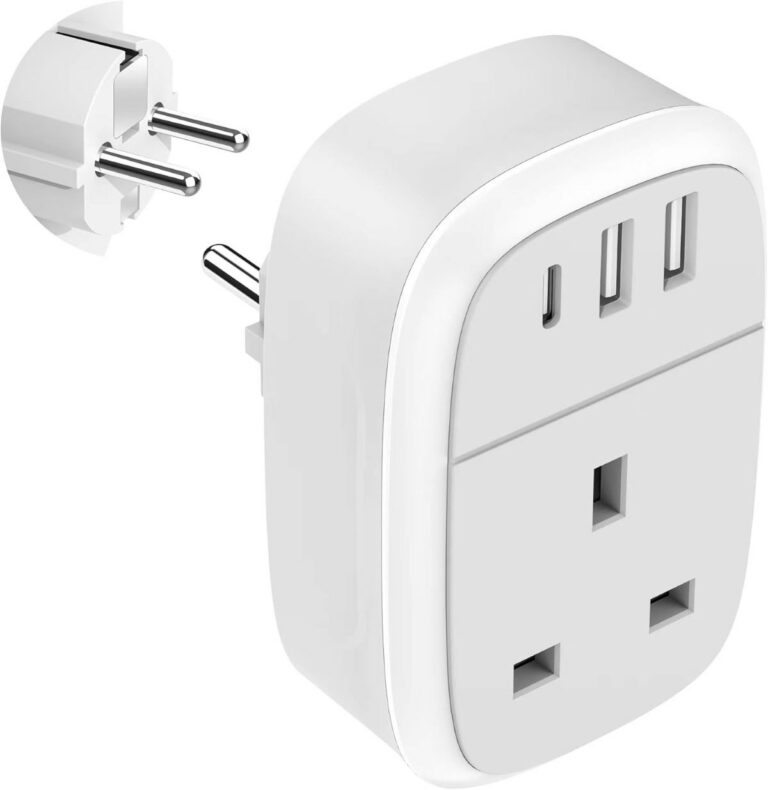
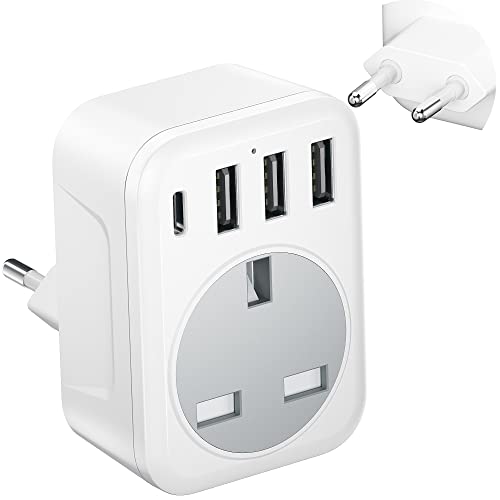
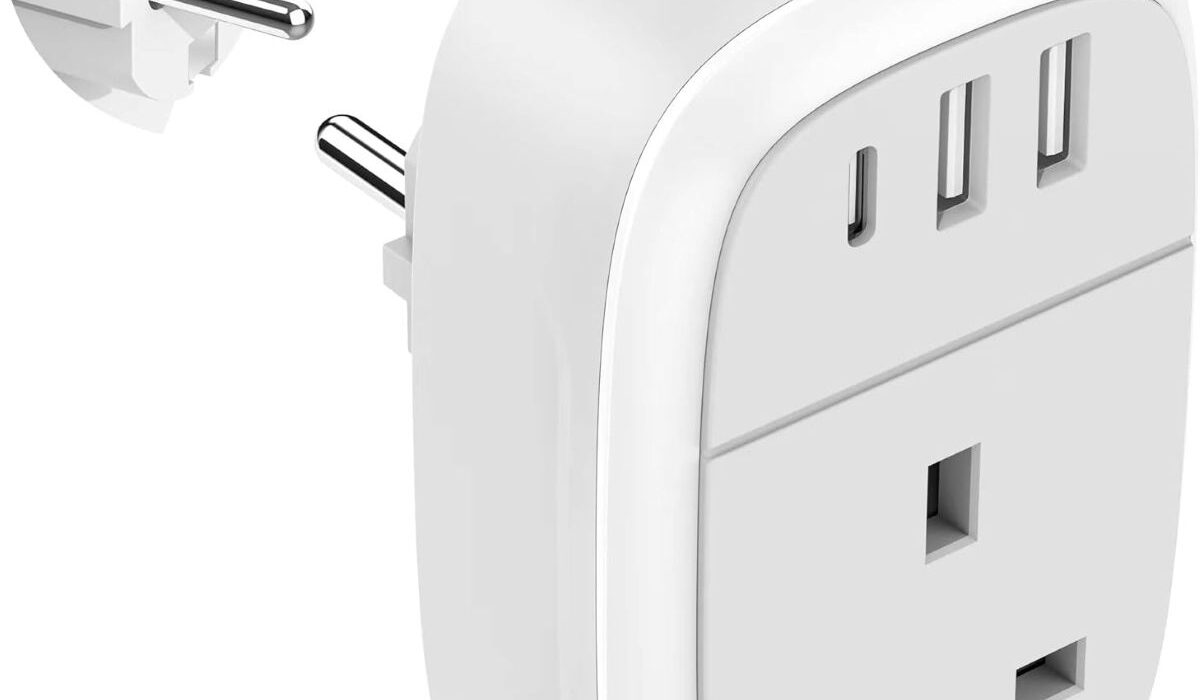
A standard UK-to-European travel adapter is exactly what you need in Indonesia. It accepts a UK Type G plug on one side and fits Indonesian Type C and Type F sockets on the other — the same adapter that works in France, Spain, Portugal, Germany, and Italy. Look for one with built-in USB-A and USB-C ports, a built-in fuse for safety, and side grounding clips for the Schuko (Type F) sockets.
A basic UK-to-EU adapter costs under £10. If you travel several times a year to different regions, a true multi-region universal adapter (covering Type A/B for the US and Type I for Australia as well) is worth the £15-20 step up.
Bali, Jakarta, and the rest of Indonesia
The Indonesia power plug type is consistent across the country. I have stayed in:
- Bali — Ubud villas, Seminyak hotels, Canggu surf hostels. All Type C/F.
- Jakarta — Mid-range business hotels, including chains like Mercure and Holiday Inn. All Type C/F.
- Yogyakarta — Small guesthouses near the Kraton. Type C only in some older buildings, but Type F in newer ones.
- Lombok — Beach resorts in Senggigi and Kuta Lombok. Type C/F in everything I used.
The exception to watch for: very small or rural homestays, particularly in Sulawesi or the more remote parts of Java, occasionally have only Type C sockets without the Type F grounding. Your two-pin Europlug adapter still works. A grounded Schuko plug also still works — it just sits flush against the socket without engaging the grounding clips.
Common questions UK travellers ask
Does Bali use the same plug type as the rest of Indonesia?
Yes. Bali uses Type C and Type F at 230 V — identical to mainland Java, Sumatra, Lombok, and the rest of Indonesia. No special Bali-only adapter is needed.
Can I use my UK plug in Indonesia without an adapter?
No. UK plugs are Type G with three rectangular pins; Indonesian sockets are round-pin Type C/F. The plug will not physically fit.
Is the voltage in Indonesia the same as the UK?
Yes. Indonesia is 230 V at 50 Hz, the same as the UK in practice. No voltage converter is needed.
Will my UK hair dryer work in Indonesia?
The voltage is the same, so it will run at full power, but check the adapter first. Many compact travel adapters are only rated for low-power chargers, and a two-pin Type C adapter provides no earth. Use an adapter rated for the dryer’s wattage, or use the hotel’s own, which most Bali and Jakarta hotels provide.
Will my UK iPhone or Android charger work in Indonesia?
Yes. Modern phone chargers are dual-voltage (100-240 V) and work anywhere with the right plug adapter. A basic UK-to-EU Type C adapter does the job.
Do I need a different adapter for Indonesia and Thailand?
Not necessarily. Thailand uses Type A, B, and C, and many sockets accept Type C plugs. A universal travel adapter covers both countries on one device. See our Thailand plug adapter guide for the specifics if Thailand is your primary destination.
What plug does Bali use specifically?
Bali uses Type C and Type F plugs at 230 V. Your UK-to-EU travel adapter works in every Bali hotel, villa, and guesthouse.