Peru Holidays: Machu Picchu & Travel Guide
Peru holidays hit me harder than I expected. I had come for Machu Picchu – the postcards, the bucket list tick – and left with something deeper. The Andes are not just mountains; they are a presence. Standing at 4,000 metres watching condors ride thermals above the Colca Canyon, or walking through Cusco’s colonial streets built on Inca foundations, or eating ceviche on Lima’s grey Pacific coast – Peru layers civilisations and landscapes in ways that stay with you.
I spent three weeks travelling from Lima through the Sacred Valley to Machu Picchu, then south to Lake Titicaca and Arequipa. Even that felt rushed. Peru is the kind of place where every traveller ends up staying longer than planned.
Lima: The Underrated Capital
Most visitors race through Lima on their way to Cusco. Do not. Peru’s capital has reinvented itself over the past two decades, and the food scene alone is worth several days.
Miraflores and Barranco
The upscale coastal districts where most tourists stay. Miraflores has the Malecón – a clifftop promenade overlooking the Pacific – along with shopping centres, hotels, and the tourist infrastructure. Barranco next door is the bohemian quarter: colonial mansions, street art, craft beer bars, and some of Lima’s best restaurants. Both are safe, walkable, and connected by the Malecón.
The grey Pacific coast and constant overcast (June-November) take some adjustment, but the atmosphere grows on you. Sunset drinks at a clifftop bar watching paragliders drift over the ocean is properly pleasant.
Historic Centre
Lima’s colonial core is a UNESCO World Heritage Site – grand plazas, baroque churches, and ornate balconied buildings. The Plaza de Armas is the heart: the Presidential Palace on one side, the Cathedral on another, and the Archbishop’s Palace with its famous wooden balconies.
The Monastery of San Francisco is the highlight – beautiful cloisters above, bone-filled catacombs below. Guided tours descend into tunnels lined with skulls and femurs, the remains of some 70,000 burials.
The Centro is grittier than Miraflores and requires more street awareness, but it shows Lima’s real history.
Lima Food
Lima is a serious food city – regularly ranked among the best in the world. The fusion of indigenous, Spanish, African, Chinese, and Japanese influences creates something unique.
Ceviche – Raw fish cured in lime juice with onion, chilli, and corn. The national dish, best eaten fresh at lunchtime. La Mar and Punto Azul are reliable; ambitious eaters should book Central or Maido (reservations essential, prepare to spend).
Anticuchos – Grilled beef heart skewers, marinated and smoky. Street food at its best, particularly from the carts that appear at dusk in Miraflores and Barranco.
Lomo saltado – Stir-fried beef with onions, tomatoes, and chips, served with rice. Chinese-Peruvian fusion that works brilliantly.
Causa – Layered potato terrine with avocado and seafood or chicken. Cold, creamy, and distinctly Peruvian.
Budget £20-30 for a good lunch in Miraflores, £100+ for the high-end restaurants that have made Lima famous.
Cusco: Heart of the Inca Empire
At 3,400 metres elevation, Cusco is beautiful and breathless – literally. The altitude hits hard, and the first day requires rest, coca tea, and slow movement. By day two your body starts adjusting; by day three you are ready to explore properly.
The city itself is extraordinary. Spanish colonial architecture sits directly on Inca foundations – you can see the seamless Inca stonework beneath the plaster and tile. The Incas built Cusco in the shape of a puma; the fortress of Sacsayhuaman forms the head. Wandering the steep cobblestone streets, ducking into ancient doorways and climbing to neighbourhood viewpoints, is the main activity.
What to See
Plaza de Armas – The central square, surrounded by arcaded buildings, restaurants, and two massive churches. This was the Inca ceremonial centre, and it remains the heart of the city.
Qorikancha – The Inca Temple of the Sun, once the most sacred site in the empire, its walls covered in gold. The Spanish built the Church of Santo Domingo on top, creating a strange hybrid. The remaining Inca stonework is extraordinary – perfectly fitted stones without mortar that have survived centuries of earthquakes.
San Pedro Market – The city’s main market: fruit juice stalls, cheese vendors, meat sections, and lunch counters serving cheap local food. Come for freshly squeezed juice and people-watching.
San Blas – The artisan quarter, steep and charming. Craft shops, cafes, and the famous twelve-angled stone (a single Inca stone with twelve perfectly fitted corners, now a tourist magnet).
Cusco Surroundings
Sacsayhuaman – The massive Inca fortress overlooking Cusco, with stones weighing up to 200 tonnes fitted together with impossible precision. A half-day trip, walkable from the city centre (uphill, remember the altitude).
Boleto Turístico – A combined ticket (S/130 / £28) covers Sacsayhuaman and numerous other sites around Cusco and the Sacred Valley over 10 days. Worth it if you are doing more than a quick visit.
The Sacred Valley
The Urubamba River valley between Cusco and Machu Picchu, dotted with Inca ruins, traditional villages, and high-end hotels. Many travellers spend a night or two here before Machu Picchu – the lower altitude (2,800m) is easier to handle, and the sites are fascinating.
Ollantaytambo
A living Inca town – the grid layout, water channels, and some buildings are still in use. The fortress above the town is a stunning example of Inca engineering: massive terraces climbing the mountainside, with temples and storehouses at the top. This is also the departure point for trains to Machu Picchu.
Pisac
Famous for its Sunday market, though markets happen daily on a smaller scale. The Inca ruins above the town are extensive and less crowded than Ollantaytambo – worth the climb for views across the valley.
Moray and Maras
Moray is a series of circular terraces descending into the earth, likely an Inca agricultural laboratory. Nearby Maras has salt pans – thousands of small pools clinging to a hillside, fed by a salty spring, still worked traditionally. The visual impact is striking.
Machu Picchu
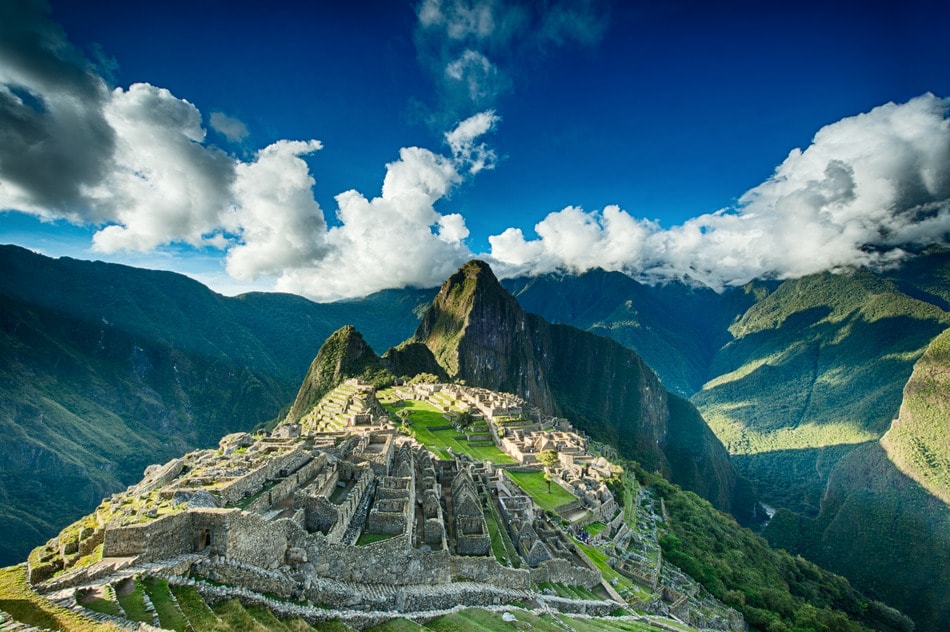
And then there is Machu Picchu. No amount of photos prepares you for the reality – partly because the site is so much larger than it appears in pictures, and partly because the setting is so dramatic. The ruins perch on a ridge between two peaks, with the Urubamba River curving around thousands of metres below and cloud forest clinging to the surrounding mountains.
Getting There
Most people take the train from Ollantaytambo to Aguas Calientes (the town below Machu Picchu), then a bus up the switchbacks to the entrance. PeruRail and Inca Rail operate services; tickets run $60-150 each way depending on class. Book ahead in peak season.
The alternative is the Inca Trail – a four-day trek following the original Inca route, ending at the Sun Gate overlooking Machu Picchu at dawn. This requires booking months in advance (permits are limited to 500 per day including guides and porters) and costs $600-1000+ depending on the operator. Physically demanding but genuinely memorable.
Other treks (Salkantay, Lares) offer similar experiences without the permit restrictions, ending with the train to Aguas Calientes.
The Site Itself
Machu Picchu requires advance booking – entry tickets are timed and limited. As of recent regulations, you must enter with a guide and follow a set circuit. This protects the site but limits flexibility.
The main ruins take 2-3 hours to explore properly. The agricultural terraces, the Temple of the Sun, the Intihuatana stone (the hitching post of the sun), the residential areas – all reward slow attention. Look for the quality of stonework, the precision of water channels, and the way buildings align with astronomical events.
Huayna Picchu – The steep peak rising behind the main ruins. An additional ticket (S/200 / £43) lets you climb the vertiginous trail for views looking down on Machu Picchu. Genuinely scary in places; not for those afraid of heights. Book well ahead – only 400 people per day are allowed.
Machu Picchu Mountain – A longer, less steep climb with different views. Quieter than Huayna Picchu.
Practical Details
Entry: S/152 (£33) for the basic circuit, more for mountain climbs.
Best time: Early morning before the crowds build, or late afternoon as day-trippers leave. The site opens at 6am.
Altitude: Machu Picchu sits at 2,400 metres – lower than Cusco, so altitude is less of an issue if you have already acclimatised.
What to bring: Water, sunscreen, rain jacket (weather changes quickly), snacks. No large bags allowed; storage available at the entrance.
Beyond the Inca Heartland
Lake Titicaca
The highest navigable lake in the world, straddling the Peru-Bolivia border. From Puno on the Peruvian side, boats visit the Uros floating islands – artificial reed platforms built by the Uros people, now heavily touristed but still interesting – and Taquile Island, with its traditional textile culture.
The lake itself is stunningly blue at 3,800 metres, with snow-capped peaks visible in the distance. The town of Puno is unremarkable, but the lake and islands justify the journey.
Arequipa and Colca Canyon
Peru’s second-largest city, with a beautiful colonial centre built from white volcanic stone. The Santa Catalina Monastery, a city within a city, is the highlight – colourful cloisters, narrow streets, and centuries of history.
From Arequipa, two-day trips visit the Colca Canyon – twice as deep as the Grand Canyon, with Cruz del Condor as the main viewpoint. Watching Andean condors rise on morning thermals, their wingspan reaching three metres, is worth the early start.
The Amazon
Peru’s Amazon region is one of the most biodiverse places on Earth. Iquitos, reachable only by river or air, is the main gateway. Jungle lodges offer multi-day programs: canoe trips, wildlife spotting (pink river dolphins, caimans, monkeys), night walks, and visits to indigenous communities.
The Tambopata and Manu reserves in the southeastern jungle offer similar experiences closer to Cusco.
Practical Information
Altitude: The biggest challenge for Peru travel. Cusco, Puno, and much of the highlands sit above 3,000 metres. Symptoms of altitude sickness (soroche) include headache, nausea, and fatigue. Take it easy for the first two days, drink lots of water, avoid alcohol, and try coca tea. Serious symptoms require descent.
Money: Peruvian Sol (S/). Roughly S/5 to £1. US dollars are widely accepted and sometimes preferred for larger purchases. ATMs in cities; cash essential in smaller towns.
Language: Spanish. English is common in tourist areas but rare elsewhere. Basic Spanish helps enormously.
Transport: Domestic flights connect Lima to Cusco, Arequipa, Iquitos, and other cities – affordable if booked ahead. Long-distance buses are comfortable and cheap; Cruz del Sur and Oltursa are reliable companies. In the Sacred Valley and around Cusco, colectivos (shared vans) are the local way to get around.
When to visit: May to September is dry season in the highlands – best for trekking and Machu Picchu. The coast is grey and cool. October to April brings rain to the mountains, but fewer crowds. The Amazon is wet year-round, with the driest months being June to September.
Costs: Peru is affordable. Budget travellers can manage on £25-35 per day outside the main tourist trail. The Machu Picchu circuit (train, entry, accommodation) is expensive by comparison – budget £200-300 for a basic two-day trip from Cusco.
Safety: Generally safe for tourists, but standard precautions apply. Petty theft is common in Lima and Cusco; do not flash valuables. Fake taxis are an issue in Lima – use registered companies or apps.
Frequently Asked Questions
Do I need a visa to visit Peru?
UK, US, Canadian, EU, and Australian citizens receive 183 days visa-free on arrival. No advance visa required for tourism. Make sure your passport is valid for at least six months beyond your planned departure date.
What is the best time to visit Peru?
May to September is dry season in the highlands and best for trekking Machu Picchu and the Inca Trail. October to April brings rain to the mountains but fewer crowds. The Amazon is wet year-round, with the driest months being June to September. The coast experiences grey overcast weather from June to November.
What currency is used in Peru?
The Peruvian Sol (S/), with roughly S/5 to £1 or S/4 to $1. US dollars are widely accepted and sometimes preferred for larger purchases. ATMs are available in cities, but bring cash for smaller towns. Credit cards are accepted in tourist areas.
How do I deal with altitude sickness in Peru?
Cusco sits at 3,400 metres and Puno at 3,800 metres, so altitude sickness (soroche) is common. Take it easy for the first two days, drink lots of water, avoid alcohol, and try coca tea. Ascend gradually if possible. Serious symptoms like severe headache, confusion, or difficulty breathing require immediate descent and medical attention.
Is Peru safe for tourists?
Peru is generally safe for tourists with standard precautions. Petty theft is common in Lima and Cusco, so avoid flashing valuables and use registered taxis or ride apps. The tourist areas are well-travelled and safe, but stay aware of your surroundings. Fake taxis are an issue in Lima – use official companies or apps only.
How much does it cost to visit Machu Picchu?
Budget £200-300 for a basic two-day trip from Cusco including train ($60-150 each way), entry ticket (S/152 / £33), bus to the site, and accommodation in Aguas Calientes. The Inca Trail costs $600-1000+ and requires booking months in advance. Additional mountain climbs (Huayna Picchu or Machu Picchu Mountain) cost S/200 (£43) extra.