Cyprus Holidays: Beaches, Resorts & Tips
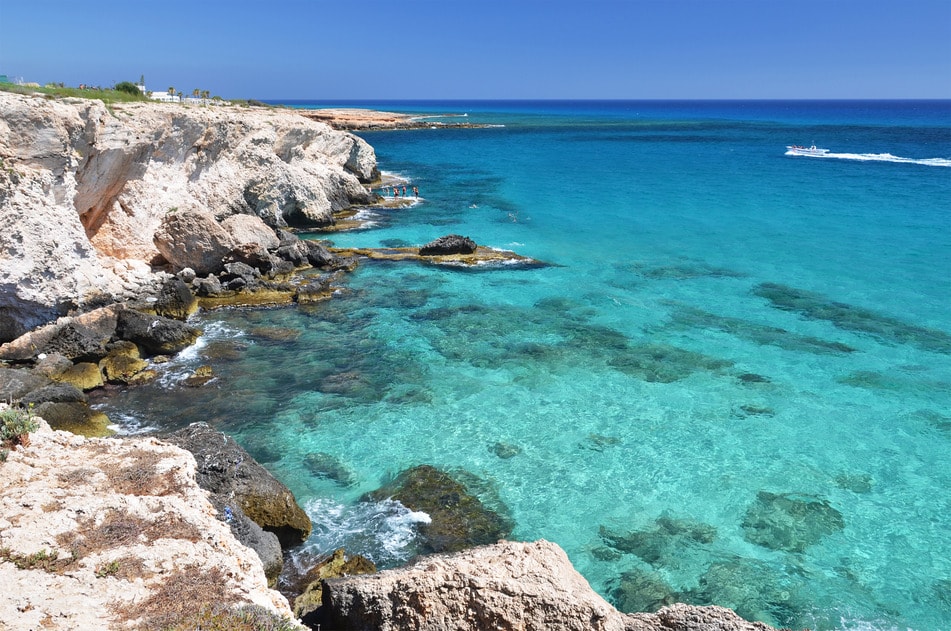
Cyprus holidays offer a destination that has been absorbing conquerors and visitors for millennia – Greeks, Romans, Crusaders, Venetians, Ottomans, and British have all left their mark on this sun-baked island at the eastern edge of the Mediterranean. I spent ten days driving around the southern Republic of Cyprus and found layers of history everywhere, mixed with beaches, mountain villages, and an unhurried pace that makes the island feel like a proper escape.
The island is divided – the Republic of Cyprus in the south (EU member, majority Greek Cypriot) and the Turkish Republic of Northern Cyprus in the north, separated since 1974. Most tourists visit the south, which is where this guide focuses, though crossing to the north is straightforward for day trips.
What struck me was how compact Cyprus is. You can drive from the ancient ruins of Paphos to the beaches of Ayia Napa in three hours, with mountain villages, Byzantine churches, and Crusader castles along the way. The variety packed into this small island is remarkable.
Paphos
The archaeological heart of Cyprus, Paphos was the island’s capital during Roman times and retains more ancient remains than anywhere else on the island. The harbour town is pleasant rather than spectacular, but the surrounding sites are exceptional.
Kato Paphos Archaeological Park
A UNESCO World Heritage Site containing the best Roman mosaics outside Italy. The mosaics, discovered by a farmer in 1962, cover the floors of several Roman villas and depict scenes from Greek mythology in extraordinary detail. The House of Dionysus, House of Theseus, and House of Aion contain the finest examples.
The site also includes an ancient odeon (theatre), the ruins of an agora, and the columns of an early Christian basilica. Allow 2-3 hours to explore properly. Entry €4.50 (£4).
Tombs of the Kings
A necropolis of underground tombs carved from rock, dating to the 4th century BC. Despite the name, the tombs held wealthy citizens rather than royalty – the grand scale suggested the name. Some tombs are carved to resemble houses, with columns and atriums. The setting, with views across to the sea, is atmospheric.
Entry €2.50 (£2.15). Go early morning or late afternoon to avoid the heat.
Paphos Castle
A small but photogenic fortress at the harbour’s edge, rebuilt by the Ottomans in the 16th century. The castle is worth climbing for harbour views; the interior is less interesting than the setting. Entry €2.50 (£2.15).
Aphrodite’s Rock (Petra tou Romiou)
The mythological birthplace of Aphrodite, rising from the sea about 25 kilometres southeast of Paphos. The rock formations are striking, especially at sunset. Swimming is possible but the current can be strong. Legend claims swimming around the rock three times grants eternal beauty – attempt at your own risk.
Limassol
Cyprus’s second city and its main port, Limassol is more commercial than Paphos but has a pleasant old town, good restaurants, and easy access to the Troodos Mountains.
Old Town
The restored historic centre around the castle has narrow lanes, craft shops, and restaurants. The atmosphere is particularly good on weekends when locals gather in the tavernas.
Limassol Castle – A medieval castle housing the Cyprus Medieval Museum. Richard the Lionheart allegedly married Berengaria of Navarre here in 1191. Entry €4.50 (£4).
Limassol Marina – A modern development with upscale restaurants, cafes, and yachts. Good for an evening stroll and dinner.
Kourion
One of the most dramatically situated ancient sites in the Mediterranean, perched on cliffs overlooking the sea about 15 kilometres west of Limassol. The Greco-Roman theatre has been restored and hosts summer performances. The mosaics in the House of Eustolios and the early Christian basilica are well-preserved.
Entry €4.50 (£4). Go early to beat the heat and the tour groups.
Wine Villages
The villages in the hills above Limassol produce some of Cyprus’s best wines. Commandaria, a sweet dessert wine, has been made here for centuries – possibly the world’s oldest named wine still in production. Village tavernas serve local food and wine at reasonable prices.
Omodos, Koilani, and Vouni are good villages to visit.
Troodos Mountains
The mountain range at Cyprus’s centre offers cooler temperatures, Byzantine churches, and hiking trails. In summer, when the coast is oppressively hot, the mountains provide welcome relief.
Troodos Villages
Kakopetria – A well-preserved village with traditional stone houses and rushing streams. Good base for hiking.
Platres – The most developed mountain resort, with hotels and restaurants. Popular since British colonial times.
Omodos – A well-preserved village centred on a monastery, with wine tastings and craft shops.
Byzantine Churches
The Troodos Mountains contain nine Byzantine churches with painted interiors, collectively UNESCO-listed. The paintings, some dating to the 11th century, are extraordinary – vivid colours depicting religious scenes on every surface. Agios Nikolaos tis Stegis and Panagia tou Araka are among the finest.
The churches are scattered across the mountains; a car is essential for visiting multiple sites.
Mount Olympus
The highest point in Cyprus at 1,952 metres. A road reaches near the summit, with hiking trails through pine forests. In winter, there is a small ski area – more novelty than destination.
Larnaca
The arrival point for most visitors (the main international airport is here), Larnaca is worth a day rather than an extended stay. The palm-lined seafront promenade (Finikoudes) is pleasant for walking, and the old Turkish Quarter (Skala) has character.
Church of Saint Lazarus – An impressive 9th-century church supposedly built over the tomb of Lazarus (raised from the dead by Jesus), who tradition says became the first bishop of Kition (ancient Larnaca).
Salt Lake – A shallow lake west of town where flamingos gather in winter months. The lakeside mosque (Hala Sultan Tekke) is one of Islam’s holiest sites.
Ayia Napa and Protaras
The eastern coast is Cyprus’s beach resort zone – package tourism, nightclubs, and long sandy beaches. Ayia Napa’s reputation for clubbing draws young crowds; Protaras is slightly more family-oriented.
The beaches are genuinely excellent – Nissi Beach and Fig Tree Bay regularly appear on European beach rankings. If you want sun, sand, and predictable Mediterranean resort facilities, this is the place.
Cape Greco
The cape between Ayia Napa and Protaras is a national park with sea caves, walking trails, and dramatic cliffs. The sea caves (accessible by boat or by climbing down rocky paths) offer good snorkelling. Less crowded and more natural than the resort beaches nearby.
Diving
Cyprus offers good diving, with clear Mediterranean waters and several notable wrecks.
MS Zenobia – The star attraction, a Swedish ferry that sank on its maiden voyage in 1980 off Larnaca. The ship lies intact at 42 metres, with trucks still in its holds. Consistently rated among the world’s top wreck dives. Suitable for experienced divers; the upper sections are accessible to those with less experience.
WWII Wrecks – Several wartime wrecks lie off Limassol and Paphos.
Reef Diving – Various sites around the coast, best off the Cape Greco area.
Expect to pay €50-80 (£43-69) for a two-tank dive.
Practical Information
Getting There
Larnaca and Paphos have international airports with direct flights from most European cities. Budget carriers (Ryanair, easyJet, Wizz Air) serve both.
Getting Around
Rental Cars – Essential for exploring properly. Roads are good; driving is on the left (British influence). Rental costs €25-50 (£21-43) per day.
Buses – Intercity buses connect major towns but services are limited, especially to mountain areas and archaeological sites.
Taxis – Available but expensive for longer distances.
Crossing to Northern Cyprus
The border crossing in Nicosia is straightforward – show your passport, walk across. Car crossings require additional insurance. The north is interesting for a day trip (Kyrenia is pleasant; Famagusta has remarkable ruins), but accommodation and tourist facilities are better developed in the south.
When to Visit
April to June, September to November – The best times. Warm but not oppressive, good for sightseeing and hiking.
July to August – Very hot (often above 40°C), especially on the coast. Swimming weather but uncomfortable for sightseeing.
December to March – Mild on the coast, snow possible in the mountains. Some beach facilities close.
Costs
Cyprus is moderately priced for the Mediterranean.
- Budget hotel: €50-80 (£43-69) per night
- Mid-range hotel: €80-150 (£69-129) per night
- Resort hotel: €150-300 (£129-258) per night
- Taverna meal: €15-25 (£13-21)
- Restaurant dinner: €25-40 (£21-34)
- Coffee: €3-5 (£2.60-4.30)
- Beer: €4-6 (£3.45-5.15)
- Kato Paphos entry: €4.50 (£4)
Visas
Cyprus is an EU member. UK visitors can stay up to 90 days in any 180-day period. Cyprus is not in the Schengen Area, so separate entry requirements apply.
Language
Greek is the main language. English is widely spoken – a legacy of British rule (Cyprus was a British colony until 1960).
Power
Cyprus uses Type G plugs (three rectangular pins, same as UK). No adapter needed for UK visitors.
Frequently Asked Questions
Do I need a visa to visit Cyprus?
UK visitors can stay in Cyprus visa-free for up to 90 days in any 180-day period. Cyprus is an EU member but not part of the Schengen Area, so separate entry requirements apply. Ensure your passport is valid for at least 6 months beyond your planned stay.
What is the best time to visit Cyprus?
The best time to visit Cyprus is April to June and September to November, when temperatures are warm but not oppressive. July and August can be very hot (often above 40°C), making sightseeing uncomfortable. Winter (December-March) is mild on the coast but some beach facilities close.
What currency does Cyprus use?
Cyprus uses the Euro (EUR). The Republic of Cyprus adopted the Euro in 2008. Credit cards are widely accepted in tourist areas, restaurants, and hotels. ATMs are readily available throughout the island for cash withdrawals.
What type of power plugs does Cyprus use?
Cyprus uses Type G plugs with three rectangular pins, the same as the UK. This is a legacy of British rule. UK visitors do not need a travel adapter. US visitors will need an adapter and possibly a voltage converter as Cyprus operates at 230V.
How expensive is Cyprus to visit?
Cyprus is moderately priced for the Mediterranean. Budget travellers can expect to spend around £50-80 per day. Mid-range travellers should budget £90-150 per day. Taverna meals cost £13-21, while restaurant dinners run £21-34. Archaeological site entries are typically £2-4.
Is Cyprus safe for tourists?
Cyprus is very safe for tourists with low crime rates. The Republic of Cyprus (south) is particularly safe. Take normal precautions with valuables. The island has been divided since 1974, but crossing to Northern Cyprus for day trips is straightforward and safe. Be aware that car rental insurance may not cover Northern Cyprus.