British Columbia Travel Guide
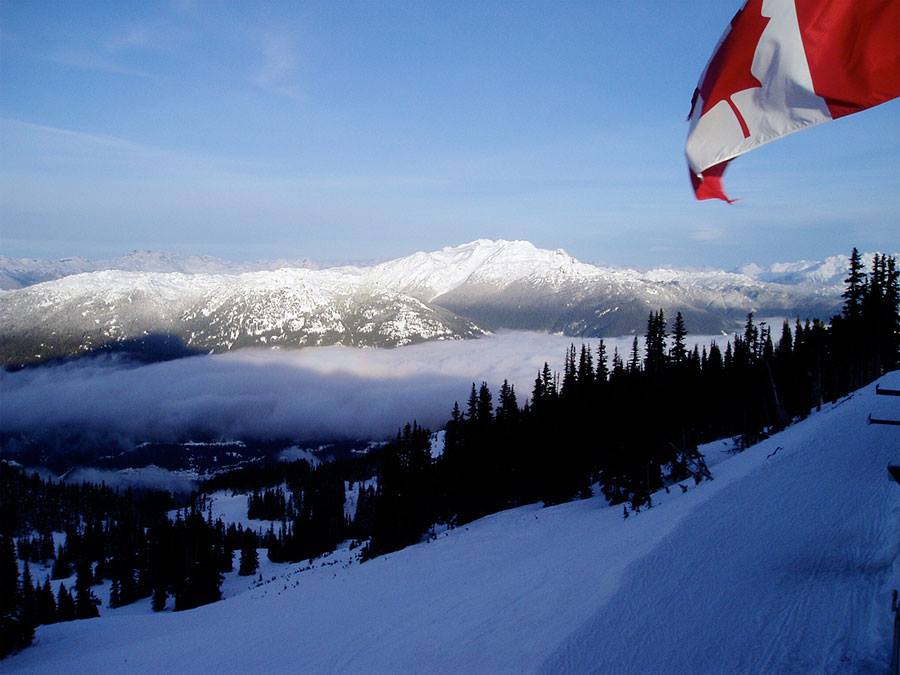
British Columbia Canada holidays left me speechless on multiple occasions during my three-week trip through the province. I watched orcas breach off Vancouver Island at sunset, hiked through ancient rainforest in Cathedral Grove where trees have stood for eight centuries, and sampled wines in the Okanagan Valley with snow-capped peaks as backdrop. This is Canada at its most dramatic – where the Pacific meets towering mountains and the wilderness feels genuinely endless.
British Columbia packs a lot in: whale watching off Vancouver Island, 400 glaciers in Glacier National Park (where black bears, grizzlies, and mountain goats are regularly spotted), Salt Spring Island’s Saturday market with local farms and crafts, and the Okanagan wine country. The province is large enough that you could easily spend three weeks here without doubling back.
Things to do in British Columbia
Go whale watching on Vancouver Island
Whale watching is one of Vancouver Island’s main draws. Resident orca pods are regularly spotted May to October; grey whales migrate through March to May; humpbacks are increasingly common year-round. The annual Pacific Rim Whale Festival runs in late March, coinciding with the peak of the grey whale migration — around 20,000 grey whales pass through on their journey north from Mexico’s Baja Peninsula. Tour operators run trips from Tofino, Ucluelet, Alert Bay, Telegraph Cove, and Victoria.
Salt Spring Island Saturday Market
The Salt Spring Island Saturday Market runs March to October, 8:30am to 4pm. Around 200 vendors sell local produce, cheese, crafts, and art. Live music plays throughout the day.
Grizzly Bear Refuge, Golden
The Grizzly Bear Refuge in Golden lets you see a resident grizzly named Boo up close. Boo has lived at the refuge since 2003. A chairlift takes you up to the refuge, followed by a walk to the interpretive centre. Tours run every hour.
Visit the Butchart Gardens
The Butchart Gardens near Victoria have been drawing visitors since they were created over a century ago in an exhausted limestone quarry. The Sunken Garden, where the quarry was, is the centrepiece — planted with shrubs and flowering trees on what were once bare rock walls. The grounds also include a Rose Garden, Japanese Garden, Italian Garden, and a Mediterranean Garden with plants from around the world. The Dahlia Garden is worth visiting in late summer when the blooms are at their peak. Summer evenings bring outdoor concerts on the Concert Lawn.
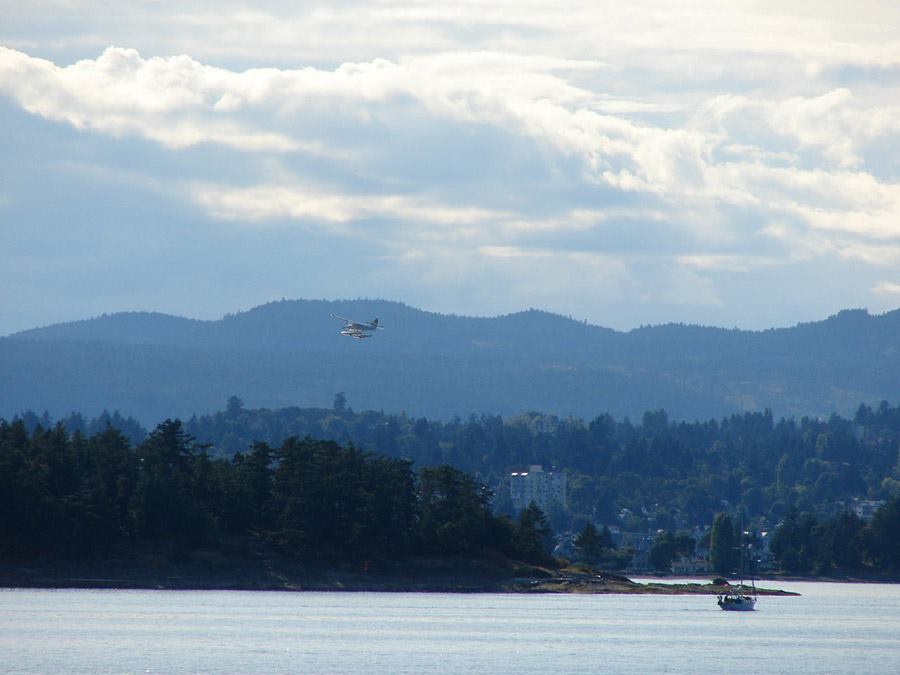
A sea plane comes in for a landing in Nanaimo, BC
Okanagan Valley wine country
The Okanagan is British Columbia’s main wine region, named the world’s second-best wine region by USA Today in 2014. The valley runs north-south between desert terrain and mountain peaks, producing Pinot Noir, Riesling, and Chardonnay among others. Wine tours are easy to arrange independently or through operators. The ski resorts of Big White and Silver Star are also in the region — useful if you want to combine a wine trip with a ski weekend.
Hike Yoho National Park
Yoho National Park, on the British Columbia side of the Rockies, has glacier-fed lakes, waterfalls, and snow-capped peaks. The hiking ranges from easy lakeside walks to full-day mountain routes. Four campgrounds make it workable for families or groups. One of the more unusual walks is the Burgess Shale trail to a 500-million-year-old fossil bed — Parks Canada guides lead groups up in summer. The park’s Red Chairs programme places Adirondack chairs at viewpoints throughout the backcountry, each with a distinct view of the mountains and waterways.
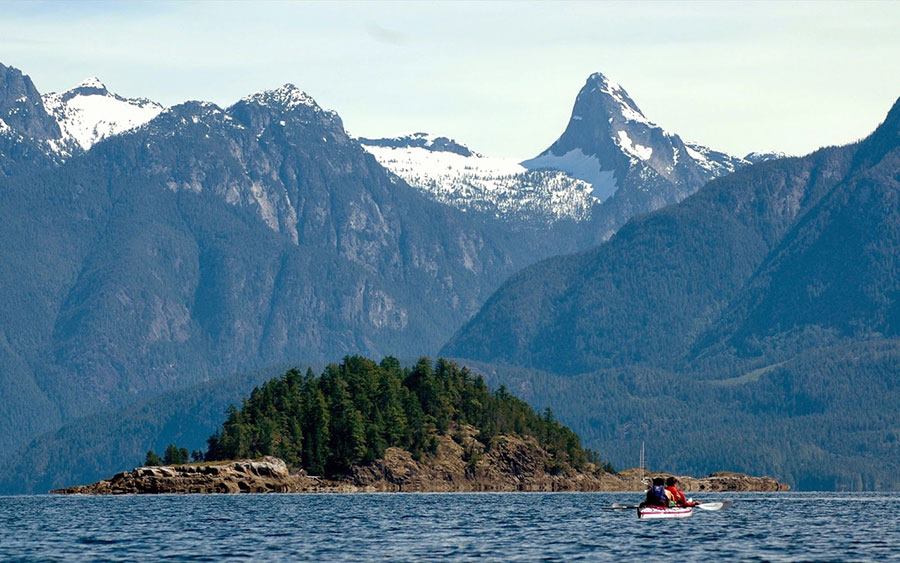
The scenic islands surrounded by mountains in British Columbia are beautiful to behold and to visit by kayak. Image : kayakbritishcolumbia.com
Explore Stanley Park
Stanley Park is a 400-hectare urban forest on a peninsula in Vancouver Harbour. Western red cedars and Douglas firs line the trails, and the 9km seawall around the perimeter is good for walking, running, or cycling. Inside the park there are beaches, gardens, the Vancouver Aquarium, a water park, and a miniature railway that runs seasonally. The totem poles near Brockton Point are a stop most visitors make, and birdwatching is decent year-round — herons, eagles, and various waterfowl are common.
Frequently Asked Questions
Do I need a visa to visit British Columbia, Canada?
Visa requirements depend on your nationality. US citizens need only a valid passport. UK, EU, and Australian citizens can visit visa-free for up to 6 months but need an Electronic Travel Authorization (eTA) when flying to Canada. Other nationalities may require a visitor visa. Check the Government of Canada website for your specific requirements.
When is the best time to visit British Columbia?
May through September offers the best weather with warm, dry conditions ideal for outdoor activities. July and August are peak season with the warmest temperatures but also the largest crowds. September is excellent for fewer tourists and fall colours. Winter (December-March) is perfect for skiing in Whistler. Spring (April-May) brings blooming flowers but some rain.
What currency is used in British Columbia?
The Canadian Dollar (CAD) is the official currency. Credit cards are widely accepted. ATMs are readily available in cities and towns. US dollars are sometimes accepted in tourist areas but at unfavorable rates – it’s best to use Canadian currency. Tipping is customary at 15-20% for restaurant service.
What type of power plugs are used in British Columbia?
British Columbia uses Type A and Type B plugs (the same as the United States) with two or three flat pins. The voltage is 120V at 60Hz. Visitors from the UK, EU, Australia, and most other countries will need a plug adapter. Devices designed for 220-240V may also require a voltage converter.
How expensive is British Columbia?
British Columbia is moderately expensive compared to other Canadian provinces. Vancouver is the priciest city. Expect to pay CAD $15-25 for budget meals, $40-70 for mid-range restaurant dinners, $100-150 for budget hotels, and $200-350 for mid-range hotels per night. Wine tours in Okanagan range from $50-150. National park entry is around $10 per adult per day.
Is British Columbia safe for tourists?
British Columbia is very safe for tourists. Vancouver, Victoria, and other cities have low crime rates compared to similar-sized North American cities. Standard precautions apply: be aware of surroundings, secure valuables, and avoid poorly-lit areas at night. Wildlife safety is important when hiking – follow park guidelines regarding bears and keep food secured. Check weather and trail conditions before backcountry adventures.