Cyprus Plug Type: Sockets, Voltage and Adapters
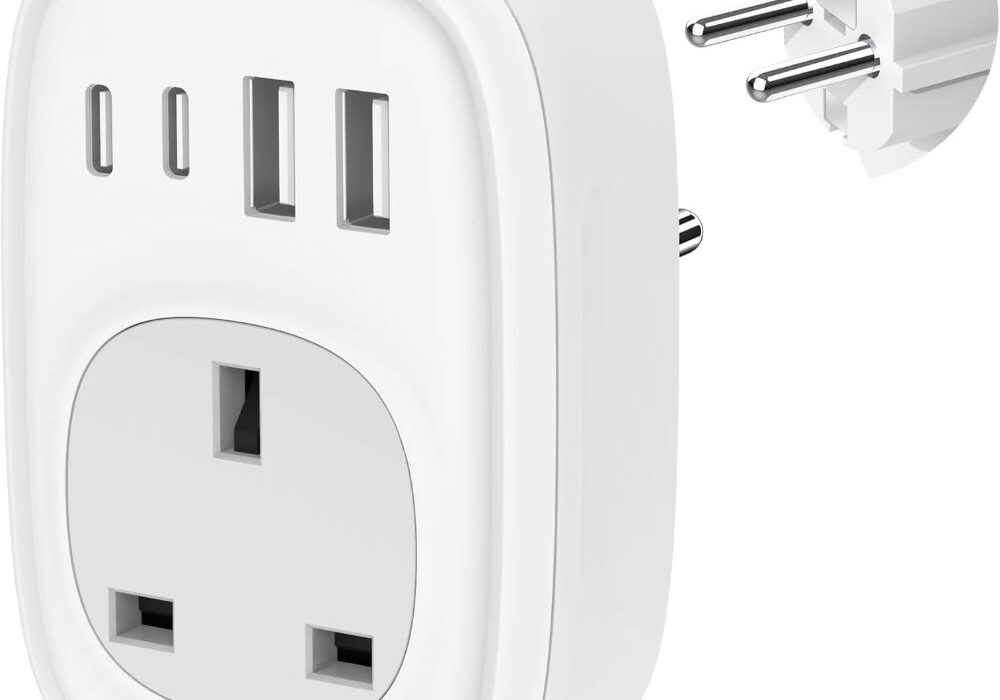
The Cyprus plug type is Type G — the same three rectangular pins you have at home if you are British. Your charger goes straight into the wall. No adapter, no converter, nothing to buy.
That is the whole answer, and it is worth stating plainly because a surprising number of people arrive having bought an adapter they never take out of the bag. I have done it myself for a trip to Cyprus, packed a two-pin Europlug adapter on the assumption that “Mediterranean island, EU member” meant continental sockets, and then found every socket in the apartment was the familiar British three-pin.
Quick Answer
- Plug type: Type G (identical to the UK)
- Voltage: 230V
- Frequency: 50Hz
- UK and Irish travellers: No adapter needed
- US, Canadian and European travellers: You need a Type G adapter
- Northern Cyprus: Also Type G — the same on both sides of the line
What Plug Type Does Cyprus Use?
Cyprus uses Type G plugs and sockets as its official standard. Three rectangular pins in a triangle, with a fuse built into the plug itself. It is the same design used across the UK, Ireland, Malta and the Gulf states.
The supply is 230V at 50Hz, which is the harmonised European figure. You will still see “240V” quoted on older guides and the occasional hotel information card. That is legacy language rather than a different supply; the numbers describe the same electricity.
WorldStandards lists Type G as the only official standard for Cyprus, and Electrical Safety First gives the same 230V/50Hz figures.
Are Cyprus Plugs the Same as the UK?
Yes, and genuinely the same rather than merely compatible. A UK kettle, hairdryer, laptop charger or games console plugs directly into a Cypriot socket and runs at the voltage it expects.
This is the part people struggle to believe, and I understand why. Cyprus is in the EU, it sits closer to Beirut than to Athens, and every neighbouring country you can name uses two round pins. Greece is Type C and F. Turkey is Type C and F. Egypt is Type C. Cyprus is the outlier in its own neighbourhood.
So if you are flying out from a UK airport, the honest advice is to leave the adapter at home. The only thing worth packing is a small extension lead or a multi-way UK plug, for the usual holiday-apartment problem of four devices and one accessible socket behind the bed.
Why Does Cyprus Use British Plugs?
Because Cyprus was a British colony. The island was administered by Britain from 1878 and formally annexed in 1914, becoming a Crown colony in 1925 and gaining independence in 1960. The electrical infrastructure was built out under British administration, to British standards, and there has never been a reason to rip it out and start again.
That is why the same three-pin socket turns up in former British territories scattered across the map: Malta, Hong Kong, Singapore, Kenya, Dubai and the UAE. It is a colonial fingerprint rather than a regional one, which is exactly why it does not follow the geography.
EU membership in 2004 changed nothing here. There is no European standard that obliges a member state to convert its domestic sockets, and doing so would mean rewiring every building on the island.
Northern Cyprus: Are the Plugs Different?
No. Northern Cyprus also uses Type G at 230V/50Hz. The British wiring standard predates the 1974 division, so both sides inherited it.
This matters more than it sounds, because the practical answer for a traveller crossing at Ledra Street or driving north to Kyrenia is reassuringly boring: nothing changes. Your charger works in Nicosia and it works in Famagusta. Currency changes, mobile roaming changes, your plugs do not.
The Two-Pin Sockets in Hotel Bathrooms
Here is the one thing that confuses people, and it accounts for a lot of the “is Cyprus two-pin or three-pin?” searching.
Walk into a Cyprus hotel bathroom and you will often find a small two-pin socket near the mirror, usually labelled “shavers only”. That is a shaver socket, and it is a standard part of British-standard bathroom wiring rather than a European socket that has crept in. It is isolated by a transformer and rated for very low power, enough for an electric razor or a toothbrush and nothing else.
It is not a Type C Europlug socket, and you should not treat it as one. Plugging a hairdryer or travel kettle into a shaver socket will, at best, trip it. If your hotel room only offers a shaver point in the bathroom, that is the room telling you to dry your hair somewhere else, not an invitation to find an adapter that fits.
Do You Need a Voltage Converter?
Not if you are coming from the UK, Ireland or anywhere else on 230V. The supply is identical, so there is nothing to convert.
If you are travelling from the US or Canada, check the charger brick before you pack. Anything printed “Input: 100-240V” is dual-voltage and needs only a plug adapter. That covers essentially every modern phone, laptop, tablet and camera. Anything printed “120V” only, which typically means hairdryers, straighteners and older travel kettles, will be destroyed by 230V. A plug adapter alone will not save it. Leave those at home and use what the hotel provides.
What US and European Visitors Need
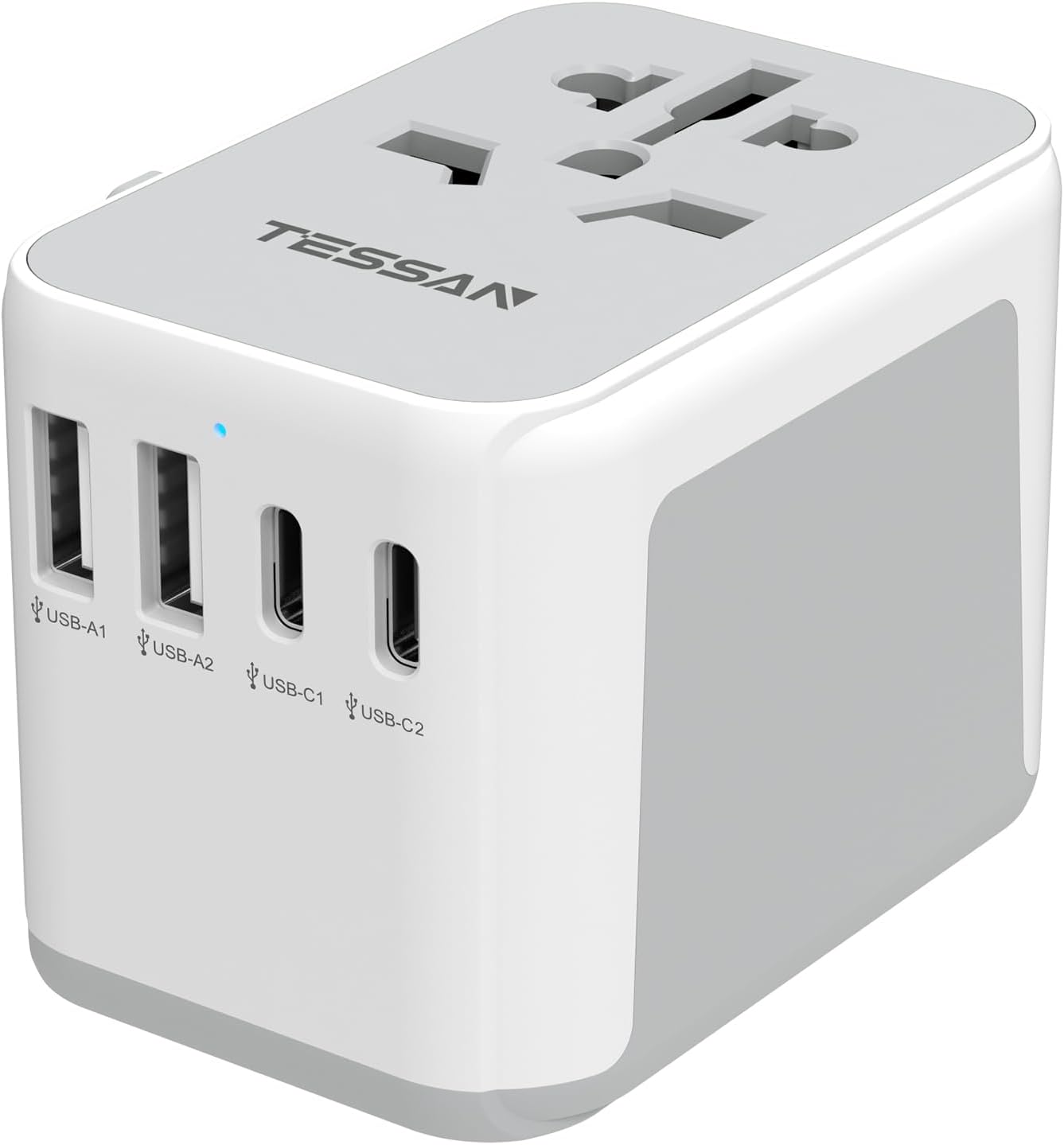
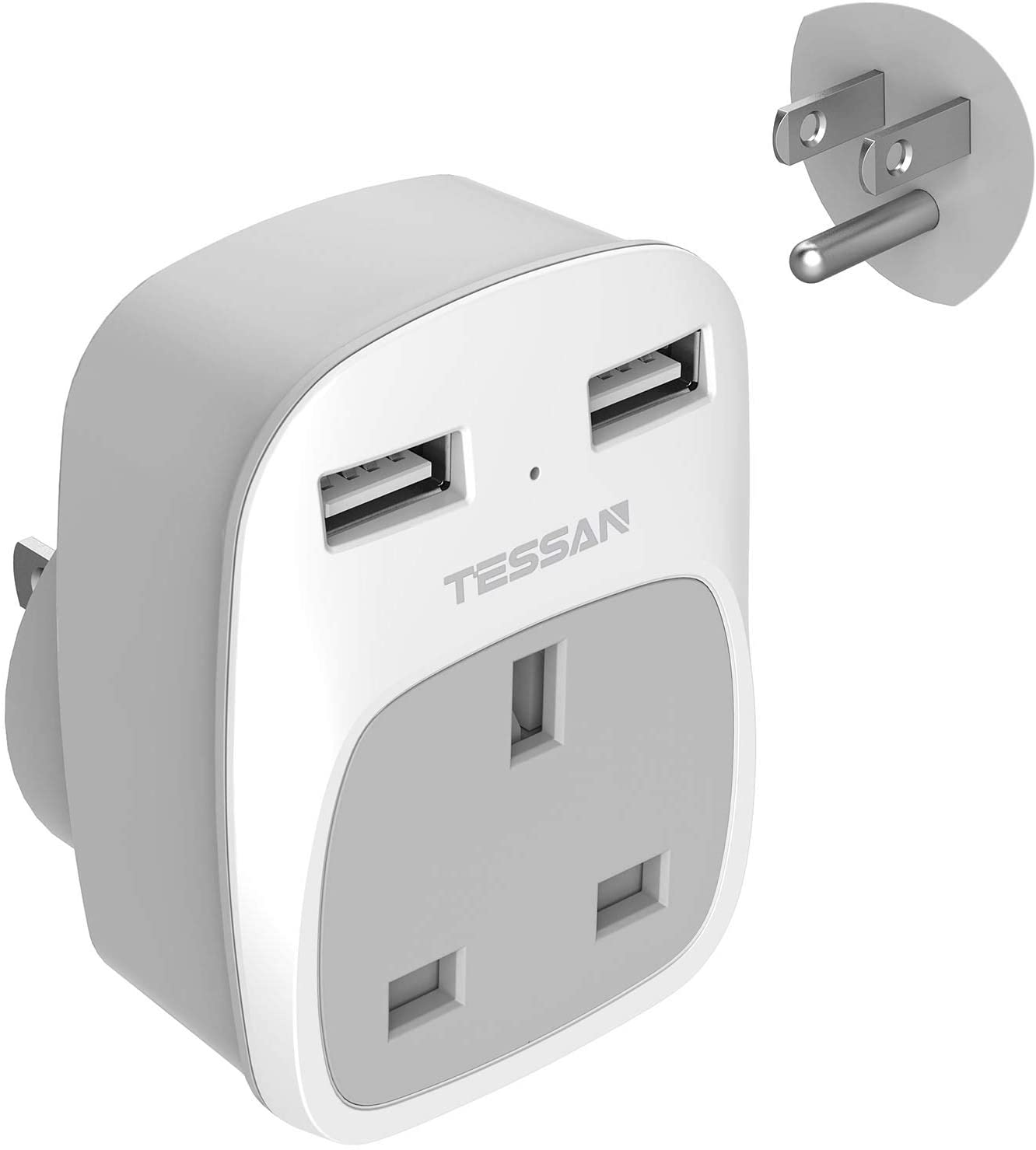
You need a Type G adapter, the one that takes your flat-pin or round-pin plug and presents three rectangular pins to the wall.
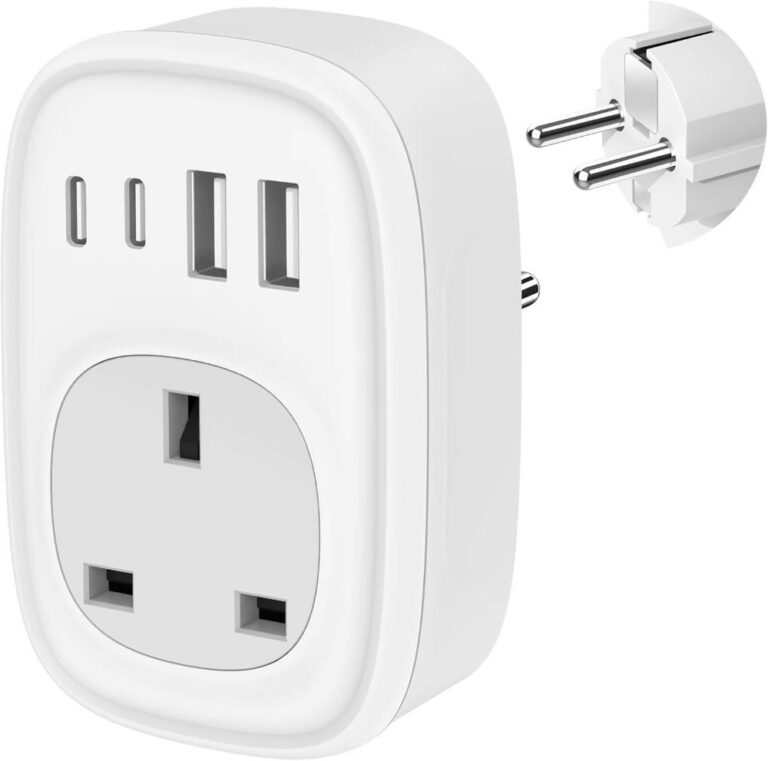
Expect to pay roughly £3-5 for a basic single adapter and £10-15 for one with USB-A and USB-C ports built in, as of September 2026. Buy before you fly. Airport prices run roughly triple, and in Cyprus itself you will be hunting for a “to Type G” adapter that local shops have little reason to stock, since everyone already has the right plugs.
A few specifics worth knowing:
- From continental Europe: you need Type C/E/F to Type G. This is the reverse of the EU plug adapter most people own, and a standard UK-to-Europe adapter will not do the job backwards.
- From the US: you need Type A/B to Type G, plus the voltage check above.
- Multiple devices: one adapter plus a power strip from home beats buying four adapters.
Practical Tips
Apartment and villa sockets. Older properties, particularly in the Troodos villages and the less-developed stretches of coast, often have fewer sockets than you expect and place them awkwardly. A four-way extension lead is the single most useful thing in my bag on this kind of trip.
Sun loungers and pool bars. Do not count on finding a socket. Bring a power bank if you are the sort of person who films everything.
Car hire. Most hire cars in Cyprus have a 12V socket rather than USB, or a USB-A port that charges at a trickle. A 12V-to-USB-C adapter is worth throwing in if you are relying on your phone for navigation, which on Cypriot mountain roads you will be.
Hotel USB ports. Increasingly common in the Ayia Napa and Limassol resort hotels, but often slow and mounted behind the bed frame. Useful as a backup, not a plan.
Cyprus Voltage and Frequency
| Specification | Cyprus | UK |
|---|---|---|
| Plug type | G | G |
| Voltage | 230V | 230V |
| Frequency | 50Hz | 50Hz |
| Adapter needed from UK | No | — |
Identical on every line that matters. For a country-by-country view, see our worldwide plug adapter types guide, or the deeper Type G plug guide if you want the detail on why the British plug is designed the way it is.
Frequently Asked Questions
What plug type does Cyprus use?
Cyprus uses Type G plugs and sockets: three rectangular pins, the same standard as the UK. The supply is 230V at 50Hz.
Do I need an adapter for Cyprus from the UK?
No. UK plugs fit Cypriot sockets directly and the voltage is identical, so British visitors need no adapter and no converter.
Are Cyprus plug sockets the same as the UK?
Yes. Cyprus and the UK both use the Type G standard at 230V/50Hz, so any UK appliance works normally.
Why does Cyprus use UK plugs?
Cyprus was under British administration from 1878 and was a Crown colony from 1925 until independence in 1960. Its electrical network was built to British standards and has stayed that way.
Does Northern Cyprus use different plugs?
No. Northern Cyprus also uses Type G at 230V/50Hz. The wiring standard predates the 1974 division, so it is the same across the island.
Why is there a two-pin socket in my Cyprus hotel bathroom?
That is a shaver socket, a standard feature of British-standard bathroom wiring. It is designed for electric razors and toothbrushes only and will not run a hairdryer or a travel kettle.
What adapter do US visitors need for Cyprus?
A Type A/B to Type G adapter. Also check that each device is dual-voltage (marked 100-240V), because Cyprus runs at 230V against the US 120V.
Is Cyprus 2 pin or 3 pin?
Three pin. The two-pin sockets people notice are low-power shaver points in bathrooms, not general-purpose sockets.
Related Guides
- Type G Plug Guide — the standard Cyprus shares with the UK
- Cyprus Holidays — beaches, resorts and getting around
- Greece Plug Type — Type C/F, so different if you island-hop
- Turkey Plugs and Sockets — Type C/F at 230V
- Dubai Plug Adapter — another Type G outlier
- Travel Adapter Guide — which adapter for which country
- Worldwide Plug Adapter Types — all 15 types compared