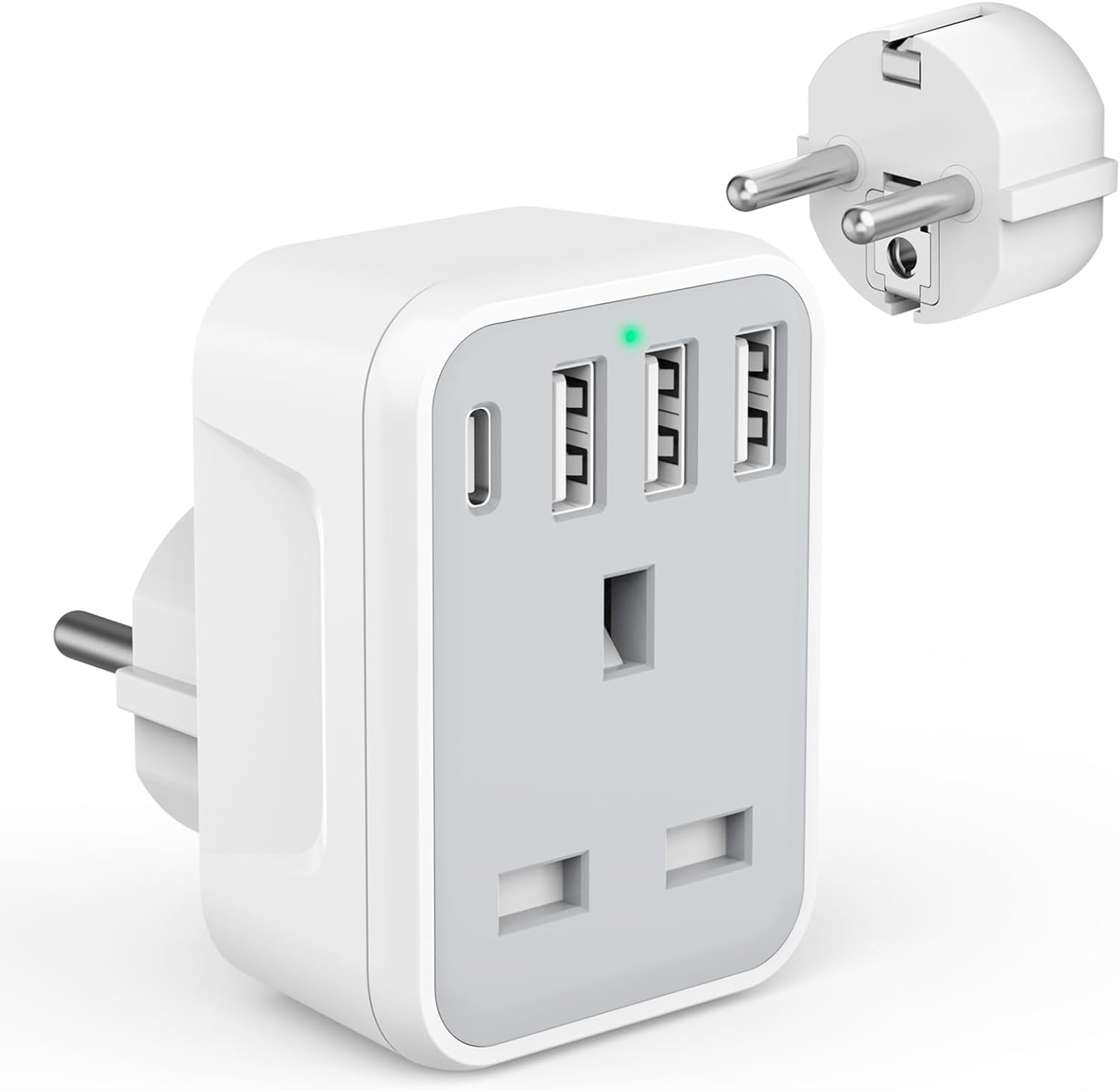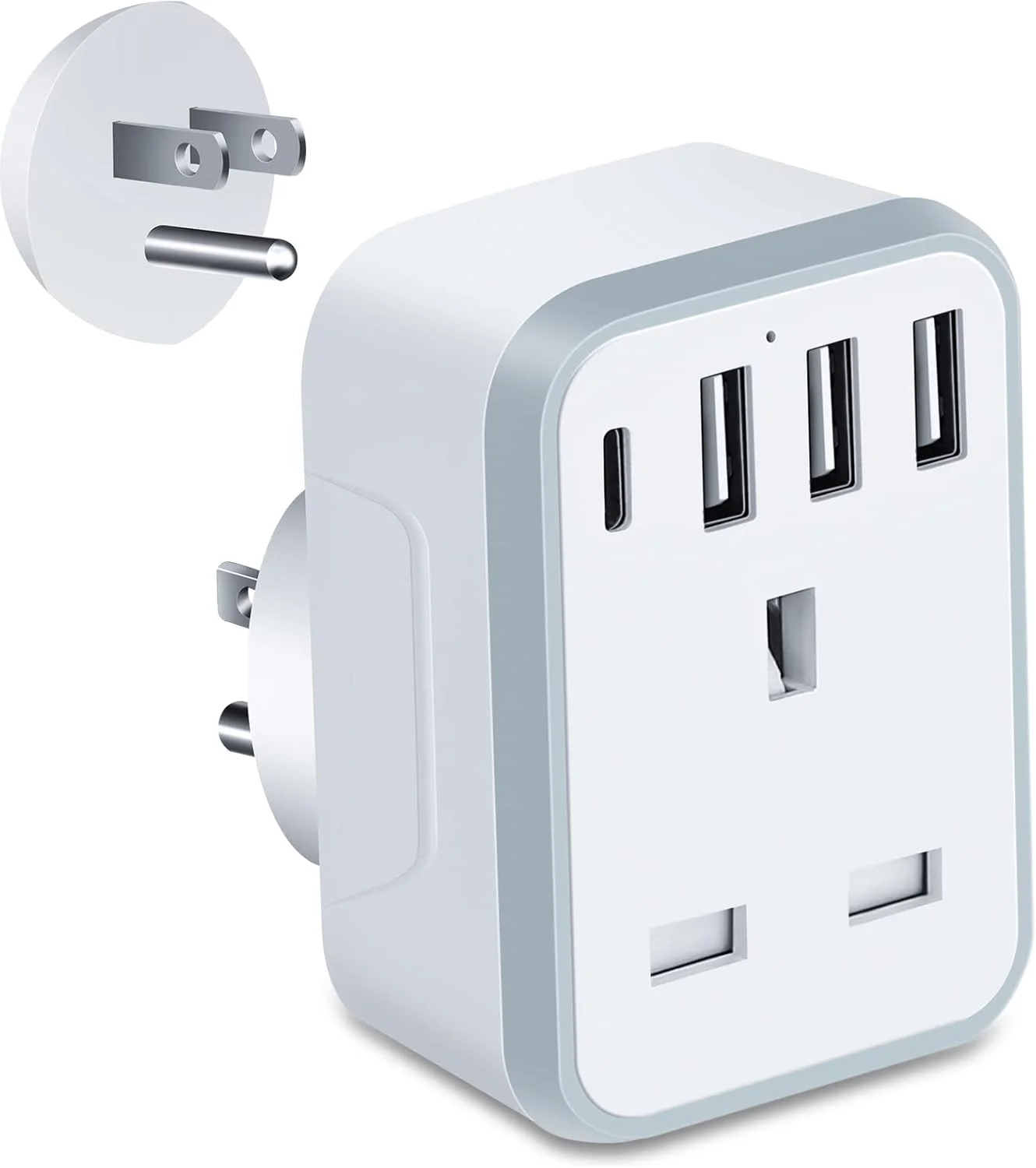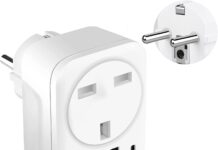
I learned about European plug adapters the hard way – arriving in Barcelona with a dead phone, a UK charger, and no idea that Spanish outlets don’t accept British plugs. An overpriced adapter from the hotel gift shop solved the immediate problem, but I’ve since learned that a £5 adapter bought before you leave does exactly the same job.
The good news: most of continental Europe uses the same plug types, so one adapter covers France, Germany, Spain, Greece, and most other EU countries. The bad news: there are a few exceptions that catch people out.
European Plug Types
Most of continental Europe uses:
Type C (Europlug):
- Two round pins
- Used across Europe for low-power devices
- No grounding pin
Type E (French):
- Two round pins plus a grounding pin in the outlet
- Used in France, Belgium, Poland, Czech Republic
Type F (Schuko):
The good news is that Type C plugs fit into both Type E and F outlets. Many European adapters are designed to work with all three.
Exceptions
Some European countries use different plug types:
UK: Type G (three rectangular pins) – not compatible with continental Europe
Italy: Type L (three round pins in a line)
Switzerland: Type J (three round pins, different arrangement)
Denmark: Type K (three round pins)
For Italy and Switzerland, a standard EU adapter may not fit all outlets. Consider a universal adapter if visiting these countries.
Voltage
European voltage is 220-240V at 50Hz, compared to 110-120V in the US.
Most modern electronics are fine. Phones, laptops, tablets, cameras, and electric shavers are typically dual-voltage (100-240V). Check the label on your charger – if it shows this range, you only need a plug adapter.
What might need a converter:
- US hair dryers and curling irons (if not dual-voltage)
- Older electronics
- Some US kitchen appliances
A voltage converter is bulky and often more trouble than it’s worth. For hair tools, either buy dual-voltage versions or use what the hotel provides.
What UK Travellers Need
UK plugs (Type G, three rectangular pins) don’t fit European outlets. You need a UK-to-EU adapter.
Basic options:
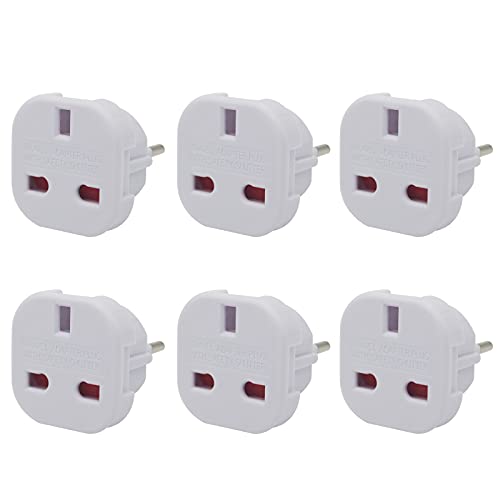
- Simple two-pin adapter: £3-5
- Adapter with USB ports: £10-15
- Pack of 6 basic adapters: £8-10 (useful if travelling in a group)
Considerations:
- Many EU sockets are recessed, so avoid bulky adapters
- UK plugs are fused for safety; cheap adapters may lack this protection
- Adapters with USB ports are convenient for charging phones
What US Travellers Need
US plugs (Type A/B, flat pins) don’t fit European outlets. You need a US-to-EU adapter.
Important: US voltage is 110-120V, so check your devices. Modern electronics are usually fine, but single-voltage devices need a converter.
Universal travel adapters that cover US, UK, EU, and Australia are a good investment for frequent travellers.
Choosing an Adapter
Adapter Type
| Price | Best For | Basic UK to EU | £3-5 | Single destination, one device |
|---|---|---|---|---|
| Multi-pack | £8-10 | Groups, backup adapters | With USB ports | £10-15 |
| Charging phones and tablets | Universal adapter | £15-25 | Multiple countries | Features to look for: |
- USB-A and USB-C ports
- Compact design for recessed sockets
- Surge protection (optional)
- Grounding support if your devices need it
Practical Tips
- Bring a power strip: One adapter + a UK/US power strip = multiple devices charging from one outlet. This trick has saved me countless times in hotel rooms with one accessible socket.
- Pack spares: Adapters are cheap and easy to leave behind. I keep a spare in my toiletry bag.
- Airport prices: Three times higher than online. Buy before you leave.
- Hotel USB ports: Many modern hotels have USB ports by the bed, but they’re often slow or awkwardly placed. Don’t rely on them.
The bottom line: buy a basic UK-to-EU adapter before your trip. It costs less than a coffee and saves the hassle of hunting for one when you arrive. If you travel frequently, a universal adapter with USB ports pays for itself quickly.
Frequently Asked Questions
What plug adapter do I need for Europe from the UK?
You need a UK to EU adapter that converts Type G (three rectangular pins) to Type C, E, or F (two round pins). Most of continental Europe uses these round-pin plug types, so one adapter works across France, Germany, Spain, Greece, and most other EU countries.
Do UK devices need a voltage converter in Europe?
No, UK devices don’t need a voltage converter in Europe. Both use 220-240V at 50Hz. You only need a plug adapter to change the plug shape from UK Type G to European Type C/E/F.
Do US travelers need a voltage converter for Europe?
It depends on your device. Most modern electronics (phones, laptops, cameras) are dual-voltage (100-240V) and only need a plug adapter. Single-voltage US devices (like many hair dryers) rated for 110-120V need a voltage converter to work safely with Europe’s 220-240V system.
Which European countries use different plugs?
Most of Europe uses Type C, E, or F plugs. Exceptions include: UK and Ireland (Type G), Italy (Type L), Switzerland (Type J), and Denmark (Type K). For Italy and Switzerland, consider a universal adapter.
Can I use my phone charger in Europe?
Yes, with a plug adapter. Modern phone chargers are dual-voltage (100-240V) and work worldwide. Just get the appropriate plug adapter for the socket type in your destination country.
Where can I buy a Europe travel adapter?
In the UK: Amazon, Argos, Currys, Boots, and supermarkets. In the US: Target, Walmart, Best Buy, and Amazon. Buy before travel – airport shops charge 3-4x more for the same adapters.
Country-Specific Guides
- France Plug Adapter
- Germany Plug Adapter
- Spain Plug Adapter
- Portugal Plug Adapter
- Italy Plug Adapter
- Greece Plug Adapter
- Croatia Plug Adapter
- Turkey Plugs & Sockets
- EU Plug Adapter
- Worldwide Plug Types