Germany Holidays: Cities & Travel Guide
Germany holidays exceeded my expectations at every turn. I spent three weeks travelling from Berlin through the Rhine Valley to Munich, and came away with an appreciation for a country far more diverse than its stereotypes suggest. Yes, there is excellent beer and efficiency everywhere – but there is also cutting-edge contemporary art, medieval half-timbered villages, dramatic Alpine scenery, and a complex history that the Germans confront with admirable honesty.
The regional differences are striking. Berlin feels like a different country from Bavaria; the industrial Ruhr has nothing in common with the fairy-tale castles of the Romantic Road. The trains run on time, the infrastructure works flawlessly, and the food is far better than Germany’s culinary reputation would have you believe.
Berlin
The capital is unlike any other European city, still marked by its divided past, endlessly creative, and constantly reinventing itself. The grey brutalist blocks of the East sit alongside restored imperial palaces and glass-and-steel modernity. The nightlife is legendary; the museums are world-class; the history is everywhere.
Historical Sites
Brandenburg Gate – The symbol of Berlin and once the dividing line between East and West. The neoclassical gate is impressive but crowded; come early morning or late evening for photographs without tourists.
Berlin Wall Memorial – The Bernauer Strasse memorial preserves a section of the wall with the death strip, watchtower, and documentation centre. Free and essential for understanding the city’s divided history.
Checkpoint Charlie – The famous crossing point is now touristy and commercialised. The museum (EUR 17.50 / £15) tells the story of escape attempts with compelling detail; the outdoor display is a photo opportunity rather than a historical site.
East Side Gallery – A 1.3km section of the wall preserved as an outdoor gallery, covered with murals painted after reunification. The Fraternal Kiss is the famous image. Free to visit.
Museum Island
Five world-class museums on an island in the Spree, collectively a UNESCO World Heritage Site:
Pergamon Museum – Ancient Greek, Babylonian, and Islamic art including the Pergamon Altar and the Ishtar Gate. Partially closed for renovation but still worth visiting. EUR 14 (£12).
Neues Museum – Egyptian collection including the bust of Nefertiti. EUR 14 (£12).
Altes Museum – Classical antiquities. EUR 12 (£10).
A day pass covering all museums costs EUR 22 (£19).
Other Attractions
Reichstag – The German parliament building with a glass dome you can climb for city views. Free but requires advance registration online.
Memorial to the Murdered Jews of Europe – The Holocaust memorial near Brandenburg Gate: a field of concrete blocks of varying heights. Powerful and sobering. Free.
Tiergarten – The enormous central park, good for escaping the city. The Victory Column and the Berlin Zoo are within.
Berlin Nightlife
Berlin’s club scene is legendary. Berghain (if you can get past the door) is Europe’s most famous techno club; Tresor, Watergate, and KitKat offer different flavours. The scene starts late – arrive before 2am and you are too early – and runs until Monday morning.
Munich
Bavaria’s capital is Germany’s wealthiest and most traditionally German city – beer halls, lederhosen on Sundays, the Alps visible on clear days. The architecture is grand, the beer is excellent, and the cultural scene is strong.
Old Town
Marienplatz – The central square with the New Town Hall and its famous Glockenspiel, which chimes at 11am and noon (also 5pm in summer). Touristy but unavoidable.
Frauenkirche – The twin onion-domed towers are Munich’s symbol. Climb the south tower for views. The church interior is surprisingly plain.
Viktualienmarkt – The daily food market south of Marienplatz has stalls selling cheese, meat, bread, and flowers, plus a beer garden. Good for lunch.
Museums
Deutsches Museum – The world’s largest science and technology museum, spread across several islands. Allow a full day. EUR 15 (£13).
Alte Pinakothek – Old masters from the 14th to 18th centuries: Dürer, Rubens, Rembrandt. EUR 7 (£6) on Sundays.
Neue Pinakothek – 19th-century art including Impressionists. Currently closed for renovation.
Pinakothek der Moderne – 20th and 21st-century art and design. EUR 10 (£8.60).
Beer Culture
Munich is beer country. The beer halls are an experience:
Hofbräuhaus – The most famous, dating to 1589, and extremely touristy. The beer is good; the atmosphere is theatrical. Worth visiting once.
Augustiner Keller – More local, with a beer garden under chestnut trees. The Augustiner beer is excellent.
Englischer Garten – The vast park has several beer gardens including the enormous Chinese Tower (Chinesischer Turm) and the lakeside Seehaus.
Beer is served by the Mass (one litre). Expect to pay EUR 11-14 (£9.50-12) in tourist areas, less elsewhere.
Oktoberfest
The world’s largest beer festival runs for 16 days in late September/early October. Six million visitors consume millions of litres of beer in enormous tents. Book accommodation months in advance; expect to pay three to four times normal rates. The atmosphere is festive and excessive.
Rhine Valley
The stretch of river between Koblenz and Mainz is UNESCO-listed, lined with castles, vineyards, and medieval towns. A scenic day trip by boat or train, or a few days exploring at leisure.
Getting There and Around
Cruise boats run by KD Rhine operate between Mainz and Koblenz (5-6 hours, EUR 54-74 / £46-64 one-way). Trains run parallel to the river; buy a regional day ticket for flexibility.
Highlights
Lorelei Rock – The cliff where a mythical siren lured sailors to their doom. The view is more impressive from the water.
Burg Eltz – A fairy-tale castle hidden in a forest valley, still owned by the same family for 850 years. EUR 12 (£10). Harder to reach than the riverside castles but worth the effort.
Bacharach – A well-preserved medieval town with half-timbered houses and a youth hostel in a 12th-century castle.
St Goar and St Goarshausen – Twin towns facing each other across the river, with the dramatic ruins of Rheinfels Castle above.
Romantic Road
A 350km route from Würzburg to Füssen through Bavaria, linking medieval walled towns and Germany’s most famous castle.
Rothenburg ob der Tauber
The most perfectly preserved medieval town in Germany – half-timbered houses, cobbled streets, intact city walls you can walk. Extremely touristy but genuinely beautiful. The Christmas shop (Käthe Wohlfahrt) is famous; the Night Watchman tour is atmospheric.
Neuschwanstein Castle
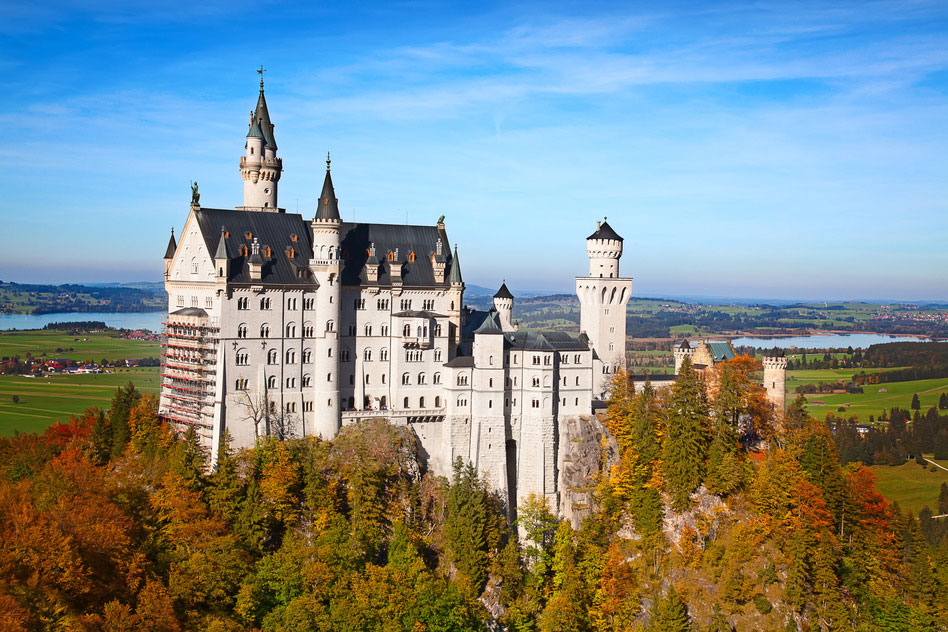
Ludwig II’s fairy-tale castle, perched on a cliff in the Bavarian Alps, inspired Disney’s Sleeping Beauty Castle. The exterior is spectacular; the interior is unfinished but elaborate. Book tickets in advance online (EUR 15 / £13); the queues without reservation are brutal.
The nearby Hohenschwangau Castle, where Ludwig grew up, is less famous but more historically interesting.
Füssen
The end of the Romantic Road and base for Neuschwanstein. A pleasant old town worth an overnight stay.
Black Forest
The forested mountain region in the southwest has hiking trails, traditional farmhouses, cuckoo clocks, and Black Forest gateau.
Freiburg
The gateway to the Black Forest is a university town with a medieval old town, cathedral, and good restaurants. The farmers’ market around the Münsterplatz is excellent.
Triberg
Home to Germany’s highest waterfall (163m, EUR 8 / £6.90 entry) and the largest cuckoo clock in the world. Touristy but delivers what it promises.
Hiking
The Westweg is a 285km trail from Pforzheim to Basel. Shorter walks are abundant; the region is crisscrossed with marked trails.
Hamburg
Germany’s second city is a port town with a distinctive character – maritime heritage, red-light district, excellent seafood, and one of Europe’s best live music scenes.
Speicherstadt
The warehouse district built on timber piles is UNESCO-listed – a remarkable example of late 19th-century port architecture. Now home to museums including the Miniatur Wunderland (the world’s largest model railway).
Reeperbahn
The famous red-light district is also the centre of Hamburg’s nightlife. The Beatles played the Star Club here before they were famous. Still lively and slightly seedy.
Elbphilharmonie
The dramatic concert hall opened in 2017, built atop an old warehouse. The public viewing platform (free but requires timed ticket) offers panoramic harbour views; concert tickets require advance booking.
Cologne
The Rhineland metropolis is dominated by its cathedral and known for its carnival celebrations, beer culture, and friendly atmosphere.
Cologne Cathedral
The twin-spired Gothic cathedral took 600 years to complete. The interior is vast and impressive; climb the south tower (533 steps) for views. The Shrine of the Three Kings holds relics supposedly of the biblical Magi. Free entry; tower EUR 6 (£5.15).
Museums
Museum Ludwig – Pop art and modern classics including Warhol, Lichtenstein, and an extensive Picasso collection. EUR 13 (£11).
Romano-Germanic Museum – Roman artifacts discovered in Cologne, including the Dionysus mosaic. EUR 9 (£7.70).
Kölsch
Cologne’s local beer is light, refreshing, and served in small 200ml glasses that waiters automatically replace until you put your coaster on top. The beer halls (Brauhaus) serve traditional food alongside; Früh and Peters are among the best known.
German Food and Drink
Regional Dishes
Schweinshaxe – Roasted pork knuckle, crispy outside and tender inside. A Bavarian speciality.
Sauerbraten – Pot roast marinated in vinegar, served with red cabbage and dumplings.
Currywurst – Sliced sausage with curry ketchup. A Berlin street food institution.
Weisswurst – White veal sausage, traditionally eaten before noon with sweet mustard and pretzels. A Munich breakfast.
Spätzle – Soft egg noodles, often with cheese (Käsespätzle) in Swabia.
Maultaschen – Swabian pasta pockets stuffed with meat and spinach.
Beer
German beer is excellent and varied:
Pilsner – The most common style, light and crisp. Northern Germany.
Weissbier (Hefeweizen) – Wheat beer, cloudy and fruity. Bavaria.
Kölsch – Light, served in small glasses. Cologne only.
Schwarzbier – Dark lager, malty but not heavy.
Bock – Strong lager, various substyles.
The Reinheitsgebot (purity law) of 1516 still influences German brewing.
Wine
The Rhine and Mosel valleys produce excellent white wines – Riesling above all. The Mosel wines are lighter; Rheingau wines are richer. Wine taverns (Weinstube) offer tastings and local food.
Practical Information
Getting There
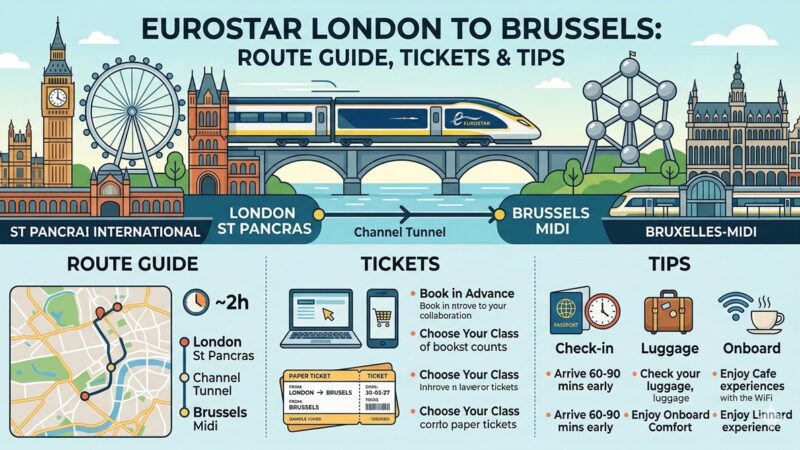
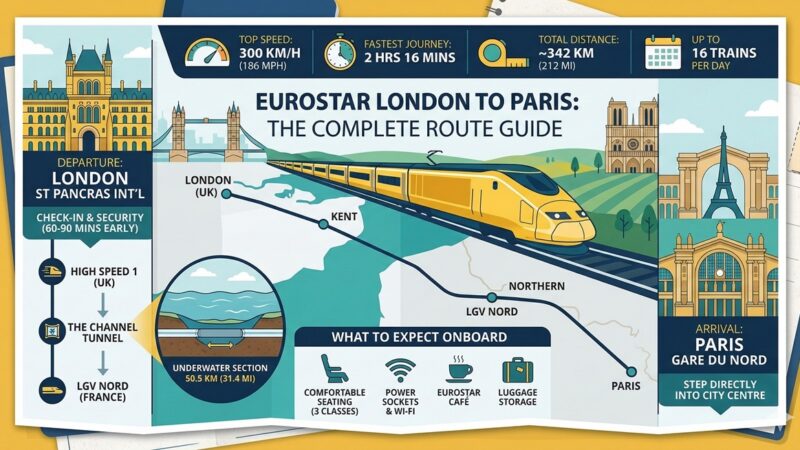
Direct flights from multiple UK airports serve Frankfurt, Munich, Berlin, Düsseldorf, and Hamburg. Frankfurt is the main international hub. Eurostar plus connecting trains reach Germany via Brussels or Paris.
Getting Around
Trains – Deutsche Bahn operates one of Europe’s best rail networks. ICE high-speed trains connect major cities (Berlin-Munich: 4 hours). Book “Sparpreis” advance fares for significant savings.
Regional tickets – The Länder-Tickets offer unlimited regional train travel for a day in each state (EUR 26-30 / £22-26 for one person, plus EUR 6-8 / £5-7 per additional person).
Driving – The Autobahn system is excellent, with many sections having no speed limit. Driving is on the right.
When to Visit
May to September – Warmest weather, outdoor activities, beer gardens. Christmas markets run late November to December.
September to October – Oktoberfest in Munich, wine festivals in the Rhine region, autumn colours.
December – Christmas markets throughout the country. Nuremberg, Cologne, and Dresden are particularly famous.
January to March – Cold but fewer tourists. Carnival (February/March) is lively in Cologne and the Rhineland.
Costs
Germany is moderately priced by Western European standards.
- Hostel dorm: EUR 20-35 (£17-30) per night
- Budget hotel: EUR 60-90 (£52-77) per night
- Mid-range hotel: EUR 100-160 (£86-138) per night
- Restaurant meal: EUR 12-25 (£10-21.50)
- Beer (0.5L): EUR 4-5 (£3.45-4.30)
- Museum entry: EUR 8-15 (£6.90-13)
Visas
Germany is in the Schengen Area. UK visitors can stay up to 90 days in any 180-day period. Passport must be valid for at least three months beyond planned departure.
Language
German. English is widely spoken, especially in cities, tourism, and among younger people. Basic German phrases are appreciated but rarely necessary.
Power
Germany uses Type C and F plugs (two round pins). Voltage is 230V. UK visitors need a travel adapter.
Frequently Asked Questions
Do I need a visa to visit Germany from the UK?
No, UK visitors can stay in Germany for up to 90 days within any 180-day period without a visa as Germany is part of the Schengen Area. Your passport must be valid for at least three months beyond your planned departure date.
What is the best time to visit Germany?
May to September offers the warmest weather, outdoor activities, and beer garden season. September to October is ideal for Oktoberfest in Munich and wine festivals in the Rhine region. December is magical for Christmas markets throughout the country, particularly in Nuremberg, Cologne, and Dresden.
What currency does Germany use?
Germany uses the Euro (EUR). Credit and debit cards are widely accepted, especially in cities and tourist areas. ATMs are common and reliable. Some smaller establishments and markets may prefer cash, so it’s worth carrying some euros.
How expensive is Germany for tourists?
Germany is moderately priced by Western European standards. Budget travellers can manage on EUR 50-80 (£43-69) per day, while mid-range travellers should budget EUR 120-200 (£103-172) per day for comfortable hotels, restaurant meals, and attractions. Beer is notably affordable at EUR 4-5 (£3.45-4.30) for 0.5L.
Is Germany safe for tourists?
Yes, Germany is very safe for tourists. Crime rates are low, and violent crime against tourists is rare. Standard precautions apply: watch for pickpockets in crowded tourist areas and train stations, especially in Berlin. The infrastructure is excellent and public transport is very reliable.
Do I need to speak German to travel in Germany?
English is widely spoken, especially in cities, tourist areas, and among younger people. Most Germans speak at least some English, and you can generally get by without German. However, learning basic German phrases is appreciated and helpful in smaller towns and rural areas.