France Plug Adapter: What UK Travellers Need
My first trip to Paris, I grabbed the only spare adapter I had — a basic two-pin plug I’d used in Germany. It worked fine for charging my phone, but when I tried to plug in my laptop in the hotel room, the adapter sat too shallow in the socket and kept cutting out. That was when I learned that France has a quirk most adapters designed for Germany don’t fully account for. The French socket pushes a grounding pin out of the wall, not the plug. Not every two-pin EU adapter seats properly in it.
Since then I’ve been to France more times than I can count — Paris, Lyon, Nice, the Loire Valley — and I always pack a travel adapter specifically labelled Type E/F. It’s never failed me.
What Plug Is Used in France?
France uses Type C and Type E plugs, running at 230V and 50Hz. UK plugs (Type G — the familiar three rectangular pins) don’t fit French sockets, so you’ll need a travel adapter.
Quick answer for anyone scanning this page:
- Plug type: Type E (standard French socket) and Type C (Europlug for small devices)
- Voltage: 230V — same as the UK
- Frequency: 50Hz — same as the UK
- Do you need a voltage converter? No
- Do you need a plug adapter? Yes
The voltage being identical to the UK is genuinely useful — it means every device you own that works at home will work in France, provided you can get the plug into the socket.
The French Socket Explained
Type E — The Standard French Power Socket
Type E is what you’ll find in virtually every French home, hotel, Airbnb, and restaurant. It has two round holes like any EU socket, but with a third element that catches UK visitors off guard: a round grounding pin that protrudes from the socket itself, pointing outward. The plug has a corresponding hole for it, rather than the other way around.
This is what distinguishes French sockets from German ones. German sockets use Type F (Schuko), where grounding clips sit on the sides of the socket rather than a pin sticking out. In practice, a Type E/F adapter works in both — and that’s exactly what you should buy.
Type C — The Europlug
Type C is the small two-pin Europlug with no grounding. It works for low-power devices — phone chargers, shavers, small lamps — and it fits into Type E sockets, so there’s no incompatibility issue. It just doesn’t carry enough current for laptops, hair dryers, or anything that draws more than 2.5A.
If you’re buying an adapter specifically for France, get one labelled Type E/F. It’ll seat properly in the French socket, handle the grounding correctly, and work across the rest of continental Europe too.
Do Paris Sockets Work the Same Way?
Yes. Paris uses the same Type E sockets as the rest of France. The French plug standard is national — you won’t find a different socket type in Paris versus Marseille or Bordeaux. The only variation you’re likely to notice is that older buildings (some classic Haussmann apartments, budget hotels in city centres) can have worn or loosely fitted sockets. In that case, a Type F adapter with side grounding clips sometimes gives a more secure fit than a bare two-pin.
Do UK Travellers Need a Voltage Converter for France?
No. France runs at 230V and 50Hz — the same as the UK. There is nothing to convert.
Check the label on your charger or power brick anyway, out of habit. If it reads “100–240V, 50/60Hz” — which covers virtually all phones, laptops, tablets, cameras, and e-readers sold in the UK — it’s dual-voltage and will work in France without any adjustment. The only devices worth double-checking are older single-voltage appliances, or anything with a heating element you’ve owned for a long time.
Will My Devices Work in France?
Phones, Laptops, and Tablets
All modern consumer electronics — iPhones, Android phones, MacBooks, Windows laptops, iPads, Kindles — carry a “100–240V” dual-voltage rating as standard. With a plug adapter in place, they charge exactly as they do at home.
Hair Dryers and Straighteners
Because France runs at 230V (matching the UK), your UK hair dryer and straighteners work in French sockets without any voltage worries. You just need the adapter for the socket shape. Most four-star hotels in France provide a hair dryer in the room, often hardwired into the bathroom wall, but the wattage is usually low. If performance matters, bring your own.
GHD straighteners: Most GHD models from the Mk4 onwards are dual-voltage (100–240V) and work anywhere with an adapter. Check the label on the heat plate housing of your specific model.
CPAP Machines
Most modern CPAP machines — ResMed AirSense 10, AirSense 11, Philips DreamStation — are rated 100–240V/50–60Hz. A standard UK-to-EU adapter is all you need. Check the label on the power supply brick rather than the machine itself to confirm. French hotel rooms often have only one socket near the bed, so a short UK extension lead with a French plug adapter can make a real difference if you’re relying on the machine overnight.
UK Kettles and High-Wattage Appliances
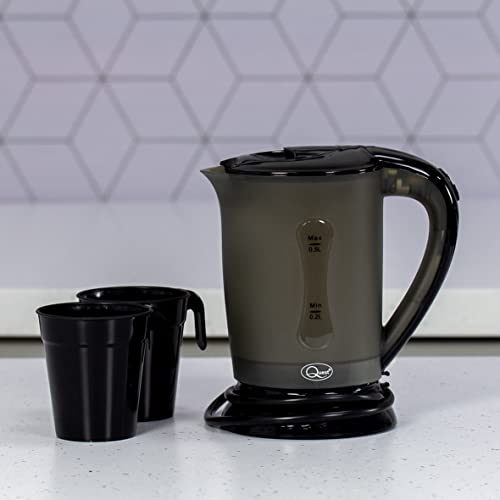
A UK travel kettle (typically 1,000W) will work in France — the voltage matches. Don’t run it through an adapter with USB ports or through a cheap unbranded adapter, though; plug it directly into the wall. Standard UK kettles drawing 2,400–3,000W are better left at home — the current draw is too high for any travel adapter to handle safely.
Choosing a France Plug Adapter
| Type | Price | Best For |
|---|---|---|
| Basic two-pin (Type E/F) | £3–5 | Single device, short trips |
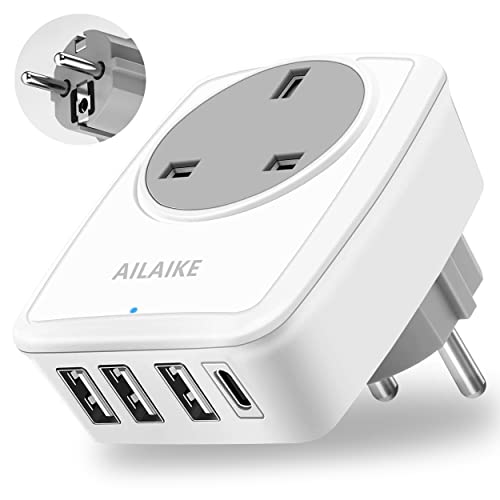
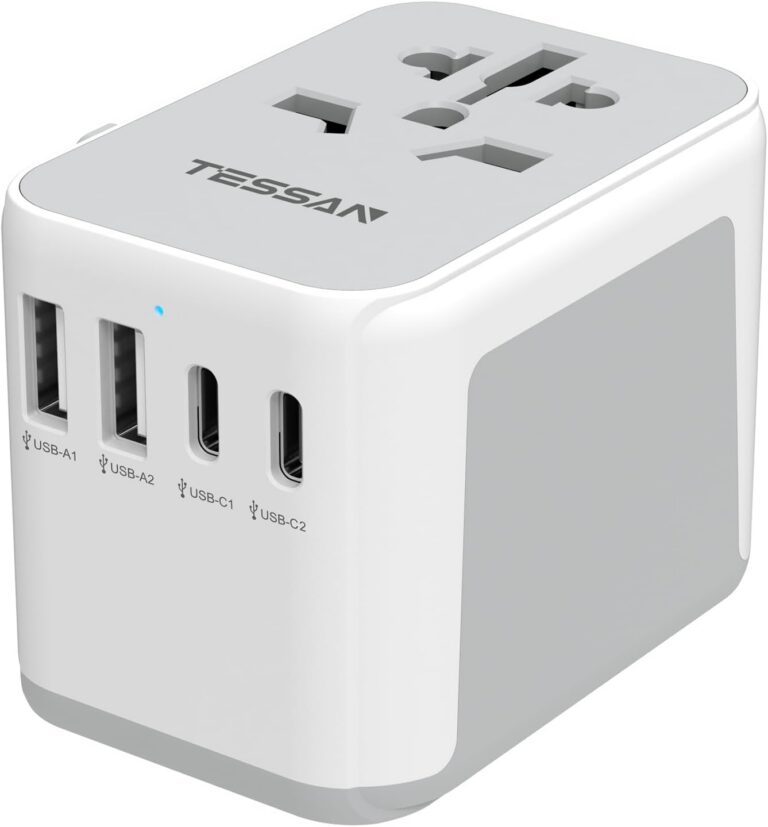
| With USB-A/C ports | £10–15 | Charging phones and tablets without extra cables |
| Universal travel adapter | £15–25 | France, Germany, Spain, US, Australia, and beyond |
| Multi-pack (3–6 adapters) | £8–12 | Groups, families, or keeping a spare in every bag |
What to Look For
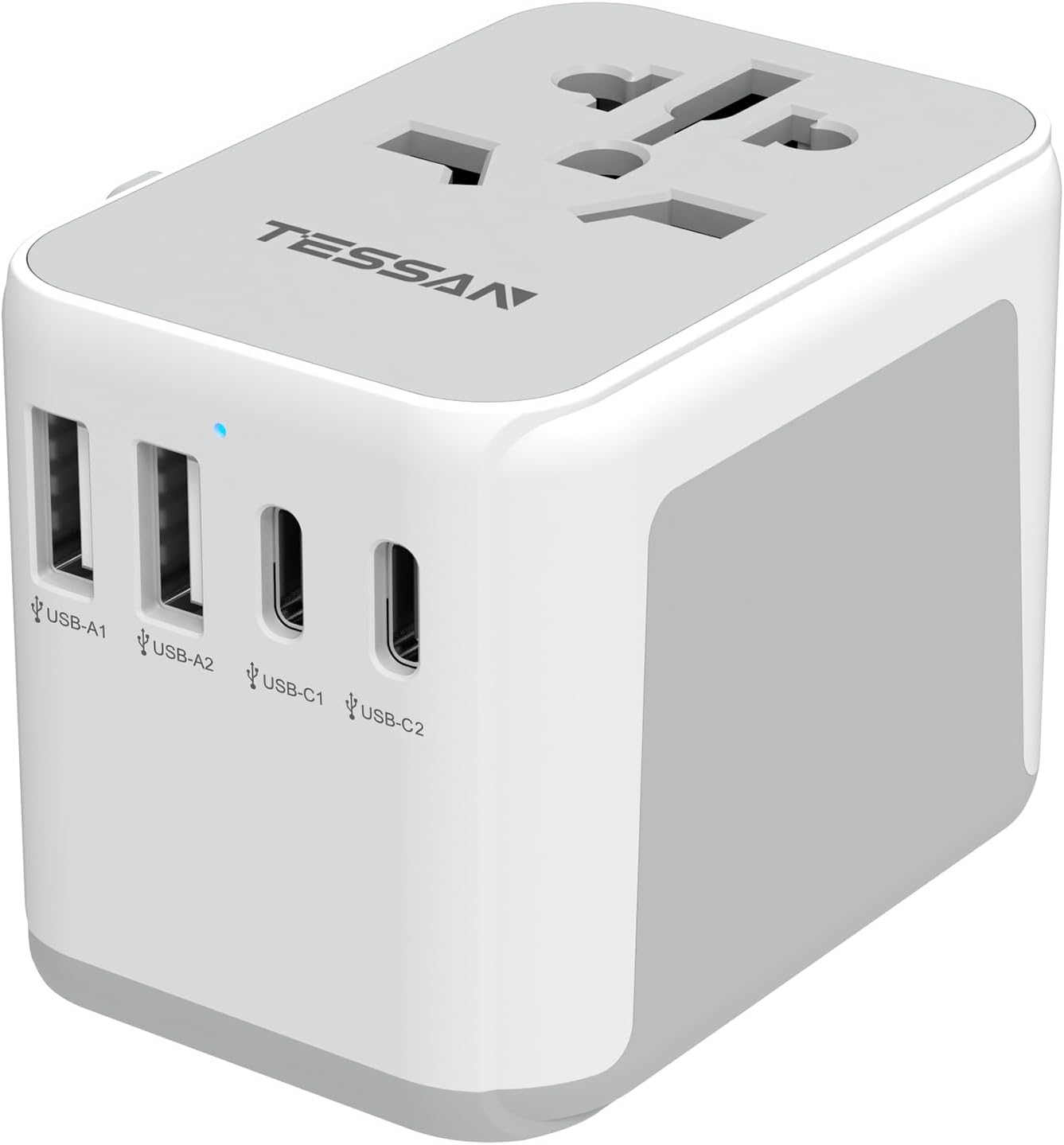
Type E/F compatibility is the main thing. “Type E/F” or “Schuko compatible” on the packaging means it works in France and across continental Europe. A bare Type C two-pin adapter might sit loose in some French sockets — Type E/F is a more secure fit.
USB-C port is worth having. Many newer phones and laptops charge faster via USB-C than USB-A, and an adapter with a built-in USB-C port means one fewer cable to carry.
Compact profile matters more than people expect. French sockets — particularly in older hotels and apartments — are sometimes set into the wall or partly obstructed by furniture. A bulky adapter can sit at an angle or simply not fit. Slim-profile adapters from TESSAN or Pipestation tend to fare better in these situations.
BS8546 compliance is the British Standard for travel adapters introduced because cheap unbranded adapters were causing fires. Look for it on the packaging. Anything that gets warm when nothing is plugged in, sparks on insertion, or has visible gaps in the casing around the pins should not be trusted overnight.
Where to Buy a French Adapter
Before you leave is always the right answer. Amazon, Argos, and Currys stock a wide range for £3–15, and supermarkets often carry basic two-pin adapters near the travel accessories. Airport prices — WHSmith, Boots, Dixons Travel — typically run £8–20 for the same adapter.
In France you can buy adapters at Carrefour, Leclerc, Fnac, or Darty, but you’ll be looking for a French-to-UK adapter, which is harder to find than a UK-to-France one. Buy before you leave. It’s not a meaningful saving to wait.
Practical Tips for France
One adapter plus a small UK extension lead (1.5m) covers everything in most French hotel rooms. Hotels in France — especially older three-star properties — often have only one or two accessible sockets, and they’re frequently behind the desk or inside the wardrobe rather than beside the bed. A power strip plugged into one French socket with a single adapter lets you charge a phone, laptop, and camera without hunting for additional sockets.
Pack a spare adapter. They’re cheap enough that leaving one behind in a hotel room is an irritation rather than a disaster. I keep one permanently in my toiletry bag and another in my suitcase.
Most French hotels now have USB ports by the bed, but they’re typically 1A slow-charge and positioned awkwardly. Don’t rely on them for overnight charging of a phone, and don’t count on them for a tablet.
Older French buildings — including many charming chambres d’hôtes and Airbnbs in rural areas — can have unreliable or loosely wired sockets. If an adapter feels unstable, try a different socket rather than forcing the connection.
France Voltage and Plug Types — Quick Reference
| Specification | France | UK |
|---|---|---|
| Voltage | 230V | 230V |
| Frequency | 50Hz | 50Hz |
| Plug types | Type E, Type C | Type G |
| Adapter needed? | Yes — UK Type G to European Type E/F | — |
| Voltage converter needed? | No | — |
Same voltage, different plug shape. A travel adapter is the only thing you need.
Frequently Asked Questions
What plug is used in France?
France uses Type E sockets as the national standard. The socket has two round holes plus a grounding pin that protrudes from the socket wall. Type C (the bare Europlug) also works for small devices. UK plugs don’t fit — you need a Type E/F travel adapter.
What adapter do I need for France from the UK?
A standard UK-to-EU travel adapter labelled “Type E/F” or “Schuko compatible.” These work in France and across continental Europe. Look for one with a grounding-compatible design — it’ll seat more securely in French sockets than a basic two-pin.
Is the Paris plug the same as the rest of France?
Yes. Paris uses Type E sockets, the same as the rest of the country. There’s no regional variation.
Do I need a voltage converter for France?
No. France runs at 230V/50Hz — identical to the UK. There’s nothing to convert.
Can I use a European adapter from Germany in France?
Yes, if it’s labelled Type E/F. Most EU adapters sold in the UK are Type E/F and work across continental Europe, including France. A Type F-only adapter (Schuko without the E pin hole) may not seat correctly in French sockets — check the packaging before assuming.
Will my iPhone charger work in France?
Yes, with a plug adapter. Apple chargers are rated 100–240V and work anywhere in the world. You just need to convert the plug shape.
What about Monaco?
Monaco uses the same Type C and E sockets as France, at 230V/50Hz. Your France adapter works there without any changes.
Do French hotels have UK sockets?
A small number of international chain hotels (Marriott, Hilton, some Accor properties) include a universal socket in the bathroom, but most French hotels do not. Don’t count on finding a UK socket — bring an adapter.
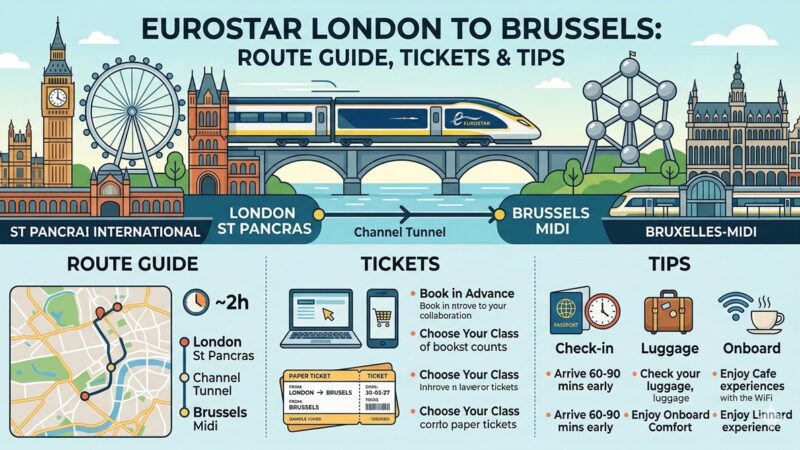
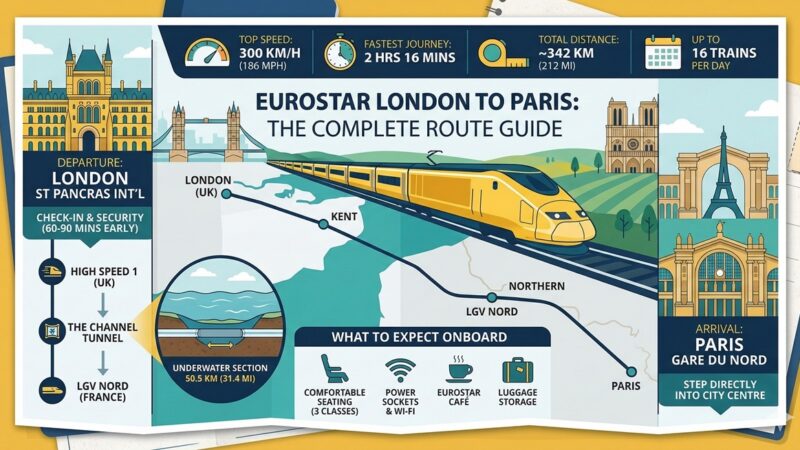
Do I need a France adapter for the Eurostar?
The Eurostar trains themselves have both UK and EU sockets. French stations — Gare du Nord, Paris Montparnasse — use French Type E sockets. If you want to charge while waiting at the station, you’ll need an adapter. On the train itself, you won’t.
Are cheap French plug adapters safe?
Unbranded adapters sold for under £3–4 can overheat and pose a fire risk. The BS8546 British Standard for travel adapters exists specifically because this was happening. Warning signs: the plastic gets warm when nothing is plugged in, it sparks on insertion, or there are visible gaps in the casing. TESSAN and Pipestation both have Type E/F adapters on Amazon UK in the £6–12 range with reliable track records.
Is a French plug the same as a Spanish plug?
Not quite. Spain uses Type F (Schuko) sockets. France uses Type E. A Type E/F adapter works in both — it’s the standard EU adapter sold in the UK — but the socket design is slightly different. The grounding in Spain comes from side clips on the socket; in France it comes from the pin protruding from the socket. A Type E/F adapter handles both correctly.