Places to Visit in China: Travel Guide
China is overwhelming in every sense. The scale of everything – the crowds, the cities, the history, the distances – takes adjustment. I spent three weeks travelling from Beijing through Xi’an to Shanghai, and the places to visit in China I covered barely scratched the surface. This is a country that could absorb months of exploration.
What struck me most was the contradiction between ancient and modern. You can stand on the Great Wall looking at mountains unchanged for millennia, then take a high-speed train back to a city of skyscrapers and facial recognition cameras. China is building the future while preserving the past, and watching both coexist is fascinating.
Independent travel in China is more challenging than most of Asia. The language barrier is real, the internet is restricted, and logistics require planning. But it is absolutely possible, and the rewards are enormous. Note that Hong Kong, while technically part of China, operates under different rules and is covered in our separate guide.
Beijing: Imperial Capital
Beijing has been China’s political centre for over 800 years, and the weight of history is everywhere. This is where emperors ruled, where the Communist Party took power, and where modern China is being directed. Give it at least four days.
The Forbidden City
The largest palace complex in the world – 180 acres, 980 buildings, home to 24 emperors across 500 years. Walking through the succession of courtyards and halls, each grander than the last, gives a sense of the scale of imperial power. The architecture is magnificent, the crowds are intense, and by the end your feet will hurt.
Practical tips: Enter from the south (Tiananmen Gate), exit from the north. Audio guides are worth renting. Go early or late to avoid peak crowds – the middle of the day is brutal. Entry costs ¥60 (£7) April-October, ¥40 (£5) November-March. Book online in advance during peak season.
The view from Jingshan Park, directly north of the Forbidden City, offers the best perspective on the complex’s scale. Climb the hill for sunset.
Tiananmen Square
The world’s largest public square, site of the 1989 protests, and heavily patrolled symbolic centre of Communist China. The square itself is vast and austere – Mao’s portrait on the Gate of Heavenly Peace, the Monument to the People’s Heroes, the Great Hall of the People. Security is tight; you will pass through checkpoints to enter.
The square is worth seeing as a historical site, though there is not much to do besides walk across it. Combine with the Forbidden City, which lies directly north.
Temple of Heaven
Where Ming and Qing emperors performed annual ceremonies to pray for good harvests. The circular Hall of Prayer for Good Harvests is one of China’s most iconic buildings – triple-tiered, blue-tiled, and surprisingly moving. The surrounding park is equally important: come early morning to see locals practicing tai chi, playing traditional instruments, and doing group exercises. This glimpse of ordinary Beijing life is as memorable as the temple itself.
Entry ¥15 (£1.75) for park only, ¥35 (£4) including buildings.
The Summer Palace
The imperial summer retreat, northwest of the city centre. Kunming Lake takes up three-quarters of the grounds – you can walk the ornate Long Corridor along its shore, climb Longevity Hill for views, and take a dragon boat across the water. Less intense than the Forbidden City, and a pleasant half-day.
Hutongs
The old neighbourhoods of narrow alleyways and courtyard houses, rapidly disappearing as Beijing modernises. The areas around Nanluoguxiang and Yandaixie Street have been preserved and gentrified – good for walking, shops, and cafes, though heavily touristed. For something more authentic, wander the hutongs around Gulou (Drum Tower) or hire a pedicab tour through the remaining residential alleys.
Beijing Food
Beijing cuisine tends toward hearty northern Chinese cooking:
Peking duck – The city’s signature dish: crispy-skinned duck wrapped in thin pancakes with spring onion and hoisin sauce. Quanjude and Da Dong are famous establishments; expect to pay ¥200-400 (£23-47) for a whole duck with accompaniments.
Jiaozi – Dumplings, particularly good in the hutong areas. Cheap, filling, and endlessly variable.
Zhajiangmian – Thick noodles with minced pork and fermented bean sauce. A Beijing staple.
Lamb skewers – Street food from China’s Muslim northwest, found throughout the city. Look for the smoke.
The Great Wall
The Great Wall is not one wall but thousands of kilometres of fortifications built over centuries. The sections near Beijing vary dramatically in character.
Badaling
The most accessible and most crowded section, fully restored with cable cars and crowds. Fine for a quick visit if time is limited, but the experience is diminished by the throngs. About 70km from Beijing.
Mutianyu
A better balance of accessibility and authenticity. Well-restored with cable car and toboggan options, but less crowded than Badaling. The wall here snakes dramatically along forested ridges. About 90km from Beijing.
Jinshanling
My recommendation for serious visitors. Partially restored, partially wild, and significantly less crowded. The hike from Jinshanling to Simatai (about 10km) is one of China’s great walks – crumbling watchtowers, steep climbs, and views that go on forever. About 130km from Beijing; harder to reach independently but worth the effort.
Jiankou to Mutianyu
For adventurous hikers, the wild section at Jiankou offers unrestored wall in dramatic condition. The hike to Mutianyu is challenging and not officially sanctioned, but stunning. Not recommended without experience and preparation.
Getting there: Most visitors book day tours from Beijing, which handle transport and entry. Independent travel is possible by bus to Badaling and Mutianyu; other sections require private transport or hiking from villages.
Xi’an: Ancient Capital
Before Beijing, Xi’an was China’s capital for over a thousand years. The Terracotta Army alone justifies the visit, but the city has much more.
The Terracotta Warriors
One of the great archaeological discoveries of the 20th century. In 1974, farmers digging a well found fragments of clay figures; excavation revealed an army of over 8,000 life-sized terracotta soldiers, horses, and chariots, buried to guard Emperor Qin Shi Huang in the afterlife.
The scale is staggering. Pit 1 alone contains 6,000 figures in battle formation, each with individual features. Standing at the edge looking down at rows of warriors stretching into the distance is genuinely moving. Pit 2 and Pit 3 are smaller but contain cavalry and command figures. The on-site museum displays bronze chariots and explains the construction techniques.
The site is about 40km from Xi’an. Tours are easy to arrange; public bus 306 runs from Xi’an train station. Entry ¥150 (£17) March-November, ¥120 (£14) December-February. Allow half a day.
Xi’an City Wall
The best-preserved ancient city wall in China – 14 kilometres around, 12 metres high, wide enough to cycle on. Renting a bike and riding the full circuit (about 2 hours at a leisurely pace) is the best way to experience it. The wall is particularly atmospheric at sunset when the watchtowers light up.
Bike rental ¥45 (£5) for 3 hours, wall entry ¥54 (£6).
Muslim Quarter
Xi’an sits on the ancient Silk Road, and its Muslim quarter has been home to Hui Chinese for over a thousand years. The narrow streets around the Great Mosque are packed with food stalls, spice shops, and halal restaurants. Try yangrou paomo (lamb soup with bread), roujiamo (Chinese hamburger with stewed meat), and biangbiang noodles (thick belt noodles).
The Great Mosque itself is a fascinating blend of Chinese and Islamic architecture – more like a Chinese temple than a Middle Eastern mosque.
Shanghai: The Future
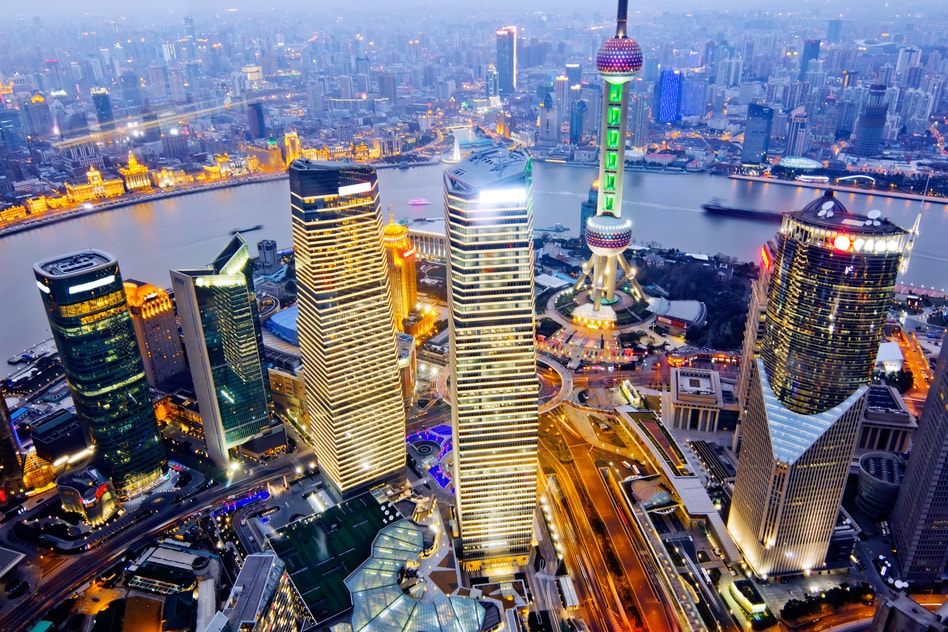
Shanghai is where China’s economic transformation is most visible. The Pudong skyline – that forest of skyscrapers across the Huangpu River – did not exist 30 years ago. This is a city that builds fast and thinks big.
The Bund
The iconic waterfront promenade lined with colonial-era buildings – banks, trading houses, and hotels from Shanghai’s 1920s heyday. Walk the Bund at night for views across to Pudong’s light show. The contrast between the European architecture behind you and the futuristic towers ahead encapsulates modern China.
Pudong
Cross the river (pedestrian tunnel, ferry, or metro) to walk among the towers. The Shanghai Tower is currently the world’s second-tallest building; the observation deck at 632 metres offers vertiginous views. The Oriental Pearl Tower is the older, more distinctive landmark.
French Concession
The former French colonial district is now Shanghai’s most pleasant neighbourhood for walking. Tree-lined streets, art deco architecture, boutique shops, and excellent restaurants. Base yourself here if you want cafes and atmosphere rather than skyscrapers.
Yu Garden and Old Town
The classical Yu Garden is a peaceful retreat – pavilions, ponds, rockeries, and dragon walls in traditional Jiangnan style. The surrounding Old Town bazaar is touristy but atmospheric, with traditional architecture and endless shops and snack stalls.
Shanghai Food
Shanghainese cuisine emphasises freshness and subtle flavours:
Xiaolongbao – Soup dumplings, the city’s signature dish. Delicate dough filled with pork and hot broth. Din Tai Fung is reliable; Jia Jia Tang Bao is the local favourite.
Shengjianbao – Pan-fried buns, crispy on the bottom, juicy inside.
Hongshao rou – Red-braised pork belly, rich and fatty.
Hairy crab – A seasonal delicacy (September-November) from nearby lakes.
Practical Information
Visas
UK citizens need a visa in advance. Standard tourist visas (L visa) cost £151 and allow 30 days. Apply through the Chinese Visa Application Service Centre. Processing takes 4-5 working days. 144-hour transit visas are available at certain airports (including Beijing and Shanghai) for visitors transiting to a third country, but the rules are specific – check eligibility before relying on this.
Internet
Google, Facebook, Instagram, WhatsApp, and most Western social media are blocked in China. A VPN is essential if you want to access these services. Download and set up your VPN before arriving – many VPN websites are also blocked inside China.
Money
Chinese Yuan (CNY/RMB), written as ¥. Roughly ¥9 to £1. Cash is becoming less common as China has leapfrogged to mobile payments (WeChat Pay and Alipay), but as a tourist you will likely need cash – setting up Chinese payment apps requires a Chinese bank account. ATMs are widespread; international cards work at Bank of China and ICBC machines.
Transport
China’s high-speed rail network is extraordinary. Trains run at 300+ km/h, are punctual, comfortable, and relatively affordable. Beijing to Shanghai takes 4.5 hours and costs from ¥553 (£65) for second class. Book via Trip.com or at stations; popular routes sell out, especially around holidays.
Domestic flights are frequent and cheap but often delayed. The rail network is usually more reliable for distances under 1,000km.
Within cities, metro systems in Beijing, Shanghai, and other major cities are efficient and cheap. Didi (the Chinese Uber) works well but requires the app and Chinese phone number setup.
Language
Mandarin Chinese. English is not widely spoken outside tourist areas and international hotels. Google Translate’s camera function (via VPN) or Pleco dictionary app are essential. Learn basic phrases – even poorly pronounced attempts are appreciated.
Best Time to Visit
Spring (April-May) and autumn (September-October) are ideal – comfortable temperatures and manageable crowds. Summer is hot and humid; winter is cold in the north. Avoid the first week of October (National Day holiday) and Chinese New Year (late January/February) when domestic tourism peaks and transport is overwhelmed.
Costs
China is mid-range for Asia. Budget travellers can manage on £30-40 per day with hostels, street food, and local transport. Comfortable travel (3-star hotels, restaurants, attractions) runs £60-100 per day. Luxury has no ceiling.
Safety
China is extremely safe for tourists. Violent crime is rare, and petty theft is less common than in most countries. The main concerns are traffic (chaotic in cities), scams targeting tourists at major sites, and food hygiene in questionable establishments.
Frequently Asked Questions
Do UK citizens need a visa for China?
Yes, UK citizens need a visa in advance. Standard tourist visas (L visa) cost £151 and allow 30 days. Apply through the Chinese Visa Application Service Centre, with processing taking 4-5 working days. Some airports offer 144-hour transit visas for visitors transiting to a third country.
What is the best time to visit China?
Spring (April-May) and autumn (September-October) are ideal for comfortable temperatures and manageable crowds. Avoid the first week of October (National Day holiday) and Chinese New Year (late January/February) when domestic tourism peaks and transport is overwhelmed.
What currency does China use?
China uses the Chinese Yuan (CNY/RMB), written as ¥. The exchange rate is roughly ¥9 to £1. While mobile payments dominate, tourists will likely need cash. ATMs are widespread and international cards work at Bank of China and ICBC machines.
Can I use Google and social media in China?
No, Google, Facebook, Instagram, WhatsApp, and most Western social media are blocked in China. A VPN is essential for accessing these services. Download and set up your VPN before arriving, as many VPN websites are also blocked inside China.
How much does it cost to travel in China?
China is mid-range for Asia. Budget travellers can manage on £30-40 per day with hostels, street food, and local transport. Comfortable travel with 3-star hotels and restaurants runs £60-100 per day.
Is China safe for tourists?
Yes, China is extremely safe for tourists. Violent crime is rare and petty theft is less common than in most countries. The main concerns are chaotic city traffic, tourist-targeting scams at major sites, and food hygiene in questionable establishments.