Mauritius Holidays: Beaches & Resorts
Mauritius holidays exceeded my expectations in every way. I spent ten days there – half at a beach resort, half exploring the island – and came away with a deep appreciation for this tiny Indian Ocean nation. The beaches are spectacular, certainly, but what surprised me was everything else: the volcanic peaks rising from the interior, the colourful Hindu temples, the Creole and Indian food, and the remarkable diversity of a country where Hindus, Muslims, Chinese, and Creoles live side by side.
The island sits 2,000km off the east coast of Africa, roughly the same latitude as Madagascar. It is small enough to drive around in a day, yet feels much larger thanks to the variety of landscapes. The west coast has calm lagoons and reliable sunshine; the east faces the trade winds with wilder waters; the mountainous interior is cool and green. The beaches drew me initially, but the culture and landscapes made me want to return.
Beaches
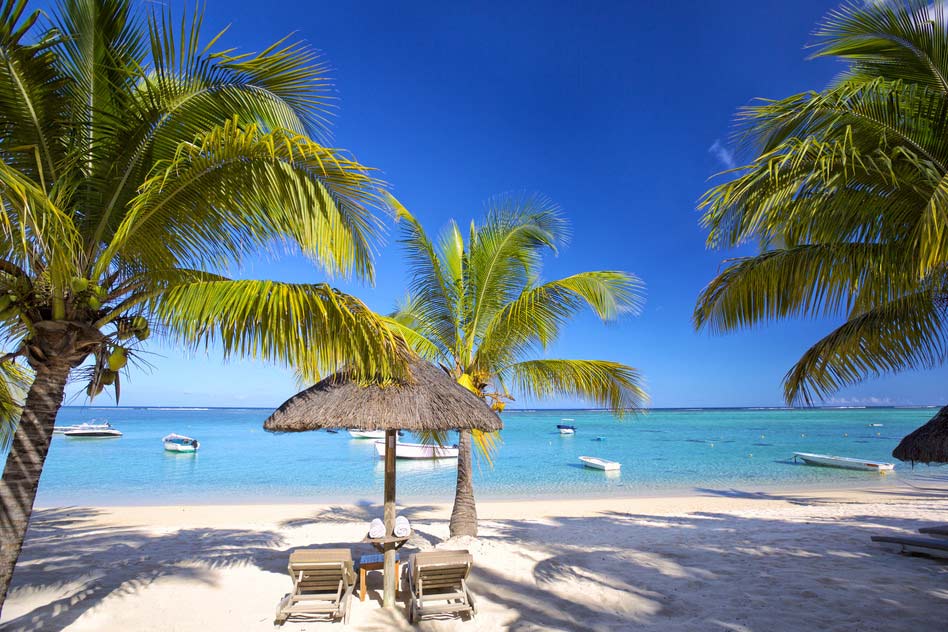
Mauritius has some of the finest beaches in the Indian Ocean, protected by coral reefs that create calm lagoons with water in impossible shades of turquoise.
North Coast
Grand Baie – The main tourist hub on the island: hotels, restaurants, shops, and nightlife clustered around a pretty bay. The beach itself is average by Mauritian standards, but the town is lively and convenient for day trips. Water sports operators line the waterfront.
Pereybere – A smaller beach just north of Grand Baie, with better swimming and a more relaxed atmosphere. Local restaurants serve Creole food at reasonable prices. Popular with families and locals on weekends.
Mont Choisy – A long curve of white sand fringed with casuarina trees, less developed than Grand Baie. The swimming is excellent; the shade from the trees is welcome.
West Coast
Flic en Flac – The longest public beach on the island, stretching for several kilometres. The water is calm and clear; the sunsets are exceptional. Several dive operators are based here, with access to some of the island’s best sites.
Le Morne – A dramatic peninsula dominated by a UNESCO-listed mountain, historically a refuge for escaped slaves. The beach is beautiful; the kite-surfing conditions are among the best in the world. Most of the peninsula is occupied by upmarket resorts.
Tamarin – A quieter bay popular with surfers (the only waves in Mauritius that break directly on the beach). The atmosphere is local rather than touristy; dolphins are often spotted in the bay.
East Coast
Belle Mare – A seemingly endless stretch of white sand with calm, shallow water. The luxury resorts are concentrated here, though public access points exist. The swimming is superb.
Ile aux Cerfs – A small island off the east coast, accessible by boat from Trou d’Eau Douce. The beaches are beautiful but the island gets crowded with day-trippers. Arrive early or stay late for a better experience. Boat transfers cost MUR 400-600 (£7-11).
South Coast
The south is wilder and less developed, with dramatic cliffs and rougher seas. The beaches are smaller but often empty. Blue Bay, a marine park with exceptional snorkelling, is the standout destination.
Diving and Water Sports
The lagoons surrounding Mauritius offer excellent conditions for water sports, while the drop-offs beyond the reef provide world-class diving.
Diving
The west coast has the best diving, with visibility often exceeding 30 metres and dive sites accessible from Flic en Flac, Black River, and Le Morne.
Cathdrale – A spectacular underwater cavern near Flic en Flac, with shafts of light penetrating through openings above. One of Mauritius’s signature dives.
Rempart Serpent – A wall dive with coral formations and schools of fish.
Whale Rock – Named for the whale skeleton that once rested here; now known for reef sharks and large pelagics.
Diving costs approximately MUR 2,500-3,500 (£45-65) for a two-tank dive. PADI Open Water courses cost MUR 18,000-22,000 (£325-400).
Snorkelling
The marine park at Blue Bay has the island’s best snorkelling, with coral gardens and abundant fish in calm, shallow water. Glass-bottom boat tours cost MUR 500-800 (£9-15), or bring your own mask and swim from the beach.
Other Water Sports
Kitesurfing – Le Morne is internationally renowned, with consistent trade winds and flat water in the lagoon. Schools offer lessons for beginners (MUR 8,000-12,000 / £145-220 for multi-day courses).
Swimming with dolphins – Spinner dolphins frequent the waters off Tamarin and the west coast. Boat trips depart early morning for the best chance of encounters (MUR 2,000-3,000 / £35-55). Practices vary; choose operators that minimise impact.
Deep-sea fishing – Mauritius was once famous for blue marlin; the fishing remains excellent, with catch-and-release increasingly common. Half-day trips cost MUR 15,000-25,000 (£270-450) for a boat.
Nature and Interior
Beyond the beaches, the volcanic interior offers different landscapes and cooler temperatures.
Black River Gorges National Park
The only remaining area of native forest on Mauritius, covering 67 square kilometres of the southwestern highlands. Hiking trails wind through the forest, passing viewpoints over the gorges and the coastline.
Alexandra Falls viewpoint – Accessible by car, with views over the park and a waterfall.
Macchabée Trail – A longer hiking route through the forest (10km, 3-4 hours).
Wildlife includes the Mauritius kestrel (once the world’s rarest bird, now recovered through conservation) and the pink pigeon. Entry is free.
Chamarel
The inland village is known for two attractions:
Chamarel Falls – A 100-metre waterfall plunging into a forested gorge. Viewing platform accessible by car (MUR 300 / £5.50 entry).
Seven Coloured Earth – A geological curiosity: exposed volcanic earth in bands of red, brown, violet, blue, and yellow. The colours are subtle but genuine. The site includes giant tortoises in an enclosure. Entry MUR 350 (£6.30).
Trou aux Cerfs
An extinct volcanic crater in the highland town of Curepipe, with views from the crater rim on clear days. The town itself has a pleasant colonial atmosphere, cooler than the coast.
Pamplemousses Botanical Gardens
The Sir Seewoosagur Ramgoolam Botanical Garden (usually called Pamplemousses) dates to the 18th century and contains specimens from across the tropics. The giant Victoria amazonica water lilies are the highlight, with leaves large enough to support a child. Giant tortoises roam the grounds. Entry MUR 200 (£3.60).
Culture and Heritage
Mauritius is remarkably diverse: roughly 48% Hindu, 27% Christian, 17% Muslim, and 3% Chinese, with influences from all these communities visible in daily life.
Hindu Temples
Grand Bassin – A crater lake sacred to Hindus, surrounded by temples and enormous statues of Shiva and other deities. During Maha Shivaratri (February/March), hundreds of thousands of pilgrims walk from across the island to the lake. Worth visiting regardless of the festival.
Ganga Talao – The temples around Grand Bassin, with statues lining the entrance road and shrines along the lakeshore.
Port Louis
The capital is a working city rather than a tourist destination, but worth a half-day for the markets and waterfront.
Central Market – A covered market selling fruit, vegetables, spices, baskets, and souvenirs. The food stalls serve cheap Creole and Indian dishes (MUR 100-200 / £1.80-3.60 for lunch).
Caudan Waterfront – A modern development with shops, restaurants, and the Blue Penny Museum (housing two rare Mauritian stamps and maritime history). Entry MUR 350 (£6.30).
Sugar Museums
Sugar dominated the Mauritian economy for centuries, and the grand estate houses remain. L’Aventure du Sucre at Pamplemousses occupies a converted sugar factory, with exhibits on the industry’s history and Mauritius’s development. Entry MUR 400 (£7.20), including rum tasting.
Mauritian Food
The cuisine reflects the island’s diversity: Indian, Chinese, Creole, and French influences combine in distinctive ways.
Traditional Dishes
Dholl puri – Indian-influenced flatbread stuffed with yellow split peas, served with curry and chutneys. The classic Mauritian street food; vendors sell them throughout the island for MUR 20-30 (£0.35-0.55).
Rougaille – A Creole tomato-based sauce served with fish, chicken, or sausages, usually over rice.
Vindaye – Fish (often octopus) marinated in mustard, turmeric, and vinegar.
Briani – The Mauritian version of biryani: rice with meat, potatoes, and spices, often lamb or chicken.
Gateau piment – Deep-fried chilli cakes, sold as snacks everywhere.
Mine frit – Mauritian fried noodles with vegetables and meat, reflecting Chinese influence.
Rum
Mauritian rum is excellent, aged in the tropical climate and smoother than Caribbean equivalents. Rhumerie de Chamarel offers tastings and distillery tours (MUR 600 / £10.80 including tasting). New Grove and Lazy Dodo are other quality brands.
Practical Information
Getting There
Direct flights from London to Mauritius take approximately 12 hours (Air Mauritius, British Airways). Most flights depart evening and arrive morning. Connections via Paris, Dubai, or Johannesburg are alternatives.
Getting Around
Car rental – The best way to explore the island. Driving is on the left; roads are generally good but often narrow. Rental costs MUR 1,500-2,500 (£27-45) per day. Avoid Port Louis at rush hour.
Taxis – Widely available but unmetered. Agree prices before setting off. A full-day tour with a driver costs MUR 3,000-5,000 (£55-90).
Buses – Cheap (MUR 25-50 / £0.45-0.90) but slow and crowded. Useful for reaching towns; less practical for beaches and attractions.
When to Visit
November to April – Summer. Hot (28-33°C) and humid, with occasional tropical rain. Cyclone risk January-March, though direct hits are rare.
May to October – Winter. Warm (22-26°C) with lower humidity and less rain. The east coast can be windy. Peak tourist season.
December to January – Holiday period with higher prices and crowds.
Water temperature is warm year-round (24-28°C).
Costs
Mauritius is moderately priced, with a wide range of options.
- Budget guesthouse: MUR 2,000-3,500 (£36-63) per night
- Mid-range hotel: MUR 5,000-10,000 (£90-180) per night
- Luxury resort: MUR 15,000-40,000 (£270-720) per night
- Local restaurant meal: MUR 200-400 (£3.60-7.20)
- Hotel restaurant meal: MUR 800-1,500 (£14.50-27)
- Dholl puri: MUR 20-30 (£0.35-0.55)
- Beer: MUR 80-150 (£1.45-2.70)
- Two-tank dive: MUR 2,500-3,500 (£45-65)
Visas
UK citizens receive visa-free entry for up to 6 months. Passport must be valid for at least 6 months beyond your stay.
Language
English is the official language; French is widely spoken; Mauritian Creole is the everyday language. Most people in tourism speak good English and French.
Currency
Mauritian Rupee (MUR). Cards accepted at hotels and larger businesses; cash useful for markets, small restaurants, and local transport.
Power
Mauritius uses Type C and G plugs (both UK three-pin and European two-round-pin work in many outlets). Voltage is 230V.
Frequently Asked Questions
Do I need a visa to visit Mauritius?
UK citizens and most Western passport holders receive visa-free entry for up to 6 months. Your passport must be valid for at least 6 months beyond your planned departure date. You may be asked to show proof of accommodation and return flights at immigration.
What is the best time to visit Mauritius?
May to October is the best time to visit, with warm temperatures (22-26°C), lower humidity, and less rain. This is the dry winter season. November to April is summer – hotter and more humid with occasional tropical rain and cyclone risk from January to March. Water temperature is pleasant year-round (24-28°C).
What currency is used in Mauritius and should I exchange money?
The Mauritian Rupee (MUR) is the local currency. Cards are widely accepted at hotels and larger establishments, but cash is useful for markets, local restaurants, and small businesses. ATMs are available in towns and tourist areas. The exchange rate is approximately MUR 55 to £1.
How much does a holiday in Mauritius cost?
Mauritius caters to all budgets. Budget guesthouses cost MUR 2,000-3,500 (£36-63) per night, while luxury resorts range from MUR 15,000-40,000 (£270-720). Local meals cost MUR 200-400 (£3.60-7.20), street food like dholl puri costs MUR 20-30 (£0.35-0.55), and a two-tank dive costs MUR 2,500-3,500 (£45-65).
Is Mauritius safe for tourists?
Mauritius is one of the safest destinations in Africa and the Indian Ocean. Serious crime against tourists is rare. Take normal precautions: don’t leave valuables unattended on beaches, be cautious in Port Louis at night, and watch your belongings in crowded markets. The ocean can have strong currents, so swim in designated areas.
What are the must-see attractions in Mauritius besides beaches?
Beyond beaches, visit Black River Gorges National Park for hiking and native forest, Grand Bassin sacred lake and Hindu temples, Chamarel Falls and Seven Coloured Earth, and the Central Market in Port Louis for local culture. Don’t miss swimming with dolphins off Tamarin, diving at Cathedral near Flic en Flac, and trying local Creole and Indian cuisine.