South Africa Holidays: Safari & Travel Guide
South Africa holidays exceeded every expectation I had. I spent three weeks travelling from Cape Town through the wine regions to Kruger National Park, and came away understanding why this country draws visitors back repeatedly. The diversity is extraordinary – world-class cities, safari wilderness, mountain ranges, and coastlines that rival anywhere on earth, all wrapped in a complex history that makes every place you visit meaningful.
The exchange rate makes South Africa remarkably good value for British visitors. A safari that would cost £500 per night elsewhere in Africa can be found for half that. Restaurant meals, wine tastings, and accommodation are all significantly cheaper than comparable experiences in Europe or North America, while the quality often exceeds them.
Cape Town
The Mother City is one of the world’s great destinations, and you could spend a week here without running out of things to do. The combination of Table Mountain, ocean beaches, and a cosmopolitan city centre creates something unique.
Table Mountain
The flat-topped mountain dominates the city from every angle. The cable car rotates as it ascends, giving 360-degree views. At the top, walking paths wind across the plateau with views over the city, the Atlantic, and the Cape Peninsula stretching south. The cable car costs ZAR 390-490 (£17-21) return for adults depending on time of day; book online to skip queues and save.
Alternatively, hike up via Platteklip Gorge – about two hours, steep but manageable. The views are earned.
V&A Waterfront
The harbour development is touristy but well done – restaurants, shops, the Two Oceans Aquarium, and boats departing for Robben Island. The food market has good options at ZAR 80-150 (£3.50-6.50) for meals. Evening drinks watching the sunset over the water is a Cape Town ritual.
Robben Island
The prison where Nelson Mandela spent 18 years is a sobering but essential visit. Former political prisoners guide tours, sharing first-hand accounts of their imprisonment. The ferry from the Waterfront takes 30 minutes; tours last about 3.5 hours total. Book well in advance – tours sell out. ZAR 600 (£26) per person.
Bo-Kaap
The colourful houses climbing the slopes of Signal Hill are one of Cape Town’s most photographed sights. This is the historic Cape Malay quarter, and the cooking courses here teach authentic Cape Malay cuisine. Visit in the morning for the best light on the painted facades.
Beaches
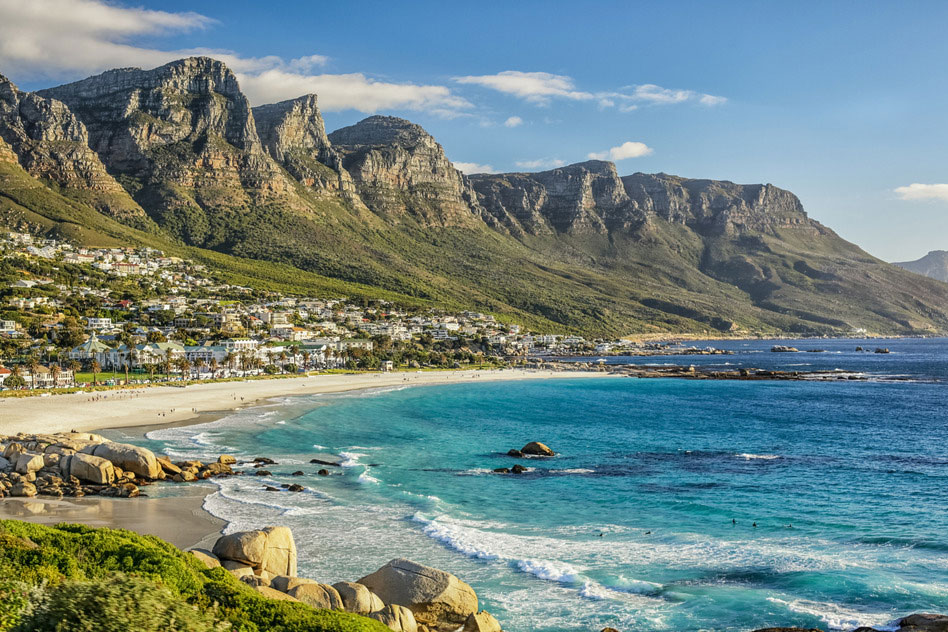
Cape Town has beaches on two oceans. The Atlantic side (Camps Bay, Clifton) has white sand and beautiful people but cold water – the Benguela Current keeps temperatures below 15°C even in summer. The False Bay side (Muizenberg, Fish Hoek) is warmer and better for swimming.
Muizenberg is the surfing beach, with gentle waves and colourful bathing boxes. Board rental costs about ZAR 150 (£6.50) for two hours.
Cape Point
The Cape Peninsula south of the city makes a spectacular day drive. Chapman’s Peak Drive hugs the cliffs above the Atlantic; Boulders Beach has its famous penguin colony (ZAR 200 / £8.50 entry); Cape Point offers dramatic views from the lighthouse where the Atlantic meets the Indian Ocean.
Allow a full day. Rent a car (from ZAR 400 / £17 per day) for flexibility; tours also cover the route.
Wine Regions
Within an hour of Cape Town, the Winelands produce some of the world’s best wines in some of its most beautiful settings. Mountains, oak-lined avenues, and Cape Dutch estates make even non-wine-drinkers happy.
Stellenbosch
The oldest and most established wine town, with a historic centre of whitewashed buildings, student cafes (it is a university town), and dozens of estates in surrounding valleys. The tasting rooms are excellent – most charge ZAR 50-100 (£2-4.50) for tastings, refundable against purchases.
Notable estates: Delaire Graff (stunning views, expensive wines), Spier (family-friendly with cheetah sanctuary), Tokara (exceptional olive oil alongside wine).
Franschhoek
The gastronomic capital of South Africa. The main street is lined with restaurants that would hold their own anywhere in the world; the valley produces exceptional wines. The Franschhoek Wine Tram is a popular way to visit multiple estates – hop-on-hop-off with a tram and tractor service through the valley. ZAR 280 (£12) for the day.
Notable estates: La Motte (excellent museum), Boschendal (historic manor house, good food), Grande Provence (contemporary art gallery).
Paarl
Less visited than its neighbours, with some excellent estates and the Afrikaans Language Monument for those interested in linguistic history.
Safari: Kruger National Park
Kruger is Africa’s premier self-drive safari destination – one of the few places where you can see the Big Five (lion, leopard, elephant, rhino, buffalo) without spending a fortune on private lodges. The park covers nearly 20,000 square kilometres, with excellent roads and well-maintained rest camps.
Self-Drive Safari
The park entrance fee is ZAR 460 (£20) per day for international visitors. Rest camps have accommodation from ZAR 700 (£30) for camping to ZAR 2,000+ (£85+) for chalets. Restaurants serve basic meals; each camp has a shop for supplies.
The experience is remarkably accessible. Drive yourself, stop when you spot animals, share sightings with other visitors. The best times are early morning and late afternoon when animals are active. A week allows thorough exploration; three or four days covers the highlights.
Best areas: The southern region around Lower Sabie and Skukuza has the highest concentration of game. The central region around Satara is excellent for predators. The northern Pafuri area is wilder and less crowded.
Private Game Reserves
The private reserves bordering Kruger (Sabi Sand, Timbavati, Manyeleti) offer a different experience – guided drives with expert trackers, off-road access, and night drives. The animals are habituated to vehicles, allowing closer encounters. Leopard sightings are nearly guaranteed in Sabi Sand.
Prices start around ZAR 5,000 (£215) per person per night all-inclusive at mid-range lodges, rising to ZAR 15,000+ (£650+) at luxury properties. The difference from self-drive is significant – you will see more, in more comfort, with knowledgeable guides explaining everything.
KwaZulu-Natal
The eastern province offers a different character – subtropical climate, Zulu culture, and the Drakensberg mountains.
Durban
South Africa’s third city has a subtropical beach culture, the largest Indian population outside India, and some of the best curry in the world. The beachfront Golden Mile has been revitalised; the Victoria Street Market sells spices and crafts.
Bunny chow – a hollowed-out loaf of bread filled with curry – is a Durban invention and essential eating. Expect to pay ZAR 60-90 (£2.50-4).
Drakensberg Mountains
The mountain range forming the border with Lesotho has excellent hiking, from day walks to multi-day trails. The Amphitheatre in Royal Natal National Park is one of Africa’s most dramatic geological features. Accommodation in the foothills ranges from backpacker lodges (ZAR 300 / £13 per night) to comfortable resort hotels.
Hluhluwe-iMfolozi Park
One of Africa’s oldest game reserves, famous for its rhino conservation. Less crowded than Kruger and easier to see the Big Five in a smaller area. Good for a two or three-day safari if time is limited.
Garden Route
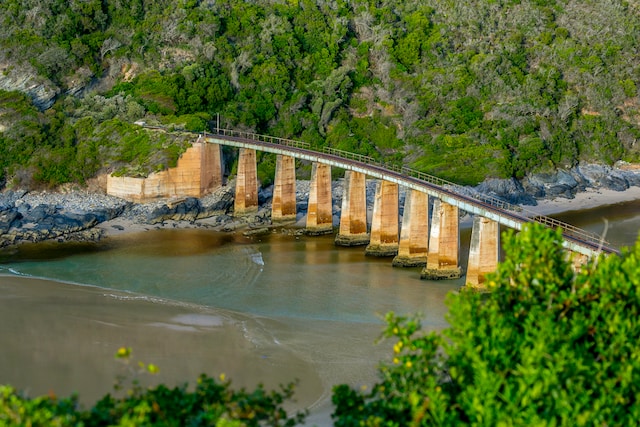
The coastal road between Cape Town and Port Elizabeth passes through forests, beaches, and charming towns. Most visitors drive the route in three to five days, stopping in Knysna (lagoon setting, oysters), Plettenberg Bay (beaches, whale watching), and Storms River (the Tsitsikamma forest and bungee jumping from Bloukrans Bridge – the world’s highest commercial bungee at 216 metres).
South African Food
Traditional Dishes
Braai – The South African barbecue is a cultural institution. Boerewors (spiced sausage), lamb chops, and steak cooked over wood coals, accompanied by pap (maize porridge), chakalaka (spicy vegetable relish), and plenty of wine.
Bobotie – A Cape Malay dish of spiced minced meat baked with an egg topping, served with yellow rice and chutney.
Potjiekos – A slow-cooked stew prepared in a three-legged cast iron pot over coals. Traditionally made over several hours, with meat and vegetables added in layers.
Biltong – Dried, cured meat (usually beef or game). Better than jerky, and available everywhere. Buy from specialist shops rather than tourist outlets for quality.
Wine
South African wine is exceptional value. Pinotage is the local grape variety – a crossing of Pinot Noir and Cinsaut producing bold, smoky reds. The Stellenbosch Cabernets and Franschhoek Chardonnays rival their international competitors at a fraction of the price.
Practical Information
Getting There
Direct flights from London to Cape Town and Johannesburg take about 11 hours — an overnight where a decent travel pillow earns its place. South African Airways, British Airways, and Virgin Atlantic operate the routes. Johannesburg is the gateway for Kruger; Cape Town for the Western Cape.
Getting Around
Domestic flights – The distances are vast. Cape Town to Johannesburg is two hours by air; driving takes 14+ hours. Kulula and Safair offer budget domestic flights.
Car rental – Essential for the Garden Route and Winelands; possible for Kruger. Major companies operate throughout; prices start from ZAR 400 (£17) per day. Driving is on the left.
Intercity buses – Greyhound and Intercape connect major cities. Comfortable but slow.
When to Visit
September to November – Spring. Wildflowers in the Western Cape, good safari (animals gather at water sources).
December to February – Summer. Hot throughout, peak beach season in Cape Town. Busy and expensive over Christmas.
March to May – Autumn. Harvest in the Winelands, still warm, fewer crowds.
June to August – Winter. Mild in most areas; Cape Town has rain. Excellent safari (dry season means better game viewing).
Costs
South Africa offers excellent value.
- Hostel dorm: ZAR 200-350 (£8.50-15) per night
- Budget guesthouse: ZAR 600-1,000 (£26-43) per night
- Mid-range hotel: ZAR 1,200-2,500 (£52-108) per night
- Restaurant meal: ZAR 150-300 (£6.50-13)
- Wine tasting: ZAR 50-100 (£2-4.50)
- Kruger entry: ZAR 460 (£20) per day
- Private safari lodge: ZAR 5,000-15,000 (£215-650) all-inclusive
Visas
UK citizens do not need a visa for visits up to 90 days. Passport must be valid for 30 days beyond your stay and have at least two blank pages.
Safety
South Africa has high crime rates, but tourist areas are generally safe with sensible precautions:
- Do not walk in cities after dark; use Uber
- Keep valuables out of sight in vehicles
- Do not display expensive items
- Use hotel safes
- Stick to well-travelled areas
The overwhelming majority of visitors have no problems.
Language
South Africa has 11 official languages. English is widely spoken in tourism, business, and cities. Afrikaans is common in the Western Cape and rural areas. Zulu dominates in KwaZulu-Natal.
Power
South Africa uses unique Type M plugs (three large round pins in a triangle). Voltage is 230V. UK visitors need a travel adapter, and most universal adapters do not include Type M, so check before you fly. The South Africa plug adapter guide covers which one to buy.
Frequently Asked Questions
Do I need a visa to visit South Africa?
UK citizens do not need a visa for tourist visits up to 90 days. Your passport must be valid for 30 days beyond your intended stay and have at least two blank pages for entry stamps. US, Canadian, EU, and Australian citizens also receive visa-free entry for tourism.
When is the best time to visit South Africa?
September to November (spring) offers excellent safari viewing as animals gather at water sources, plus wildflowers in the Western Cape. December to February (summer) is peak beach season in Cape Town but hot and busy. March to May (autumn) is harvest time in the Winelands with warm weather and fewer crowds. June to August (winter) provides the best safari conditions due to dry weather and better game viewing.
What currency does South Africa use?
The South African Rand (ZAR) is the local currency. The exchange rate makes South Africa excellent value for British visitors, with approximately ZAR 23-24 to £1. ATMs are widely available, and credit cards are accepted in most tourist areas, hotels, and restaurants. Always carry some cash for markets and smaller establishments.
How much should I budget for South Africa?
South Africa offers exceptional value compared to similar experiences elsewhere. Budget ZAR 1,500-2,500 (£65-108) per day for mid-range accommodation and meals. Restaurant meals cost ZAR 150-300 (£6.50-13), wine tastings ZAR 50-100 (£2-4.50). Private safari lodges range from ZAR 5,000-15,000 (£215-650) per night all-inclusive, while self-drive Kruger entry is ZAR 460 (£20) per day.
Is South Africa safe for tourists?
South Africa has high crime rates, but tourist areas are generally safe with sensible precautions. Don’t walk in cities after dark – use Uber instead. Keep valuables out of sight in vehicles, don’t display expensive items, use hotel safes, and stick to well-travelled areas. The vast majority of visitors have no problems when following basic safety guidelines.
Can I do a self-drive safari in South Africa?
Yes, Kruger National Park is one of Africa’s premier self-drive safari destinations. You can see the Big Five without spending a fortune on private lodges. The park entrance fee is ZAR 460 (£20) per day, with accommodation in rest camps from ZAR 700 (£30). Roads are excellent, and animals are easily spotted. Three to seven days allows thorough exploration of different regions.
Related
- Kenya
- Tanzania
- Namibia
- Botswana
- Search flights & hotels on lastminute.com