If you’re looking for things to do in Australia, you’ll find no shortage of options. The country exceeded every expectation I had, and I had high ones. I spent five weeks travelling from Sydney down the coast to Melbourne, then flying north to Cairns and the Great Barrier Reef. The scale of the place is hard to comprehend until you are there – this is a continent, not a country, and the distances between cities are measured in days of driving, not hours.
What surprised me most was the variety. I had expected beaches and outback, and Australia delivered both spectacularly. But I had not expected the sophistication of Melbourne’s laneways, the ancient rainforests of the Daintree, or the sheer drama of the Blue Mountains an hour from Sydney’s skyscrapers. Every region felt like a different country.
Sydney: Australia’s Gateway
Sydney is where most visitors start, and the harbour alone justifies the long flight. The Opera House and Harbour Bridge together form one of the world’s most recognisable cityscapes, and it looks just as good in person as it does in photographs – better, actually, because you can walk across the bridge, take a ferry past the sails, and watch the light change across the water.
The Harbour
Sydney Opera House – Even if you do not see a performance, the building rewards close attention. The shells are covered in over a million tiles that shift colour throughout the day. Guided tours (A$43 / £22) take you inside, explaining the construction drama and showing off the concert halls. For the full experience, book tickets to something – the Sydney Symphony performs regularly, and even a modest show lets you experience the interior properly.
Sydney Harbour Bridge – You can walk across for free on the pedestrian path, with views to the Opera House and the city skyline. The BridgeClimb experience (from A$268 / £138) takes you to the summit via catwalks and ladders – genuinely thrilling, especially at sunset.
Ferries – The best and cheapest way to experience the harbour. Take the ferry from Circular Quay to Manly (A$7.79 / £4 each way) for a 30-minute cruise past harbourside mansions and headlands, ending at a beach suburb with excellent surf.
Beaches
Sydney’s beaches are world-class and accessible by public transport.
Bondi Beach – The famous crescent of sand, busy with surfers, swimmers, and sunbathers. The Bondi to Coogee coastal walk (6km) passes through sculpture-dotted headlands and smaller beaches. Surf lessons cost around A$80-100 (£41-51) for a two-hour group session.
Manly Beach – Quieter than Bondi, with a more local feel. The ferry journey is part of the appeal. Good snorkelling at Shelly Beach on the northern headland.
Northern Beaches – A string of beaches stretching north from Manly – Freshwater, Curl Curl, Dee Why, Narrabeen. Less touristy, equally beautiful, slightly harder to reach.
Beyond the Harbour
The Rocks – Sydney’s oldest neighbourhood, where the First Fleet landed in 1788. Narrow lanes, sandstone buildings, weekend markets, and some excellent pubs. The Lord Nelson Brewery Hotel has been brewing on-site since the 1840s.
Blue Mountains – A day trip or overnight excursion (90 minutes by train from Central Station). Dramatic sandstone cliffs, eucalyptus forests, and the Three Sisters rock formation. The Scenic Railway at Katoomba drops into the valley at a 52-degree incline. Bring hiking boots for the trails.
Melbourne: Culture Capital
Melbourne and Sydney have a long-standing rivalry, and Melburnians will tell you their city is better. They might be right – for culture, food, and coffee, Melbourne is hard to beat. What Sydney does with natural beauty, Melbourne achieves with human creativity.
Laneways and Street Art
Melbourne’s identity is in its laneways – narrow alleys behind the main streets filled with street art, hidden bars, and tiny restaurants. Hosier Lane is the famous one, constantly changing as artists paint over each other’s work. But the real pleasure is getting lost – Centre Place, Degraves Street, AC/DC Lane, and dozens of others wind through the city centre.
Neighbourhoods
Fitzroy – The bohemian heart of Melbourne. Brunswick Street has vintage shops, bars, and some of the city’s best Vietnamese food. Smith Street next door is rougher-edged but equally interesting.
St Kilda – The beachside suburb with Luna Park, a historic pier, and penguin colonies at the breakwater at sunset (free, best viewed at dusk).
South Yarra and Prahran – Upmarket shopping on Chapel Street, excellent brunch cafes, and the Prahran Market for fresh produce.
Carlton – Little Italy, with Lygon Street’s trattorias and the Melbourne Museum.
Melbourne Food
Melbourne’s food scene is exceptional, driven by immigration and an obsessive coffee culture.
Coffee – Melburnians take coffee seriously. Flat whites are the local order, and most cafes roast their own beans or source from local roasters. Patricia on Little Bourke Street, Market Lane, and Seven Seeds are cult favourites.
Brunch – A Melbourne institution. Expect queues at popular spots on weekends. Higher Ground and Top Paddock do elaborate dishes; Hardware Societe does French-influenced classics.
Multicultural eating – Vietnamese in Richmond, Greek on Lonsdale Street, Ethiopian in Footscray, Chinese in Box Hill. Melbourne’s suburbs are worth exploring for food alone.
Budget A$15-25 (£8-13) for a good cafe meal, A$30-50 (£15-26) for dinner at a casual restaurant.
Great Barrier Reef
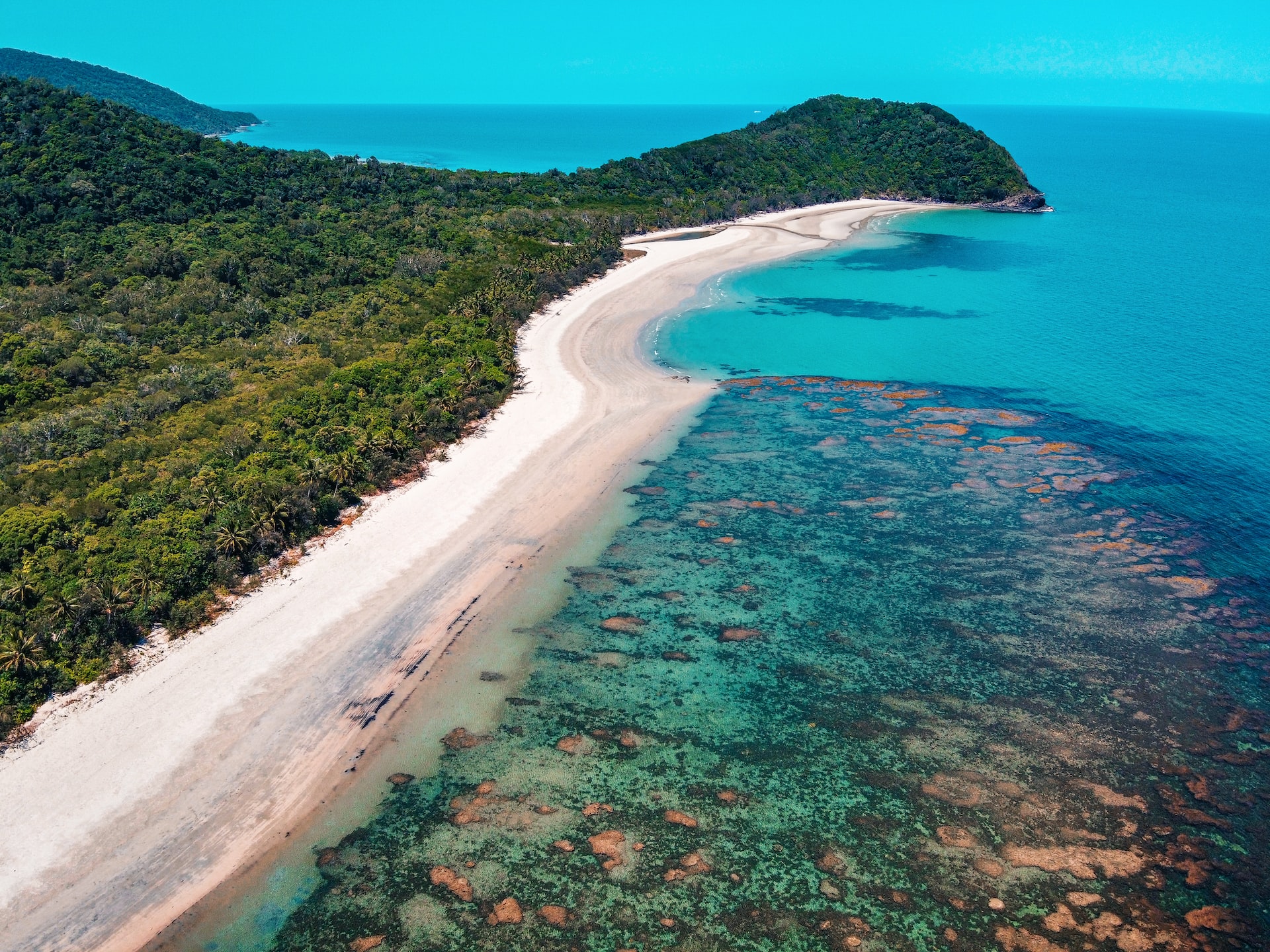
The world’s largest coral reef system stretches 2,300 kilometres along the Queensland coast. Seeing it is essential; seeing it responsibly matters too, given the bleaching events of recent years.
Cairns
The main gateway to the reef, Cairns is a small city geared entirely toward tourism. The town itself has limited charm – no real beach, humid year-round – but it serves as an efficient base for reef trips.
Day trips – Boats depart daily for various reef sites. The outer reef (1.5-2 hours out) has better coral than the inner reef. Expect to pay A$200-280 (£103-144) for a day trip including snorkelling gear, lunch, and reef tax. Some operators include introductory scuba dives at extra cost.
Liveaboard diving – For certified divers, multi-day liveaboard trips offer access to pristine outer reef sites and night diving. Three-day trips start around A$700 (£360).
Port Douglas – An hour north of Cairns, smaller and more upmarket. The reef trips depart from here too, and the town has better restaurants and a nicer beach.
Whitsundays
The other main reef access point, further south. The 74 Whitsunday Islands offer sailing, beaches, and reef snorkelling combined.
Whitehaven Beach – Consistently ranked among the world’s best beaches. The silica sand squeaks underfoot and the water is impossibly clear. Day trips from Airlie Beach cost A$150-250 (£77-128).
Sailing trips – The classic Whitsunday experience: two or three days on a yacht, sleeping on board, visiting beaches and snorkelling spots. Trips range from party boats (younger crowds, more alcohol) to upmarket catamarans. Budget A$400-800 (£206-412) for two nights.
Reef Conservation
The reef has suffered significant bleaching in recent years. Choose operators accredited by Ecotourism Australia or certified by the Marine Park Authority. The A$7.50 (£3.85) reef tax per visitor funds conservation and research.
The Outback
Most visitors to Australia never leave the coast, but the interior holds some of the country’s most powerful landscapes.
Uluru
The red monolith rises from flat desert in the Northern Territory, sacred to the Anangu people who have lived here for tens of thousands of years. Climbing Uluru is now permanently closed out of respect for the traditional owners – the base walk (10km) and sunset viewing are the main activities.
Getting there – Fly to Ayers Rock Airport from major cities, or drive from Alice Springs (450km). The only accommodation is at Yulara resort village.
What to do – The sunrise and sunset colour changes are worth waking up for. The Uluru-Kata Tjuta Cultural Centre explains the Anangu connection to the land. Field of Light (when operating) creates a stunning art installation of 50,000 solar lights across the desert.
Nearby Kata Tjuta (the Olgas), a series of dome formations, offers the Valley of the Winds walk – arguably better hiking than Uluru itself.
The Red Centre
Beyond Uluru, the Red Centre includes Kings Canyon (spectacular rim walk), Alice Springs (the Outback hub), and the MacDonnell Ranges. Self-drive or guided tours cover the region in 3-5 days.
Practical Information
Visas
UK citizens need an Electronic Travel Authority (ETA) or eVisitor visa before arrival. Both are free or low-cost and processed online within minutes. Apply before booking flights.
Transport
Australia is vast. Sydney to Melbourne is 880km; Sydney to Cairns is 2,500km. Plan accordingly.
Domestic flights – Qantas, Virgin Australia, and budget carriers Jetstar and Rex connect major cities. Book ahead for better prices; flights from Sydney to Melbourne start around A$80 (£41) one way.
Driving – The classic Australian road trip requires time. The Pacific Highway from Sydney to Brisbane takes two days comfortably; the Great Ocean Road from Melbourne needs at least two days. Car rental starts around A$50-80 (£26-41) per day.
Trains – Limited and slow for intercity travel, though the Indian Pacific (Sydney to Perth) and Ghan (Adelaide to Darwin) are famous experiences in themselves.
Costs
Australia is expensive by Asian standards, comparable to Western Europe.
- Hostel dorm: A$35-50 (£18-26) per night
- Budget hotel: A$120-180 (£62-93) per night
- Mid-range hotel: A$200-350 (£103-180) per night
- Cafe breakfast: A$18-28 (£9-14)
- Pub meal: A$25-40 (£13-21)
- Pint of beer: A$10-14 (£5-7)
When to Visit
Australia spans multiple climate zones.
Sydney and Melbourne – Best September to November (spring) and March to May (autumn). Summer (December-February) is hot; winter (June-August) is mild but cooler.
Tropical north (Cairns, Darwin) – Visit May to October (dry season). November to April brings monsoon rains, humidity, and stinger (jellyfish) season.
Outback – Best March to October. Summer temperatures exceed 40°C and are genuinely dangerous.
Wildlife
Australia’s animals are as advertised – you will see kangaroos, wallabies, and exotic birds without trying. Koalas require more effort; wildlife parks guarantee sightings (Taronga Zoo in Sydney, Lone Pine in Brisbane, Healesville Sanctuary near Melbourne).
The dangerous reputation is exaggerated but real. Follow posted warnings about swimming (crocodiles in the north, sharks and rip currents on beaches), wear shoes in the bush, and check your boots for spiders in the outback.
Power
Australia uses Type I plugs (three flat pins in a triangle). Voltage is 230V. UK visitors need a travel adapter.