Food on Eurostar: What to Eat and Drink on the Train
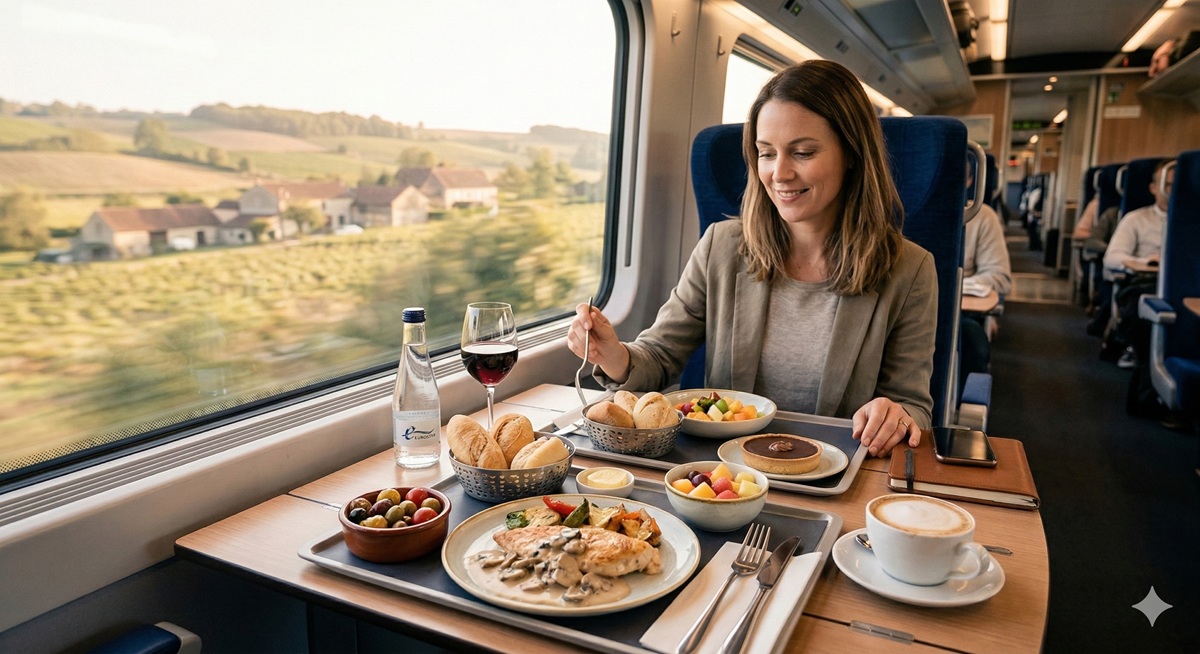
The food situation on Eurostar is one of the clearest points of difference between the ticket classes. In Standard, you go to the bar buffet car and buy what they have — a serviceable range of snacks and hot drinks. In Standard Premier, a three-course meal is brought to your seat. In Business Premier, it’s a genuinely good restaurant-quality spread.
For a two-hour train journey, how much this matters depends on what time of day you’re travelling. A 9am departure from London with a decent breakfast inside you and nothing until Paris lunch? Standard is fine. A 7am departure heading to a business meeting where you haven’t eaten? Standard Premier starts to look very sensible.
Here’s what to expect in each class, and whether it’s worth bringing your own food.
Standard: The Bar Buffet Car
Every Eurostar train has a bar buffet car, and it’s open to all Standard passengers throughout the journey. It sells:
Hot drinks:
- Tea and coffee — standard espresso-based options (flat white, cappuccino, latte, Americano)
- Hot chocolate
- Prices typically £2.50–£4.50 per drink
Cold drinks:
- Water, soft drinks, fruit juice
- Beer (typically a lager, sometimes a Belgian option) — around £4–5 per can
- Wine by the glass or small bottle — typically £6–9
- Spirits in miniature bottles
Food:
- Sandwiches and wraps (usually 3–5 options — a chicken, something vegetarian, possibly a prawn or smoked salmon option)
- Salads and snack boxes
- Pastries and sweet snacks
- Crisps and chocolate
Prices: Expect to pay £5–9 for a sandwich, £3–5 for a snack. Broadly in line with an airport food outlet — not cheap, but not offensive.
The bar buffet is physically a standing-order counter in a converted carriage. On busy trains — particularly Friday mornings and Monday afternoons — a queue can develop. If you want a coffee at the start of the journey, it’s worth going early rather than at the point when everyone else has the same idea. By the middle of the journey on a full train, the queue can be 10–15 minutes.
Practical tip for Standard passengers: The selection at the bar buffet is limited. If you want specific food — a particular dietary preference, or just something better than a basic wrap — buy at the station before you board. St Pancras has good food options, including Pret a Manger, a bakery, and several other outlets in the main concourse. Bring it through security in your bag. The Eurostar baggage allowance guide confirms that there is no restriction on bringing food through — it goes through the X-ray like everything else, but no restrictions on type or quantity.
Standard Premier: The Meal Service
Standard Premier includes a full meal service at your seat. A trolley comes round with your options, and a proper multi-course meal is served with drinks included.
What’s typically included:
- A starter (something like a charcuterie selection, a soup, or a small salad)
- A main course (typically two or three options — usually a meat option and a vegetarian alternative)
- A dessert or cheese course
- Drinks: wine (a choice of red and white), beer, soft drinks, tea and coffee
- Bread, butter, and condiments
The menu changes seasonally. Eurostar’s current catering is provided in partnership with a chef or food partner (this has changed over the years — they’ve worked with various names in British and French food). The quality is consistently above airline catering and below a mid-range restaurant, which is about where you’d hope it would be for a two-hour train journey.
I’ve eaten the Standard Premier meal on several journeys and it’s always been properly cooked. The main course is generally warm and reasonably substantial — not a tiny airline portion. A glass of wine with lunch on the way to Paris feels exactly right.
Is Standard Premier worth it for the food alone?
If the price premium over Standard is small — which it sometimes is, particularly on morning and evening trains when demand for Premier is moderate — it’s almost always worth it. You’d pay £10–15 for a comparable meal and drink at a station café. If Standard Premier is £25–35 more than Standard on a specific booking, the meal broadly covers the cost. Check at the time of booking.
Business Premier: The Full Dining Experience
Business Premier is where the food genuinely shifts into a different category. It’s a restaurant-quality meal with wine and full table service — comparable to a decent brasserie meal rather than a train meal.
What Business Premier includes:
- An amuse-bouche or bread service on arrival
- A starter with proper plating
- A main course (typically 3–4 choices, including a vegetarian option)
- A dessert and/or cheese
- A drinks menu: champagne to start, a selected wine list (the wines change with the seasonal menu), spirits, soft drinks, tea and coffee
- An afternoon tea service is sometimes served on certain departures in addition to the main meal
The Business Premier carriage is a different, calmer environment from Standard. The seating configuration gives more space between passengers. Service is personal — your food and drinks are brought individually, not via a trolley. The meal is the centrepiece of the journey rather than an afterthought.
For business travellers, the meal is part of the overall Business Premier proposition alongside the lounge access, flexible ticketing, and priority boarding. See the Eurostar seat classes guide for the full comparison.
Drinks: What’s Available in Each Class
| Standard | Standard Premier | Business Premier | |
|---|---|---|---|
| Tea/Coffee | Buy at buffet | Included | Included |
| Wine | Buy at buffet | Included | Included (wine list) |
| Beer | Buy at buffet | Included | Included |
| Champagne | Buy at buffet (limited) | Not typically included | Sometimes included |
| Soft drinks | Buy at buffet | Included | Included |
| Spirits | Buy at buffet | Not typically included | Included |
Standard passengers are not restricted from buying alcohol at the bar. There is a Eurostar rule that passengers should not consume more than four cans or bottles of beer, or one bottle of wine, that they’ve brought on board themselves — though the bar has no formal per-person cap in the same way. This is a courtesy rule rather than a policed limit.
Bringing Your Own Food
You can bring your own food on Eurostar. There’s no restriction on carrying food through security (it goes through the X-ray). Drinks in sealed containers are fine.
What makes sense to bring:
- A better sandwich or meal from St Pancras if you want more choice than the buffet
- A bottle of wine (within the on-board consumption guidelines — you can open one bottle at your seat; bringing back bottles in your bags is fine and duty-free limits apply on return)
- Snacks for children, specific dietary needs, or if the buffet options won’t work for you
What to note: Eurostar’s rule on alcohol brought on board is four cans/bottles of beer or one bottle of wine per person. Opening a bottle of spirits for consumption on the train is not permitted. This is a conditions-of-carriage rule that’s enforced if passengers become disruptive.
Food at Gare du Nord and Brussels-Midi
A few notes on food at the main arrival stations:
Gare du Nord, Paris: The station has a range of food outlets — some decent brasseries and cafes within the station itself, and the surrounding neighbourhood (10th arrondissement) has excellent options within a short walk. Eric Kayser bakeries are near the station. The surrounding streets have traditional brasseries if you want lunch immediately on arrival.
Brussels-Midi: The station itself has limited options and the immediate area around Brussels-Midi is not the best part of the city. Get on the Metro into the city centre and eat there. The Grand Place neighbourhood has restaurants at every price point within 10–15 minutes of the station.
Amsterdam Centraal: Much better immediately outside — several decent food options in the station and around the Stationsplein. The city centre is immediately accessible.
Frequently Asked Questions
Is there food on Eurostar Standard class?
Yes — a bar buffet car sells sandwiches, snacks, hot drinks, and alcohol. It’s available to all Standard passengers throughout the journey.
Does Eurostar Standard Premier include food?
Yes. Standard Premier includes a full three-course meal service at your seat, with drinks (wine, beer, soft drinks) included.
Can I bring my own food on Eurostar?
Yes. There’s no restriction on bringing food through security and eating it on the train. Food goes through the X-ray like everything else.
How much does food cost at the Eurostar bar buffet?
Sandwiches and wraps are typically £5–9. Hot drinks £2.50–4.50. Beer and wine £4–9 per serving.
Is the food in Business Premier good?
Yes — noticeably better than Standard Premier, which is itself better than the buffet car. Business Premier provides a restaurant-quality multi-course meal with a proper wine selection.
Can I drink alcohol I’ve brought on board?
Yes, within limits. Eurostar’s conditions of carriage permit passengers to consume four cans/bottles of beer or one bottle of wine that they’ve brought on board. Spirits brought on board are not for consumption during the journey.
For the full picture on Eurostar — routes, check-in, tickets, baggage, and seat classes — see the Eurostar travel guide.