Things to Do in Florence: Italy Travel Guide
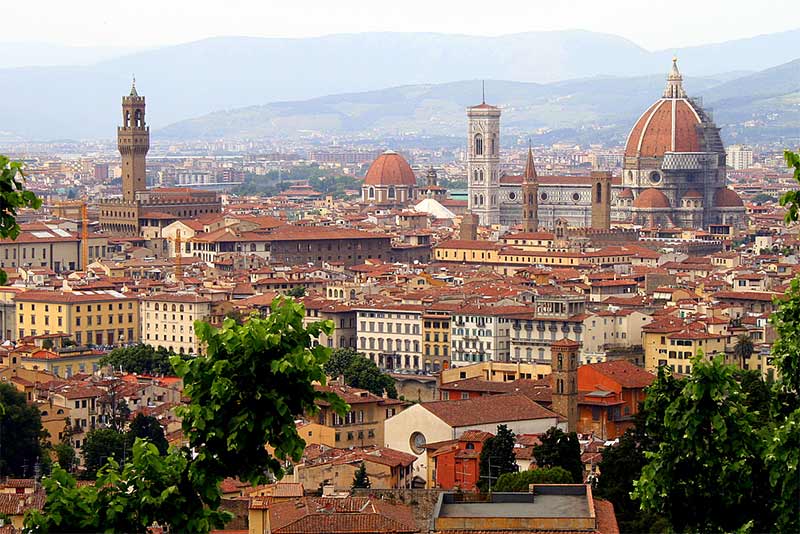
Florence changed how I think about art. The things to do in Florence are overwhelming – I spent four days there, and by the end, walking past yet another Renaissance masterpiece on a random street corner had started to feel almost normal. This city – small enough to cover on foot, dense with beauty at every turn – is where the Renaissance happened, where Michelangelo carved David and Brunelleschi built his impossible dome and the Medici family patronised artists whose work would define Western art for centuries.
The terracotta rooftops, the Arno cutting through the centre, the afternoon light on ancient stone — Florence is photogenic in ways photographs cannot capture. It is also crowded, expensive, and can feel like a theme park of high culture in peak season. But step away from the main arteries, find a quiet piazza, order a glass of Chianti, and the city reveals why artists and writers have been falling in love with it for six hundred years.
The Duomo
The cathedral of Santa Maria del Fiore dominates Florence’s skyline with Brunelleschi’s dome – an engineering marvel of the 15th century that still impresses today. The dome spans 45 metres without any internal support, a feat that seemed impossible when Brunelleschi proposed it.
Climbing the dome (463 steps) offers intimate views of Vasari’s frescoes inside and panoramic views of Florence from the top. The adjacent Campanile (414 steps) provides arguably better views of the dome itself. Giotto designed the bell tower; the climb is slightly easier.
The Baptistery opposite the cathedral has Ghiberti’s bronze “Gates of Paradise” – gilded panels depicting biblical scenes that took 27 years to complete. The originals are now in the Museo dell’Opera del Duomo across the square; the doors you see are reproductions.
Tickets: A combined pass (EUR 30 / £26) covers the dome climb, campanile, baptistery, crypt, and museum. Book the dome climb with a specific time slot – this is essential in peak season.
The cathedral itself is free to enter but usually has queues.
The Uffizi Gallery
The Uffizi holds one of the world’s finest collections of Renaissance art. The Medici family commissioned, bought, and collected for centuries; the gallery displays the results.
The highlights are famous: Botticelli’s Birth of Venus and Primavera, Leonardo’s Annunciation, Titian’s Venus of Urbino, Raphael’s Madonna of the Goldfinch. But beyond the famous works, the collection traces Italian art from medieval to baroque, room after room of masterpieces.
The building itself – designed by Vasari in the 16th century – is beautiful, with corridors offering views over the Arno and towards the Palazzo Vecchio.
Practical tips: Book tickets online with a timed entry (EUR 25 / £21.50 plus EUR 4 / £3.45 booking fee). The queues without reservation can stretch for hours. Allow at least three hours; serious art lovers will want half a day.
Early morning and late afternoon are least crowded.
Galleria dell’Accademia
The Accademia exists, for most visitors, for one reason: Michelangelo’s David. The original has stood here since 1873, removed from its outdoor position in the Piazza della Signoria to protect it from the elements.
The statue is larger than expected (5.17 metres) and more striking in person than any photograph suggests. Michelangelo carved it from a single block of marble that other sculptors had rejected as flawed. The detail – the veins in David’s hands, the tension in his muscles, the intensity of his gaze – rewards extended viewing.
The museum also holds Michelangelo’s unfinished Prisoners, figures emerging from rough marble, and a collection of musical instruments and Renaissance paintings. But most visitors come for David.
Practical tips: Book tickets online (EUR 16 / £13.80 plus booking fee). Without reservation, expect queues of 1-2 hours in peak season. The museum is small; 45 minutes to an hour is sufficient.
Palazzo Vecchio
The fortress-like town hall of Florence has been the seat of government since the 14th century. The Salone dei Cinquecento (Hall of the Five Hundred) is vast – built for public assemblies, decorated with massive frescoes depicting Florentine military victories.
The private apartments of the Medici dukes are richly decorated; the studiolo of Francesco I is a small room packed with precious objects and hidden compartments. The tower offers views over the Piazza della Signoria, though the climb is steep.
Entry EUR 14 (£12); tower additional EUR 14 (£12). Combined tickets available with the Arnolfo Tower.
Piazza della Signoria
Florence’s political heart is an open-air sculpture gallery. A replica of Michelangelo’s David stands where the original once did; the Fountain of Neptune (the Florentines call it “Il Biancone” – the white giant – and have never much liked it) dominates one corner; the Loggia dei Lanzi shelters Renaissance sculptures including Cellini’s Perseus with the Head of Medusa and Giambologna’s Rape of the Sabines.
The piazza buzzes with tourists, but the free display of sculpture is worth the crowds.
Ponte Vecchio
The medieval bridge lined with goldsmiths and jewellers has spanned the Arno since 1345. It is the only Florentine bridge to survive World War II – allegedly on Hitler’s orders. The Vasari Corridor, a private covered walkway built for the Medici, runs above the shops connecting the Uffizi to the Pitti Palace.
Walking across is free, though the shops cater to tourists with money to spend. The views of the river from here, particularly at sunset, are memorable.
Palazzo Pitti and Boboli Gardens
The massive Renaissance palace on the Oltrarno (south of the river) houses multiple museums: the Palatine Gallery (Raphaels, Titians, and other Old Masters hung salon-style in lavish rooms), the Modern Art Gallery, the Silver Museum, and the Costume Gallery.
Behind the palace, the Boboli Gardens rise up the hillside in formal Italian style – terraces, fountains, grottos, and paths winding through greenery. It is a welcome escape from the intensity of the museums, particularly in hot weather.
Tickets: Combined entry EUR 22 (£19) for all Pitti museums and Boboli Gardens. The gardens alone are EUR 10 (£8.60).
San Lorenzo and the Medici Chapels
The parish church of the Medici family, designed by Brunelleschi, contains the family tombs in the Medici Chapels. The New Sacristy, designed by Michelangelo, holds his sculptures of Night, Day, Dawn, and Dusk – allegories of time on the tombs of two Medici princes. The Chapel of the Princes, a baroque addition, is overwhelmingly decorated with semi-precious stones.
The adjacent San Lorenzo Market fills the surrounding streets with leather goods, souvenirs, and clothing stalls. Quality varies; bargaining is expected.
Entry to Medici Chapels EUR 13 (£11); the church is separate (EUR 9 / £7.70).
Santa Croce
The Franciscan church is the burial place of Florentine greats: Michelangelo, Galileo, Machiavelli, and Rossini among them. The frescoes by Giotto in the Bardi and Peruzzi chapels are among the most important early Renaissance paintings in Florence; Brunelleschi’s Pazzi Chapel in the cloister is an architectural gem.
Entry EUR 8 (£6.90).
Oltrarno
The neighbourhood south of the Arno has artisan workshops, local restaurants, and a less touristy atmosphere than the centro storico. The Piazza Santo Spirito has a daily market and evening aperitivo scene; the streets around Via Maggio have antique shops and traditional craftspeople. This is where Florentines actually live.
Walk up to Piazzale Michelangelo for sunset – the panoramic view over Florence, with the Duomo and towers silhouetted against the sky, is the classic image of the city. Arrive early to claim a spot.
Florentine Food
Tuscan cuisine is hearty and unfussy, built on excellent ingredients simply prepared.
Traditional Dishes
Bistecca alla fiorentina – The signature dish: a thick T-bone steak from Chianina cattle, grilled rare, served by weight. Expect to pay EUR 50-70 (£43-60) per kilogram; a steak for two is typically 1-1.2 kg.
Ribollita – A thick bread soup with cannellini beans, cavolo nero (black kale), and vegetables. Originally peasant food, now on every traditional menu.
Pappa al pomodoro – Another bread-thickened soup, this one tomato-based.
Lampredotto – Tripe sandwich from street vendors, served with salsa verde. A Florentine street food tradition; an acquired taste.
Crostini di fegatini – Chicken liver pate on toast, a standard antipasto.
Where to Eat
The centro storico has many tourist traps; head to Oltrarno or the Sant’Ambrogio market area for better value. Look for “trattoria” rather than “ristorante” for simpler, cheaper meals.
A pranzo (lunch) menu often offers two courses plus water and coffee for EUR 12-18 (£10-15.50). Evening meals at traditional trattorias run EUR 25-40 (£21.50-34) for a full meal with wine.
The Mercato Centrale, the covered food market near San Lorenzo, has a first-floor food hall with various stalls – good for casual meals.
Wine
Florence sits in Chianti country. A glass of house wine costs EUR 4-6 (£3.45-5.15); a bottle of decent Chianti Classico EUR 20-30 (£17-26) in restaurants.
For wine bars (enoteca), try Le Volpi e l’Uva near Ponte Vecchio or Enoteca Pitti Gola e Cantina in Oltrarno.
Day Trips
Pisa
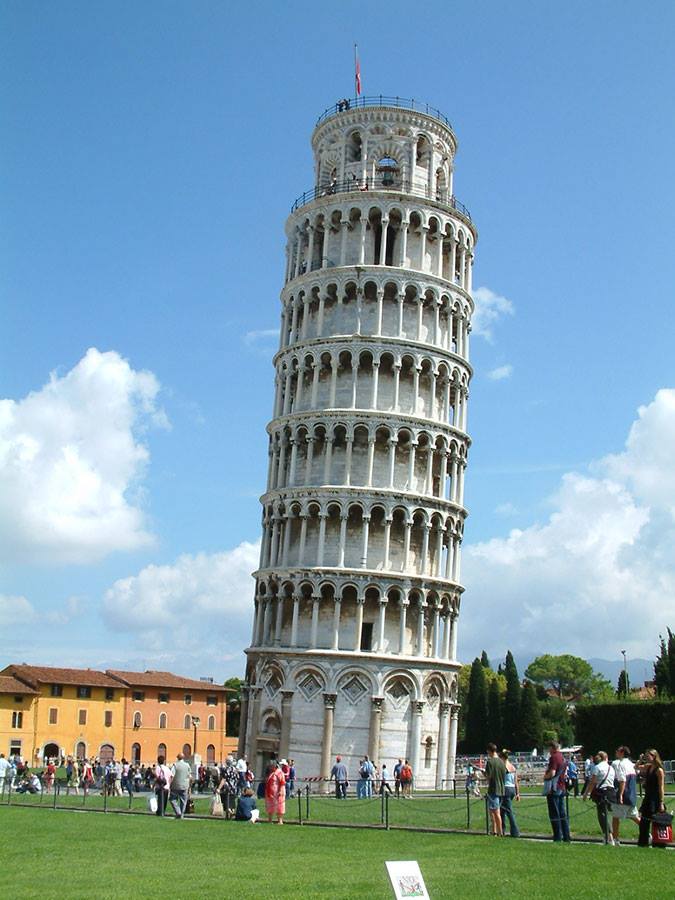
The Leaning Tower is an hour away by train (EUR 9 / £7.70 each way). The Piazza dei Miracoli with the tower, cathedral, and baptistery is genuinely impressive despite the tourist circus around it. Climbing the tower costs EUR 20 (£17) and must be booked in advance in peak season.
A half-day is sufficient.
Siena
The rival city to medieval Florence has the shell-shaped Piazza del Campo (site of the famous Palio horse race twice yearly), a magnificent cathedral, and a beautifully preserved historic centre. About 1.5 hours by bus from Florence.
Worth a full day.
Chianti
The wine region between Florence and Siena is best explored by car. Rolling hills, vineyards, stone farmhouses, and wine tastings at estates throughout. Greve in Chianti and Castellina in Chianti are good base towns.
Practical Information
Getting There
Florence’s airport (FLR) has limited international connections. More flights serve Pisa airport (PSA), connected to Florence by train (1 hour).
High-speed trains connect Florence Santa Maria Novella station with Rome (1.5 hours), Milan (2 hours), Venice (2 hours), and Bologna (35 minutes).
Getting Around
Florence’s centro storico is small and walkable – most sights are within a 20-minute walk of the Duomo. The ZTL (restricted traffic zone) covers the centre; do not drive in unless your hotel arranges access.
Buses run by ATAF serve areas beyond walking distance. Tickets EUR 1.50 (£1.30) for 90 minutes.
When to Visit
April to June – Spring. Pleasant weather, crowds building towards peak.
July and August – Hot (often above 35°C), crowded, and expensive. Many Florentines leave the city.
September and October – Autumn. Good weather, harvest season in Chianti, more manageable crowds.
November to March – Cooler and quieter. Some attractions have reduced hours; December brings Christmas markets.
Costs
- Hostel dorm: EUR 25-40 (£21.50-34) per night
- Budget hotel: EUR 80-120 (£69-103) per night
- Mid-range hotel: EUR 130-200 (£112-172) per night
- Restaurant lunch: EUR 12-20 (£10-17)
- Restaurant dinner: EUR 30-50 (£26-43)
- Coffee at bar: EUR 1.30-1.80 (£1.10-1.55)
- Glass of wine: EUR 4-6 (£3.45-5.15)
- Museum entry: EUR 10-26 (£8.60-22)
Firenze Card
The Firenze Card (EUR 85 / £73) provides priority entry to most museums and unlimited public transport for 72 hours. Worth it if you plan to visit multiple major museums – skip-the-line access alone saves hours.
Language
Italian. English is widely spoken in tourism, but basic Italian phrases are appreciated.
Power
Italy uses Type C, F, and L plugs (two or three round pins). Voltage is 230V. UK visitors need a travel adapter.
Frequently Asked Questions
Do I need a visa to visit Florence?
UK, US, Canadian, and Australian citizens do not need a visa for tourist visits to Italy up to 90 days within a 180-day period. Your passport must be valid for at least three months beyond your planned departure date. EU citizens can visit freely with a valid ID card or passport.
What is the best time to visit Florence?
The best time to visit Florence is April to June or September to October. Spring offers pleasant weather with crowds building towards peak season, while autumn brings harvest season in Chianti and more manageable crowds. July and August are hot (often above 35°C), crowded, and expensive, with many Florentines leaving the city. November to March is cooler and quieter, with lower prices but some attractions having reduced hours.
What currency does Florence use?
Florence uses the Euro (EUR). Credit cards are widely accepted at hotels, restaurants, and shops, though some smaller establishments and trattorias prefer cash. ATMs are readily available throughout the city. Note that many restaurants include a coperto (cover charge) of €2-4 per person on the bill.
What type of power plugs are used in Florence?
Italy uses Type C, F, and L plugs with two or three round pins. The voltage is 230V at 50Hz. UK visitors need a travel adapter, while US visitors need both an adapter and potentially a voltage converter for devices that don’t support 230V.
How much does a trip to Florence cost?
Budget hotels cost EUR 80-120 per night, mid-range EUR 130-200. Lunch pranzo menus run EUR 12-18, while evening meals at traditional trattorias cost EUR 25-40 for a full meal with wine. Major museum entries range from EUR 10-26. The Firenze Card (EUR 85) provides priority entry to most museums and can save time and money if visiting multiple attractions.
Is Florence safe for tourists?
Florence is generally safe for tourists. Petty theft and pickpocketing can occur in crowded tourist areas, around the Duomo, and on public transport. Keep valuables secure and be aware of your surroundings. Violent crime is rare. The centro storico is a restricted traffic zone (ZTL), so avoid driving in the historic center unless your hotel arranges access.