The Amalfi Coast: What Nobody Actually Prepares You For
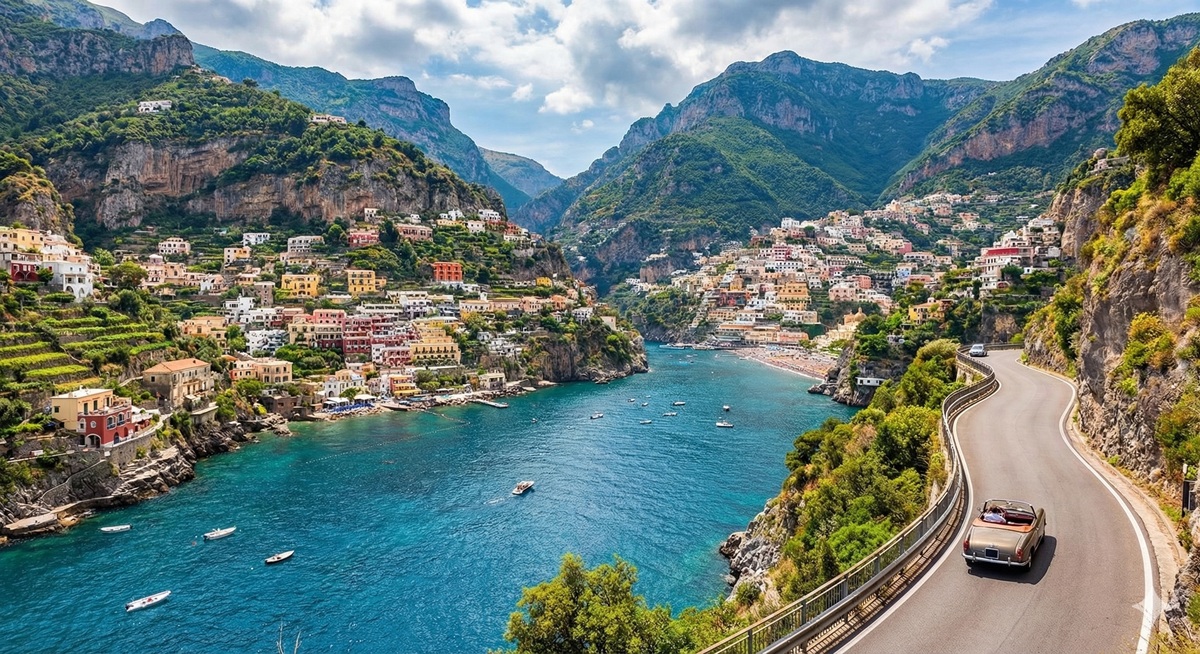
You’ve seen the photos. Pastel houses stacked up impossibly steep cliffs, impossibly blue water below, a glass of limoncello in someone’s impossibly manicured hand. The Amalfi Coast looks like it was designed by a committee of travel photographers.
It kind of was. And it’s still absolutely worth going.
But most guides about the Amalfi Coast skip the part where you’re white-knuckling a rented Fiat down a road barely wider than the car, a full-size coach approaching from the opposite direction, and a 200-metre drop to your left. Or the part where the “quiet beach” everyone recommends is crammed shoulder-to-shoulder in July. Or the part where a plate of pasta costs €28 because your hotel’s restaurant is the only thing within walking distance.
This guide exists to fill those gaps. By the end, you’ll know exactly what to expect, where to stay based on your actual priorities, how to get around without descending into madness, and whether the Amalfi Coast is the right choice for you at all.
Spoiler: it probably is. But you’ll enjoy it a lot more with realistic expectations.
What Is the Amalfi Coast?
The Amalfi Coast — Costiera Amalfitana in Italian — is a 34-mile stretch of coastline in the Campania region of southern Italy. It runs along the southern edge of the Sorrentine Peninsula, facing the Gulf of Salerno, roughly between the towns of Positano in the west and Vietri sul Mare in the east.
It became a UNESCO World Heritage Site in 1997, recognised for what the committee called “an outstanding example of a Mediterranean landscape.” That’s understatement. Vertical limestone cliffs drop straight into turquoise water. Thirteen towns are wedged into gaps and ledges along the rock face, each one a scramble of narrow alleys, tiled church domes, and terraced gardens growing lemons the size of your fist.
The whole thing is threaded together by one road: the SS163, a two-lane coastal highway with hairpin bends, passing places, and the kind of views that make passengers forget to be terrified.
The 13 Towns: A Quick Orientation
Most visitors only see two or three towns. Here’s what each one is actually like:
Positano — The famous one. Steeply vertical, ridiculously photogenic, and priced accordingly. Expect €30 cocktails and €400-a-night hotels. Worth at least half a day even if you’re not staying.
Praiano — Quieter, cheaper, genuinely beautiful, and often overlooked. A smart base if you want Positano access without Positano prices. About 20 minutes east by bus or ferry.
Conca dei Marini — Tiny, relatively undiscovered, home to the Grotta dello Smeraldo (an emerald sea cave worth visiting). Almost no flat ground — everything is steps.
Furore — The “invisible town” — largely scattered up the hillside, with a famous tiny fjord beach that’s spectacular but takes commitment to reach.
Amalfi town — The historical capital and transport hub. More commercial than its neighbours, but genuinely interesting: the cathedral, the paper museum, the maze of back streets. Good ferry and bus connections make it a practical base.
Atrani — Literally 5 minutes’ walk from Amalfi but worlds quieter. The smallest municipality in Italy. Has a small beach, a couple of good restaurants, and almost no tourists. Stay here if you can find accommodation.
Ravello — Up in the hills, not on the water, and better for it. Gardens, a concert hall, cooler air, and views that stop you mid-sentence. A non-negotiable day trip.
Minori and Maiori — The most “normal” towns — actual supermarkets, actual locals, actual prices. Good beach at Maiori. Often dismissed by guidebooks, which makes them worth a look.
Cetara — The fishing town. Famous for its anchovies (seriously — the anchovy sauce here is exported globally). Far fewer tourists, excellent seafood, and one of the most authentic atmospheres on the coast.
Vietri sul Mare — The ceramics capital. Brightly painted tiles everywhere. Marks the eastern end of the coast; many people pass through but few stay.
Getting There
From Naples: The most common arrival point. Naples to the Amalfi Coast takes around 1.5 to 2.5 hours depending on your destination and method.
- By ferry (seasonal): The fastest and most enjoyable option. High-season ferries run from Molo Beverello directly to Positano, Amalfi and other stops. Check Alilauro and Travelmar schedules. Run April–October only.
- By SITA bus: Cheap, frequent, but slow and often overcrowded. Take Bus 5001 from Naples to Sorrento, then change for the Amalfi Coast service.
- By car: Fastest but not necessarily recommended unless you’re confident on narrow mountain roads. See the driving section below.
From Rome: About 4–5 hours total. Train to Naples Centrale, then ferry or bus onward. A long day-trip from Rome is technically possible but you’ll spend more time travelling than being there.
From Salerno: Often overlooked — Salerno is just 40 minutes by ferry to Amalfi town, cheaper than Naples, and a genuinely good base for budget travellers.
One thing worth sorting before you leave: Italy uses Type C and Type L sockets, not the UK Type G. Your standard UK plug won’t fit. Pick up an adapter before you fly — this one covers both socket types:
📌 Read next: How to Get Around the Amalfi Coast Without Losing Your Mind →
Where to Stay: The One-Line Version
Your base decides how much of your trip you spend on that congested coast road versus actually enjoying the place. The honest one-liner: don’t stay in Positano unless budget is no object and steps don’t bother you — Praiano and Amalfi town suit most people far better, and Salerno wins on price.
Which town is right depends entirely on your budget, mobility and travel style, so I’ve broken all eight bases down properly — with nightly price ranges, who each suits, and the catch nobody mentions — in the dedicated guide. Book July and August accommodation six months ahead; it is not overkill.
📌 Read next: Where to Stay on the Amalfi Coast: town-by-town, with prices →
Getting Around Once You’re There
This is where most visitors get caught out. The Amalfi Coast has exactly one road running along it (the SS163), and it is consistently congested from June through September.
Your options are:
Ferry — The best option. Scenic, relaxing, avoids the road entirely. Runs between main towns April–October. Book tickets on the day at the harbour.
SITA Bus — Cheap and goes everywhere, but prepare for delays, crowds, and the occasional hour-long wait in the heat. Keep exact change.
Driving yourself — Achievable with care, but the road is genuinely narrow. Summer traffic can mean 45 minutes to cover 5 kilometres. See full driving guide.
Water taxi — Expensive but flexible. Good for getting to beaches not accessible from the road.
Organised day tours — Often the most stress-free option for a first visit, especially for day-trippers from Naples or Sorrento.
📌 Read next: How to Get Around the Amalfi Coast: Ferries, Buses and Driving Explained →
When to Go
Best months overall: May, June, and September. Warm, manageable crowds, most services running.
July and August: Beautiful but genuinely crowded. Roads gridlocked. Beaches packed by 9am. Hotels at peak prices. If this is your only option, go — but manage expectations.
October: Underrated. Still warm enough to swim (just). Far fewer crowds. Most restaurants and hotels still open. Ferry services may be reduced.
November–March: Most smaller hotels and restaurants close. The coast takes on a quieter, more authentic character that some travellers love. Good for Ravello and the towns — not for beach holidays.
📌 Read next: Best Time to Visit the Amalfi Coast: Month-by-Month Honest Guide →
What It Actually Costs
The Amalfi Coast is not budget travel. But it’s not automatically ruinous either — it depends enormously on where you stay and how you eat.
Budget end: Staying in Salerno or Minori, eating at local trattorias away from the waterfront, using public ferries and buses. Possible at €100–150/day for two people.
Mid-range: A B&B in Praiano or Atrani, eating well without splashing out, a boat trip or two. Expect €200–300/day for two.
High end: Staying in Positano, sunset cocktails, private boat hire. Budget open.
The single biggest cost-saving move: walk 100 metres away from any harbour or main piazza before sitting down to eat. Price difference is immediate and dramatic.
📌 Read next: Amalfi Coast on a Budget: Real Costs and How to Cut Them →
The Things That Surprise People
The steps. Almost every Amalfi Coast town is built vertically. There are no flat routes. If mobility is a concern, this needs serious research before you go.
The driving reputation is earned. The SS163 is a spectacular but demanding road. Coaches and lorries use it daily. If you’ve never driven mountain roads, consider the bus or ferry instead.
Positano is not a beach destination. The beach is small, pebbly, and gets full early. The experience of Positano is the town itself — the staircases, the boutiques, the view.
The lemons are not a gimmick. The sfusato amalfitano — the local lemon variety — genuinely tastes different. The limoncello made from it is also genuinely better. Buy it from a producer, not a tourist shop.
Cetara deserves more time than it gets. Most itineraries skip it. It’s one of the most genuine towns on the coast and has the best seafood.
Is It Worth It?
Yes. Without reservation.
The Amalfi Coast is one of the most beautiful places in Europe, possibly in the world. The combination of dramatic landscape, historic towns, excellent food, and genuine Mediterranean atmosphere is hard to match.
What it isn’t: relaxed, easy, or cheap. It rewards people who do their research, pick their base carefully, travel in shoulder season if possible, and let go of the idea that it’s going to look exactly like the photos.
It won’t. It’ll look better in some ways and more chaotic in others. That’s the deal.
Further Reading
- Where to Stay on the Amalfi Coast: Town-by-Town Breakdown →
- How to Get Around the Amalfi Coast Without Losing Your Mind →
- Best Time to Visit the Amalfi Coast →
- Amalfi Coast on a Budget: Real Costs + How to Save →
Frequently Asked Questions
How long does it take to reach the Amalfi Coast from Naples?
Around 1.5 to 2.5 hours depending on which town you are heading for and whether you travel by ferry, bus or car. Naples is the most common arrival point for good reason.
Can you visit the Amalfi Coast as a day trip from Rome?
Technically yes, but I would not. It is roughly four to five hours each way — train to Naples Centrale then ferry or bus onward — so you would spend most of the day travelling rather than on the coast.
How many towns are there on the Amalfi Coast?
Thirteen. They are very different from one another in price, atmosphere and how easy they are to reach, so choosing the right base matters more here than in most destinations.
Is the Amalfi Coast worth it?
Yes, with your expectations adjusted. It is more crowded, more expensive and harder to move around than the photographs suggest. Go knowing that and it is still one of the most beautiful coastlines in Europe.