St Peters Basilica: Vatican City Visitor Guide

Nothing prepares you for the scale of St Peter’s Basilica. I’ve seen photographs my whole life, but standing in the nave for the first time, I felt genuinely small. The ceiling seems impossibly high, the marble columns impossibly thick, and Bernini’s bronze baldachin over the altar – which looks modestly sized in photos – rises four storeys above the floor. This is a building designed to overwhelm, and it works.
St Peter’s is the largest church in the world and the spiritual centre of the Catholic faith. But you don’t need to be religious to appreciate it. This is one of the greatest architectural achievements in history, packed with art by Michelangelo, Bernini, and others. Even confirmed atheists walk out impressed.
What to See Inside
The Pietà
Michelangelo’s sculpture of Mary holding the body of Christ is behind protective glass in the first chapel on the right. He carved it in 1499 when he was just 24. The glass barrier keeps you at a distance, but the detail is still remarkable – the folds of Mary’s robe, Christ’s limp hand, the expression on her face.
This is the only work Michelangelo ever signed. Look for his name carved into the sash across Mary’s chest.
Bernini’s Baldachin
The massive bronze canopy over the main altar dominates the interior. At 29 metres tall, it’s as high as a seven-storey building. Bernini completed it in 1634 using bronze stripped from the Pantheon’s portico – a decision that spawned the phrase “what the barbarians didn’t do, the Barberini did.”
The twisted columns reference the columns of Solomon’s Temple. Standing beneath it, looking up at the dome above, is one of those moments that reminds you why people built things like this.
The Dome
Michelangelo designed the dome but died before its completion. The interior is covered in gold mosaics depicting saints and angels, with Latin inscriptions around the base. The letters spelling out “You are Peter, and on this rock I will build my church” are each nearly two metres tall.
You can climb to the top (see below), but even from the floor, the dome is spectacular.
The Tomb of St Peter
The basilica is built over what’s believed to be St Peter’s burial site. Below the main altar, the Vatican Grottoes contain the tombs of many popes, including John Paul II. Excavations beneath the Grottoes (the Scavi tour) reach the original Roman cemetery and the bones believed to be Peter’s.
Other Highlights
- The Chair of St Peter – Bernini’s bronze throne at the far end of the church, supposedly containing a wooden chair used by Peter himself
- Monument to Alexander VII – Bernini’s dramatic tomb with Death as a skeleton emerging from beneath the door
- The bronze statue of St Peter – The right foot is worn smooth from centuries of pilgrims touching it
Climbing the Dome
The dome climb is one of the best things to do in Rome. You can take the lift partway (€10) or walk the entire 551 steps (€8). Either way, you’ll finish with a claustrophobic spiral staircase that curves along the inside of the dome itself.
The views from the top are spectacular – across St Peter’s Square, over Rome’s rooftops to the Colosseum, and into the Vatican Gardens. On a clear day, you can see the Apennine Mountains.
Tips:
- Go early to avoid queues
- Not suitable for those with mobility issues or claustrophobia
- The final staircase is narrow and steep – the walls literally lean inward
- Allow 30-45 minutes for the climb
The Vatican Grottoes
Below the basilica, the Grottoes contain the tombs of numerous popes from the 10th century onwards. Entry is free and accessed from inside the basilica. Pope John Paul II’s tomb draws the most visitors.
For the excavations beneath the Grottoes (the Scavi), you need to book separately through the Vatican’s Excavations Office. Tours are limited to small groups and sell out weeks in advance.
Practical Information
Opening Hours:
- Basilica: 7am-7pm (April-September), 7am-6pm (October-March)
- Dome: 8am-6pm (April-September), 8am-5pm (October-March)
- Grottoes: 7am-6pm (April-September), 7am-5pm (October-March)
Entry:
- Basilica: Free
- Dome with lift: €10
- Dome by stairs: €8
- Grottoes: Free
- Scavi (excavations): €13, advance booking required
Dress Code:
Shoulders and knees must be covered. This is enforced – bring a scarf or wear trousers. No exceptions.
Security:
Airport-style security screening at the entrance. Expect queues of 20-45 minutes during peak season.
Avoiding the Queues
The queue for the basilica can stretch across the square. To minimise waiting:
- Arrive early: Before 8am in summer, when tour groups haven’t arrived yet
- Visit during lunch: 12pm-2pm is often quieter
- Late afternoon: Less crowded, but you’ll have less time before closing
- Avoid Wednesdays: The Pope’s weekly audience fills the square and clogs access
If you’re also visiting the Vatican Museums and Sistine Chapel, book a guided tour that enters the basilica directly from the Sistine Chapel – this bypasses the main queue entirely.
Nearby
Castel Sant’Angelo
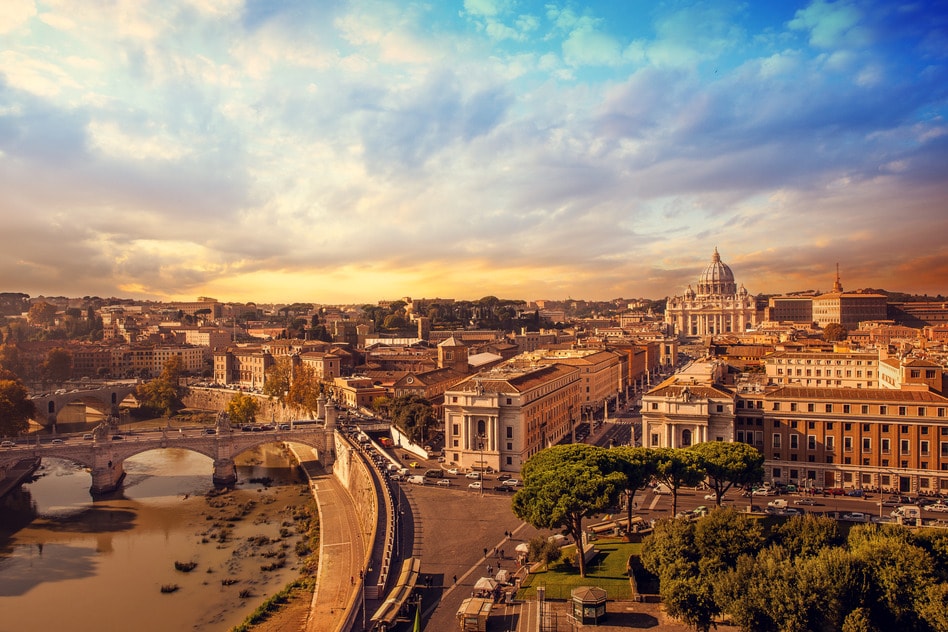
A 10-minute walk along the Tiber, this cylindrical fortress was originally Emperor Hadrian’s mausoleum before becoming a papal fortress and prison. The rooftop terrace has excellent views of St Peter’s.
Vatican Museums
The museums and Sistine Chapel are separate from the basilica and require a ticket (€17-21). Book online to avoid the even longer queues.
St Peter’s Square
The vast piazza designed by Bernini, with its curved colonnades representing the Church’s embrace. The obelisk in the centre is from ancient Egypt. Stand on the stone discs set into the pavement to see how Bernini designed the columns to appear as a single row.
Frequently Asked Questions
Do I need a visa to visit Vatican City?
Vatican City is surrounded by Italy and follows the same visa requirements. EU, USA, Canadian, Australian, and New Zealand citizens can visit for up to 90 days without a visa. Vatican City is accessible through Italy, so if you can enter Italy (Schengen Area), you can visit Vatican City.
When is the best time to visit St Peter’s Basilica?
Visit early morning (before 8am) or late afternoon to avoid the worst crowds. Avoid Wednesdays when the Pope’s weekly audience fills the square. The best months are April-May and September-October for pleasant weather and moderate crowds. Winter months have fewer tourists but shorter opening hours.
What currency is used and how much does it cost to visit?
Vatican City officially uses the Euro (EUR), though it’s accessed through Italy. Entry to St Peter’s Basilica is free. Climbing the dome costs €10 with the lift or €8 by stairs. The Vatican Museums cost €17-21. Budget €100-150 per day for accommodation and meals in Rome.
Is Vatican City safe for tourists?
Vatican City and the surrounding area are generally very safe. Pickpocketing can occur in crowded areas, especially in the security queues for St Peter’s. Keep valuables secure and be vigilant. The area is heavily patrolled by both Vatican security and Italian police.
What is the dress code for St Peter’s Basilica?
Shoulders and knees must be covered for both men and women. Tank tops, shorts, and short skirts are not allowed. This dress code is strictly enforced at the entrance. Bring a scarf or shawl to cover shoulders if needed. Hats must be removed inside.
How long should I spend at St Peter’s Basilica?
Allow 2-3 hours to visit the basilica and explore its major artworks. Add 30-45 minutes if you’re climbing the dome, and another 30 minutes for the Vatican Grottoes. If you’re also visiting the Vatican Museums and Sistine Chapel, plan a full day.