Mount Rushmore & the Black Hills: Visitor Guide
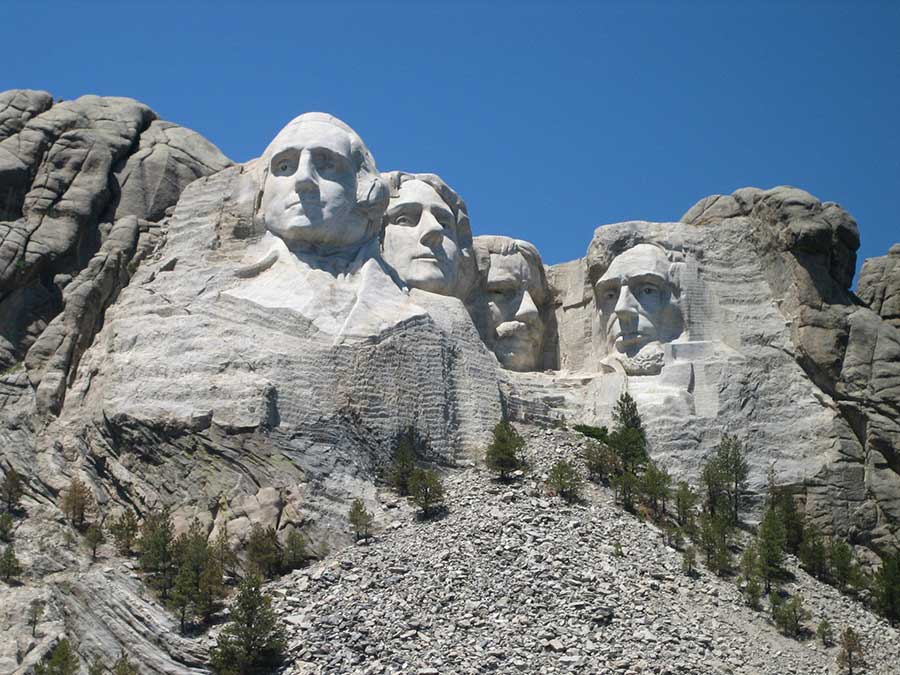
Mount Rushmore sits in a corner of South Dakota that most people only visit for the monument itself. That’s a mistake. The Black Hills region surrounding those four presidential faces offers some of the best scenery and outdoor activities in the American Midwest – enough to fill several days if you have the time.
The monument itself takes a couple of hours. The region deserves longer.
Mount Rushmore: What to Expect
Four faces carved into granite: George Washington, Thomas Jefferson, Theodore Roosevelt, and Abraham Lincoln. Each head stands about 18 metres tall – roughly the height of a six-storey building. Sculptor Gutzon Borglum and around 400 workers spent 14 years (1927-1941) blasting and carving 450,000 tons of rock from the mountain.
The viewing experience is straightforward. You park (around $10 for an annual pass that covers the parking fee), walk through the Avenue of Flags, and arrive at the Grand View Terrace where most people take their photos. That view – the one you’ve seen in films and on postcards – takes about ten minutes to absorb.
The Presidential Trail
For a closer look, walk the Presidential Trail. It’s a half-mile loop (about 800 metres) with 422 stairs, winding through the forest below the sculpture. The views from different angles show details you miss from the main terrace – the textures in the carvings, the scale against the surrounding rock.
The trail is paved and reasonably accessible, though the stairs can be challenging. Allow 30-45 minutes for the full loop.
Evening Lighting Ceremony
From late May through early September, the monument is illuminated after dark. A ranger talk precedes the lighting, and veterans in the audience are invited to help fold the flag. It’s touristy but genuinely moving – the faces lit against the night sky have a different impact than the daytime view.
Arrive at least 30 minutes early for seats in the amphitheatre.
Lincoln Borglum Visitor Center
The museum beneath the viewing terrace explains the monument’s construction with photos, tools, and a 13-minute film. Worth 30 minutes if you’re interested in the engineering challenges of carving a mountain. The Sculptor’s Studio nearby shows Borglum’s original models and workspace.
Crazy Horse Memorial
About 27 kilometres from Mount Rushmore, another mountain carving has been in progress since 1948. When completed, the Crazy Horse Memorial will be the world’s largest sculpture – the Lakota warrior on horseback will stand 172 metres tall (Mount Rushmore’s heads would fit inside Crazy Horse’s head).
The catch: it’s nowhere near finished. After 75 years, only the face is complete. The arm pointing forward has been started. At the current rate, completion is decades away – maybe generations.
Whether it’s worth the $15 entry fee depends on your perspective. Some find the ongoing work inspiring; others feel it’s an expensive construction site. The Indian Museum of North America on site offers genuine insight into Native American culture and history – arguably more valuable than viewing the unfinished carving.
The backstory matters: Chief Henry Standing Bear commissioned the memorial in 1939 to show that “the red man has great heroes too” – a direct response to Mount Rushmore being carved on land sacred to the Lakota. The Ziolkowski family has continued the work since Gutzon Borglum’s student Korczak Ziolkowski died in 1982.
Custer State Park
If you only have time for one thing beyond Mount Rushmore, make it Custer State Park. The 71,000-acre park contains some of the best wildlife viewing in the country.
Wildlife Loop Road
The 18-mile (29 km) Wildlife Loop Road passes through open grassland where bison herds roam. You’ll likely see them from the car – sometimes blocking the road entirely. Also watch for pronghorn antelope, wild burros (descendants of pack animals abandoned by miners), prairie dogs, and occasionally mountain lions and elk.
Early morning or late afternoon gives the best wildlife viewing and light for photography.
Needles Highway
State Route 87 through the park twists through granite spires and tunnels blasted through solid rock. The “Needle’s Eye” tunnel is barely wide enough for a car. It’s spectacular driving, though not for anyone nervous about heights or tight spaces.
Lakes and Recreation
Sylvan Lake offers swimming, kayaking, and easy hiking trails. Legion Lake and Stockade Lake have similar facilities with fishing for trout and bass. The park has multiple campgrounds if you want to spend the night.
Entry fee: Around $20 per vehicle for a seven-day pass.
Wind Cave National Park
Below the prairie surface, Wind Cave contains over 240 kilometres of surveyed passages – one of the longest caves in the world. Above ground, the park protects one of the few remaining mixed-grass prairies, home to bison, elk, and prairie dogs.
Cave Tours
Rangers lead several tour options, from basic hour-long walks to more strenuous “wild cave” experiences involving crawling and climbing. The cave maintains a constant 11°C (53°F), so bring a layer even in summer.
The cave’s distinctive “boxwork” formations – thin calcite fins resembling honeycomb – are found in greater quantity here than anywhere else on earth. Book tours in advance during summer months.
Above Ground
The surface wildlife viewing rivals Custer State Park with fewer crowds. The 4.4-mile (7 km) Centennial Trail offers prairie hiking with good chances of seeing bison.
Black Hills National Forest
The forest covers over 1.2 million acres surrounding the parks and monuments. For visitors, it means endless hiking and biking trails, scenic drives, and dispersed camping.
Spearfish Canyon
Highway 14A through Spearfish Canyon is one of the most scenic drives in the region – limestone cliffs, waterfalls, and dense forest. Roughlock Falls and Spearfish Falls are both accessible via short walks from roadside pullouts.
Harney Peak (Black Elk Peak)
The highest point between the Rockies and the French Alps, Black Elk Peak (formerly Harney Peak) stands at 2,207 metres. The 6-mile (9.7 km) round-trip hike from Sylvan Lake gains about 350 metres of elevation, leading to a stone fire tower with 360-degree views.
It’s a moderate hike suitable for reasonably fit visitors – allow 3-4 hours.
Practical Information
Getting There
The nearest major airport is Rapid City Regional (RAP), about 40 kilometres from Mount Rushmore. Denver and Minneapolis are the nearest hub airports, both around 6-7 hours by car.
A rental car is essential – there’s no useful public transport in the Black Hills.
When to Visit
Summer (June-August): Peak season with warm weather, all facilities open, but crowds at Mount Rushmore. Evening lighting ceremonies available.
Spring and Autumn: Fewer crowds, pleasant temperatures, but some facilities may be closed. Wildlife viewing can be better – animals are more active.
Winter: Cold (often below freezing) and some roads close, but Mount Rushmore itself stays open year-round. Dramatic snow-covered views and virtually no crowds.
Where to Stay
Keystone: The closest town to Mount Rushmore, full of tourist shops and motels. Convenient but not charming.
Custer: Better base for exploring the wider region. More authentic small-town feel with decent dining options.
Rapid City: Largest city in the area with full range of hotels, restaurants, and services. About 40 minutes from Mount Rushmore.
Camping: Multiple options in Custer State Park and Black Hills National Forest. Book well ahead for summer weekends.
How Long to Stay
- Mount Rushmore only: Half a day
- Mount Rushmore + Crazy Horse: Full day
- Including Custer State Park: 2 days minimum
- Proper Black Hills exploration: 3-4 days
Frequently Asked Questions
Do I need a visa to visit Mount Rushmore?
International visitors need to meet US visa requirements. Citizens of Visa Waiver Program countries (including UK, Australia, most EU nations) can visit for up to 90 days with an approved ESTA. Canadian citizens typically don’t need a visa for tourism. Check current requirements before travel as policies can change.
When is the best time to visit Mount Rushmore?
Late May to early September offers the best weather and all facilities open, including the evening lighting ceremony. However, this is peak season with larger crowds. Spring (April-May) and autumn (September-October) have fewer visitors and pleasant weather. Winter visits offer snow-covered views and virtually no crowds, though some roads may close.
What currency is used and how much does it cost to visit?
The USA uses the US Dollar (USD). Mount Rushmore parking costs around $10 for an annual pass. Entry to the monument itself is free. Budget $80-120 per day for accommodation in nearby towns, $30-50 for meals, and additional costs for activities like Custer State Park ($20 per vehicle) and Crazy Horse Memorial ($15).
Is Mount Rushmore safe for tourists?
Mount Rushmore and the Black Hills region are very safe for tourists. The monument has park rangers and security on site. Wildlife encounters (bison, mountain lions) are possible in Custer State Park and surrounding areas – maintain safe distances and follow park guidelines. Standard outdoor safety precautions apply when hiking.
How long should I spend at Mount Rushmore?
The monument itself takes 2-3 hours including the Grand View Terrace, Presidential Trail, and visitor center. However, the surrounding Black Hills region deserves 3-4 days to properly explore Custer State Park, Crazy Horse Memorial, Wind Cave National Park, and the scenic drives.
Can you climb Mount Rushmore?
No, climbing Mount Rushmore is strictly prohibited and illegal. The monument is a protected national memorial. Visitors can only view it from designated viewing areas and the Presidential Trail. However, you can climb to the top via stairs during the evening lighting ceremony setup, though this doesn’t take you to the faces themselves.