Bali Indonesia Holidays: Beaches & Temples
Bali has a reputation problem. Mention the island and people picture either yoga retreats and spiritual awakenings or Australian party tourists chugging Bintang beer. Both stereotypes exist, but they miss the point. Beyond the Instagram clichés and the overdeveloped south, Bali remains genuinely special – ancient temples, terraced rice paddies, volcanic peaks, and a Hindu culture that has somehow survived centuries of change.
I have been three times over ten years, and each trip revealed a different island. Bali Indonesia holidays reward those who know where to go and when to skip past the crowds.
Understanding Bali’s Geography
The island is small (about 140km east to west) but feels larger because traffic is horrendous and roads are winding. Mentally divide it into regions:
South Bali (Kuta, Seminyak, Canggu, Uluwatu) – Beaches, surfing, nightlife, tourist infrastructure. This is where most visitors stay and where mass tourism has taken the heaviest toll.
Central Bali (Ubud) – Rice terraces, temples, art galleries, yoga studios. The cultural and spiritual heart of the island, though increasingly commercialised.
East Bali (Sidemen, Amed, Candidasa) – Quieter, more traditional, with Mount Agung dominating the skyline. Better for those seeking authenticity over convenience.
North Bali (Lovina, Munduk) – Cooler highlands, waterfalls, black sand beaches. Least visited by tourists.
West Bali – National park, surfing at Medewi, ferry to Java. The least developed region.
Ubud: The Cultural Centre
Ubud sits in the central foothills, surrounded by rice terraces and river valleys. This is where Eat Pray Love was set, and the town has leaned into that identity – wellness retreats, vegan cafes, and crystal shops have proliferated. But beneath the tourist veneer, Ubud retains genuine cultural depth.
What to See
Tegallalang Rice Terraces – The famous stepped paddies north of town. Yes, everyone photographs them. Yes, they charge entrance fees and hassle you for donations at every turn. Go anyway – the terraces are genuinely beautiful, especially in the early morning before tour buses arrive. The less-visited Jatiluwih terraces near Mount Batukaru are a UNESCO World Heritage site and far more peaceful.
Monkey Forest – A temple complex inhabited by hundreds of long-tailed macaques. The monkeys are aggressive thieves – do not bring food, loose items, or dangling jewellery. Beyond that warning, the forest is atmospheric and the temples are ornate.
Ubud Palace and Market – The royal palace hosts traditional dance performances most evenings (80,000-100,000 IDR / £4-5). The adjacent market sells souvenirs at wildly inflated prices; haggle hard or browse only.
Museums – ARMA and Neka museums showcase Balinese and Indonesian art. The Blanco Renaissance Museum is the eccentric former home of Spanish-Filipino artist Antonio Blanco.
Ubud Food
The food scene has evolved beyond nasi goreng and satay. Ubud now has excellent restaurants serving both traditional Balinese and modern fusion:
Locavore is Bali’s most acclaimed restaurant – tasting menus using Indonesian ingredients at international fine-dining standards. Book well ahead; expect to pay 2,000,000+ IDR (£100+) per person.
Warung Biah Biah serves traditional Balinese food in a simple setting at local prices. The babi guling (roast suckling pig) is excellent.
Bebek Bengil (Dirty Duck Diner) does crispy duck in rice paddy surroundings – touristy but good.
For authentic warungs (local eateries), look for places with no English menus and plastic furniture. A full meal costs 25,000-50,000 IDR (£1.25-2.50).
Beyond Central Ubud
The surrounding villages reward exploration:
Tirta Empul – A sacred water temple where Balinese Hindus come for ritual purification. Visitors can participate (appropriate dress and respectful behaviour required). Arrive at 8am to beat the crowds.
Gunung Kawi – Rock-cut shrines dating to the 11th century, reached by descending 300 steps through rice terraces. Atmospheric and less visited than other major temples.
Campuhan Ridge Walk – A short but scenic walk along a narrow ridge between two valleys, best at sunrise. Starts just west of Ubud centre.
The Beaches: South Bali
If you want sand and surf, you are heading south. Each beach area has a distinct personality.
Kuta and Legian
The original tourist development and still the party centre. Kuta Beach itself is wide and sandy, decent for sunset but not for swimming (strong currents, crowded water). The streets behind are a tourist strip of bars, cheap hotels, and shops selling knockoff goods. If you want nightlife and do not care about authenticity, Kuta delivers.
Avoid unless: You specifically want the budget backpacker/party scene.
Seminyak
North of Kuta, Seminyak is more upmarket – boutique hotels, stylish beach clubs, better restaurants. Ku De Ta and Potato Head are the famous sunset venues, serving cocktails to a fashionable crowd at premium prices (beers 80,000 IDR / £4, cocktails 150,000 IDR / £7.50+).
The beach is similar to Kuta but the atmosphere is more refined. Good shopping for homewares and clothing, though prices are higher than elsewhere.
Canggu
The hipster surfer hangout. Canggu has exploded in popularity over the past decade, filling with digital nomads, yoga practitioners, and Australian surfers. The vibe is laid-back, the cafes serve avocado toast and smoothie bowls, and the surf breaks are more forgiving than Uluwatu.
Batu Bolong and Echo Beach are the main stretches. The black volcanic sand is not classically beautiful, but the surf culture is genuine. Good mid-range accommodation options.
Uluwatu and the Bukit Peninsula
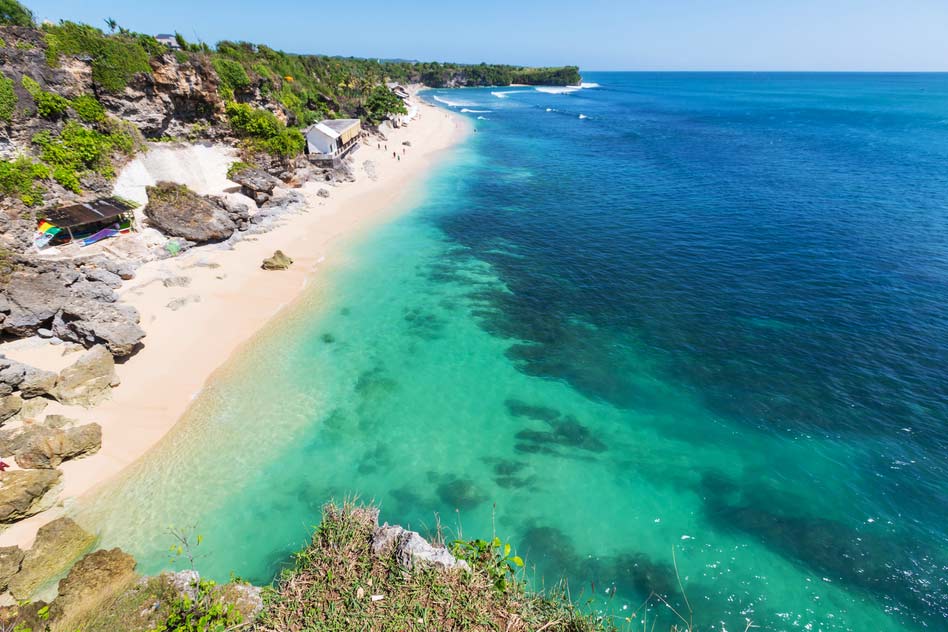
The southern peninsula has Bali’s most dramatic coastline – limestone cliffs dropping to reef breaks and white sand coves. The beaches here are stunning but often require climbing down steep stairs.
Uluwatu Temple perches on a cliff edge 70 metres above the sea. Visit for the sunset kecak fire dance (performed daily at 6pm, 150,000 IDR / £7.50) – traditional but heavily touristed.
Padang Padang is a small beach made famous by Eat Pray Love. Beautiful but tiny and overcrowded.
Bingin and Impossibles attract serious surfers. The accommodation here tends toward simple cliff-top guesthouses.
Nusa Dua is the resort enclave – walled compounds of international chain hotels with manicured beaches. Sanitised and safe; also soulless if you want to experience Bali rather than just be in it.
East Bali: Quieter and More Traditional
The east coast sees fewer tourists and retains more of traditional Bali. This is where to go if Ubud feels too developed and the south feels too chaotic.
Sidemen
A valley of rice terraces beneath Mount Agung, with barely any tourist infrastructure. Stay in a family-run homestay, wake to roosters, and walk through paddies to villages where ceremonies still mark the rhythm of life. This is Bali as it was before the tourists came.
Amed
A string of fishing villages along the northeast coast. The beaches are black volcanic sand and pebbles – not lounging beaches, but excellent for snorkelling and diving. The Japanese shipwreck just offshore is accessible from the beach.
Amed is also the base for sunrise hikes up Mount Agung, Bali’s highest and holiest volcano (3,142 metres). The climb is challenging – 6-8 hours return, starting around 2am – but watching sunrise from the crater rim, with the shadow of the mountain stretching across the sea, is memorable.
Candidasa
A small coastal town that never quite became a major resort. The beach eroded years ago (seawalls and concrete have not helped), but as a base for exploring east Bali – including the impressive Tirta Gangga water palace and the traditional village of Tenganan – it works well.
Temples and Ceremonies
Bali is the only part of Indonesia that remained Hindu when the rest of the archipelago converted to Islam. The result is a culture saturated with religion – offerings laid out daily, ceremonies disrupting traffic, and temples everywhere you look.
Major Temples
Tanah Lot – The iconic sea temple perched on a rocky outcrop, cut off at high tide. Spectacular at sunset, but you will be sharing the view with hundreds of others and navigating a gauntlet of souvenir stalls. Worth seeing once; arrive two hours before sunset for parking.
Uluwatu – Equally dramatic cliff-top position, with better sunset dance performances.
Besakih – The “mother temple” on the slopes of Mount Agung. Bali’s largest and most important temple complex, but also notorious for aggressive touts and mandatory “guides.” Go with realistic expectations.
Tirta Empul – The purification temple mentioned above, more interesting as a living religious site.
Attending Ceremonies
If you are lucky, you will stumble upon a ceremony – cremations, tooth-filings, temple anniversaries. Balinese Hinduism is intensely communal, and ceremonies happen constantly. Visitors are generally welcome to observe (respectfully, from a distance, wearing appropriate dress). Attending a cremation, with its processions and tower-burning, is a profound cultural experience.
Practical Information
Getting there: Ngurah Rai International Airport (Denpasar) has direct flights from across Asia and connections from Europe and Australia. From the UK, expect connections via Singapore, Kuala Lumpur, or the Gulf. Flight time is roughly 15-17 hours.
Getting around: Traffic is Bali’s biggest challenge. Renting a scooter is common but dangerous if you are not experienced – Bali’s roads claim tourist lives regularly. Car and driver is safer and surprisingly affordable (600,000-800,000 IDR / £30-40 per day). Grab and Gojek (ride-hailing apps) work but are banned from some tourist areas due to taxi cartel politics.
Money: Indonesian Rupiah (IDR). Roughly 20,000 IDR to £1. ATMs everywhere; cards accepted at hotels and proper restaurants. Cash needed for warungs, markets, and small shops.
Visas: UK citizens can enter visa-free for 30 days or buy a visa on arrival (500,000 IDR / £25) which can be extended once for another 30 days. Note: Bali also requires a separate tourism levy of 150,000 IDR (~£7.50) for international visitors.
When to visit: Dry season (April to October) is best. June to August is peak tourist season. Wet season (November to March) brings afternoon downpours but also lower prices and fewer crowds. Rain rarely lasts all day.
What to wear at temples: Cover shoulders and knees. A sarong and sash are required at major temples – you can rent them at entrances for a small fee, but carrying your own is more convenient.
Costs: Bali ranges from budget to luxury. Basic accommodation starts around 200,000 IDR (£10) per night. Mid-range hotels 600,000-1,500,000 IDR (£30-75). Luxury villas with private pools 3,000,000+ IDR (£150+). Food is cheap unless you seek out fine dining. Tours and activities are generally affordable.
What to Pack for Bali
The long-haul flight and tropical climate require some planning.
Travel Essentials
Travel Adapter: Indonesia uses Type C and F plugs (European style, two round pins). UK plugs will not fit without an adapter.

Neck Pillow: The 15-17 hour journey from the UK is brutal without proper sleep support.
Luggage Scale: Budget airlines to Singapore or KL connecting to Bali are strict on baggage weight. Avoid excess fees.
Packing Tips
- Light, breathable clothing – Cotton or linen for the tropical heat
- Sarong – Required for temple visits, also useful as beach cover-up
- Reef-safe sunscreen – Protect Bali’s coral
- Mosquito repellent – Especially for Ubud and rice paddy areas
- Waterproof day bag – For beach trips and sudden tropical downpours
Is the Hype Justified?
Partly. Bali’s popularity has created real problems – overdevelopment, traffic, plastic pollution, cultural commodification. The Instagram version of Bali (swing over rice terraces, floating breakfast in infinity pool) is increasingly divorced from the island’s reality.
But the real Bali still exists if you look. The dawn ceremonies, the rice farmers working paddies as their ancestors did, the offerings placed with genuine devotion. The volcanic landscape and surrounding coral reefs remain beautiful despite the development.
Visit with realistic expectations. Accept that some places are overcrowded and commercialised. Seek out the quieter corners. Respect the culture that is hosting you. And maybe – just maybe – skip the influencer photo spots entirely.
Frequently Asked Questions
Do I need a visa to visit Bali?
UK citizens can enter Indonesia visa-free for 30 days, or purchase a visa on arrival for 500,000 IDR (approximately £25) which can be extended once for another 30 days. Make sure your passport is valid for at least 6 months from your date of entry.
When is the best time to visit Bali?
The dry season from April to October offers the best weather, with June to August being peak tourist season. The wet season (November to March) brings afternoon downpours but also lower prices and fewer crowds. Rain rarely lasts all day, so visiting during wet season can still be enjoyable.
What is the currency in Bali and how much cash should I carry?
The Indonesian Rupiah (IDR) is the local currency, with roughly 20,000 IDR to £1. ATMs are widely available throughout Bali, and cards are accepted at hotels and proper restaurants. However, you’ll need cash for warungs (local eateries), markets, temples, and small shops.
How much does a trip to Bali cost?
Bali accommodates all budgets. Basic accommodation starts at 200,000 IDR (£10) per night, mid-range hotels cost 600,000-1,500,000 IDR (£30-75), while luxury villas run 3,000,000+ IDR (£150+). Street food is very cheap, with meals costing 25,000-50,000 IDR (£1.25-2.50) at local warungs.
Is Bali safe for tourists?
Bali is generally safe for tourists, but take normal precautions. The biggest danger is actually traffic – renting a scooter is common but risky if you’re not experienced, as Bali’s roads claim tourist lives regularly. Petty theft can occur in crowded areas, so keep valuables secure. Drink responsibly and be cautious with your belongings at beaches and in nightlife areas.
What should I wear when visiting temples in Bali?
You must cover your shoulders and knees when entering Balinese temples. A sarong and sash are required at major temples – you can rent them at entrances for a small fee, but carrying your own is more convenient. Respectful dress shows appreciation for the local Hindu culture and is strictly enforced.
Related
Destinations
Travel Essentials
- Travel Adapter Guide – Indonesia uses Type C/F plugs (European style)
- Best Travel Pillows – Essential for the long-haul flight
- Cabin Bag Backpacks – Pack light for island hopping
- Luggage Scales – Avoid excess baggage fees