How to Sleep on a Plane (What Actually Works)
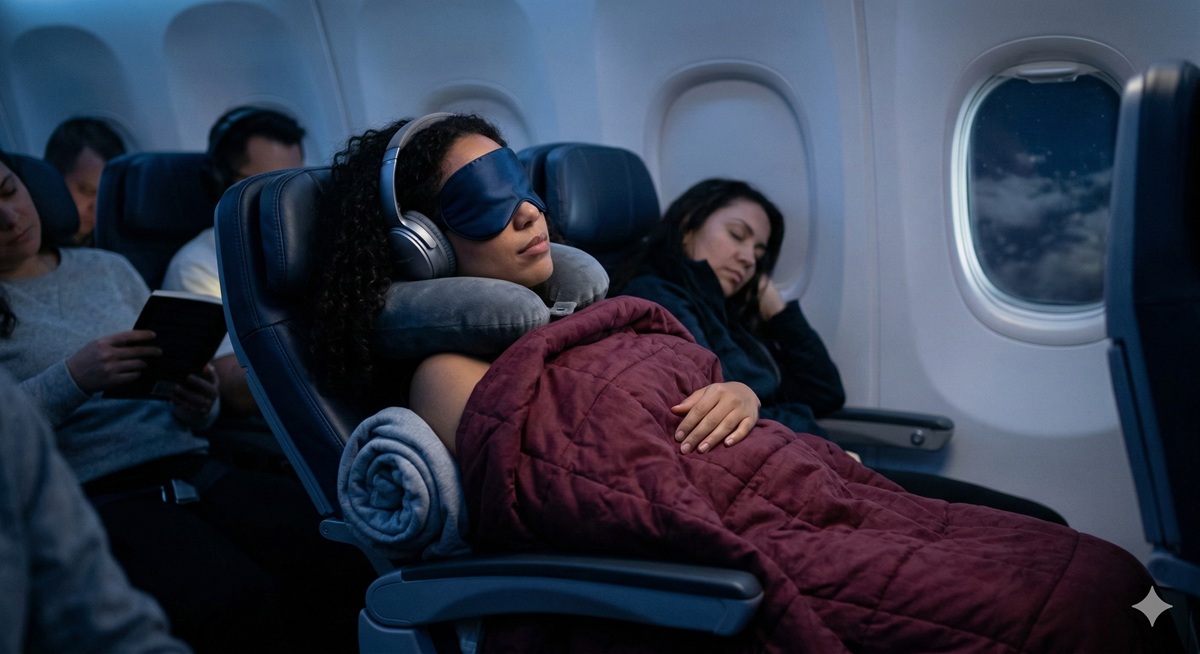
Most advice on sleeping on planes is either obvious (wear comfortable clothes) or useless (just relax). This guide is based on what I’ve actually tested across dozens of long-haul flights — including a stretch of six intercontinental flights in eight weeks that forced me to take sleep on planes seriously or fall apart.
Economy class is not designed for sleep. The seats are too upright, the space too narrow, and the noise and light too constant. But economy sleep is achievable. It requires setting up the right conditions rather than hoping the conditions are right.
Step 1: Choose Your Seat Carefully
Seat selection is the single highest-impact decision for in-flight sleep, and it costs nothing if you book far enough in advance.
Window seats are better for sleep than aisle seats. The reasons:
- You have a wall to lean against — critical for side sleepers
- Nobody climbs over you during the night (no need to unfold yourself for other passengers’ toilet trips)
- You control your own experience: lean the seat, turn towards the window, pull your pillow against the wall
Avoid middle seats entirely if sleep is a priority. Both neighbours will need to pass you. You have armrests on both sides but neither to yourself. No wall to lean against. Nothing except misery and the person in 31E’s elbow.
Row matters. Avoid seats directly in front of lavatories (constant traffic, smell, queue noise). Avoid the last row of a section (seats often do not recline). The rows at the emergency exit have more legroom but fixed armrests — fine for legroom, less good if you want to curl sideways.
For long-haul routes, many seat-comparison sites let you check which rows have more recline and which are known poor-sleep spots before booking.
Step 2: Get a Proper Travel Pillow
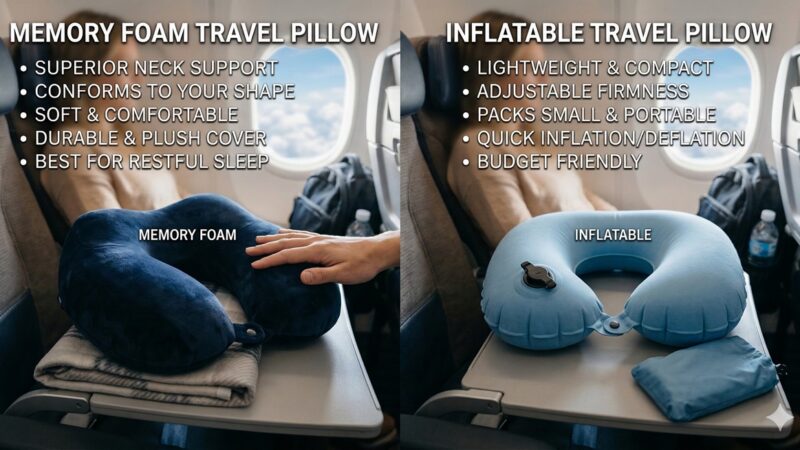
A rolled-up fleece is not a travel pillow. A £5 polystyrene bead pillow from the airport shop is barely a travel pillow. For genuinely restorative in-flight sleep, you need something designed for the job.
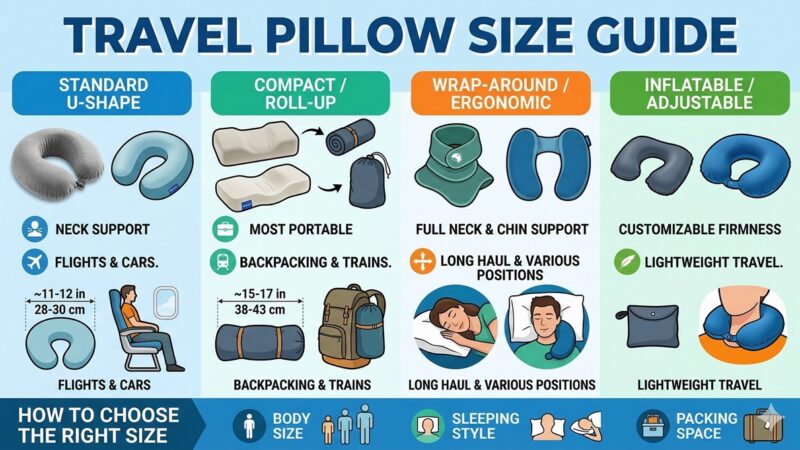
The right pillow depends on how you sleep:
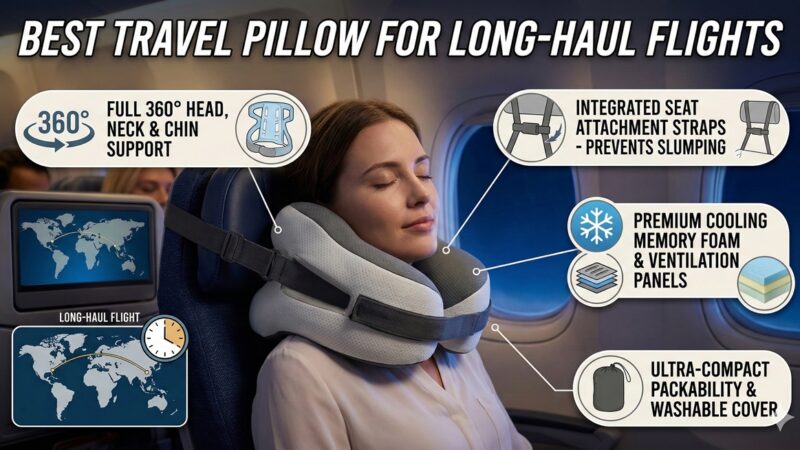
Upright sleepers (head balanced above shoulders): The Trtl Pillow is the best solution — its internal frame prevents head drop in any direction without adding bulk to the seat area. The Trtl Plus with adjustable height is worth the extra for routes over 8 hours.
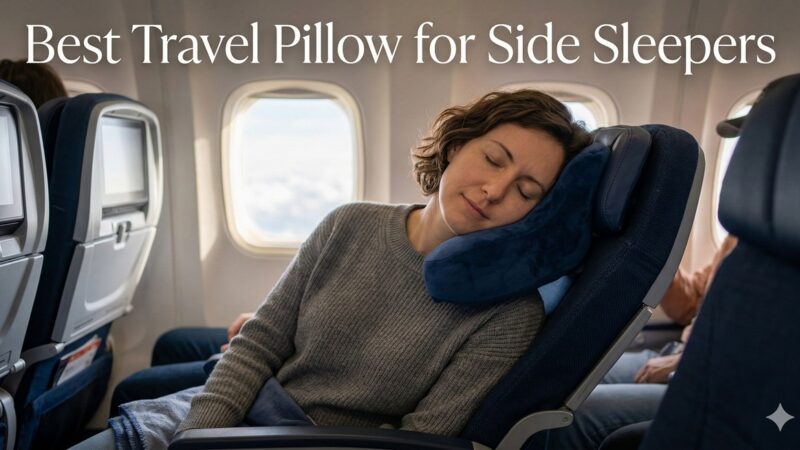
Side sleepers leaning against a window: The J-Pillow or SNUGL. The J-Pillow’s three-way support is purpose-built for side sleeping; the SNUGL’s adjustable strap keeps it from shifting when you lean.
Side sleepers in aisle or middle seats: The Travelrest straps to the headrest and creates an artificial wall to lean against, which is the most practical solution when no window is available.
Those who find structured pillows uncomfortable: The BCOZZY offers soft wraparound support with chin protection — less rigid than the Trtl, more effective than a standard U-pillow.
See our full travel pillow guide for a complete comparison, or our specific guide to the best travel pillow for long-haul flights.
Step 3: Block Light Properly
Light is the primary enemy of in-flight sleep. Aircraft cabins use overhead lighting during meals and before landing. Screens from other passengers’ entertainment systems produce significant blue light. The window (even with shade down) lets in ambient light.
A sleep mask addresses all of this, but standard flat masks press on your eyes, which some people find uncomfortable. The alternative is a contoured or 3D mask that sits over the eyes without contact. The BUYUE travel kit includes a 3D contoured mask alongside the pillow — worth considering if you want both in one purchase.
If you use a sleep mask, put it on before the crew dims the lights after the meal service. Putting it on reactively — when you’re already tired and someone near you has their reading light on — is less effective than pre-empting the problem.
Step 4: Handle Noise
Cabin noise on a commercial aircraft is around 85 decibels — equivalent to a busy road. Over 8–10 hours, this is fatiguing even when you’re not trying to sleep.
Basic foam earplugs reduce noise by around 20–30dB. Cheap, effective, and available in any pharmacy. Pair them with a sleep mask and you have solved two of the three main sleep disruptions in economy.
Noise-cancelling headphones are better at handling the consistent low-frequency hum of engines (which earplugs are less effective against) but worse at handling irregular sharp sounds. Playing white noise or ambient sound through them is more effective than silence.
The combination of earplugs inside the ear cups of noise-cancelling headphones is used by some frequent long-haul travellers for maximum effect — overkill for most, but worth knowing if engine noise is your specific problem.
Step 5: Time Your Sleep Correctly
The biggest mistake most people make on overnight long-haul flights is trying to stay awake until their normal bedtime — which may be 5–6 hours into the flight. By then, the meal service is over, the cabin is already dark, and other passengers are deep into their sleep cycles while you’re still adjusting.
Board the flight already in destination mindset. Look up the local time at your destination and think of that as your reference point. If you’re landing at 8am local time and it’s a 12-hour flight, you should aim to sleep within the first 2–3 hours of the flight, regardless of what time it is at home.
Avoid alcohol before sleeping. Alcohol feels like a sleep aid but disrupts sleep architecture — you fall asleep faster and wake more fragmented. A single glass of wine with dinner is fine. Three drinks to feel sleepy before a transatlantic crossing means poor quality sleep and worse dehydration than you would have had otherwise.
Avoid caffeine for 5–6 hours before intended sleep. If the meal service includes coffee and you want to sleep through the second half of a 10-hour flight, decline the coffee.
Eat during the first meal service, then sleep. Many experienced long-haul travellers eat with the first service (or request the vegetarian option, which is often served first) and then put on their sleep kit immediately rather than watching films until they’re too tired to sleep well.
Step 6: Physical Setup for Sleep
Recline your seat. Economy recline is limited — 3–4 inches typically — but it matters. The difference between fully upright and reclined is the difference between sleeping and not sleeping for many people. Recline as soon as the seatbelt sign goes off after takeoff and leave it reclined until approach.
Use the headrest wings. Most modern long-haul economy seats have adjustable headrest wings that fold forward on each side. Fold the wing on the side you’re leaning towards forward by 30–45 degrees. This creates a partial cradle for your head that reduces the work your pillow has to do.
Loosen your waistband. Tight clothing or a stiff waistband becomes noticeably uncomfortable after 4–5 hours of sitting. Loose trousers, or changing into more comfortable bottoms before sleep, makes a real difference.
Wear compression socks. The reduced circulation from sitting still on a long flight causes leg discomfort that disrupts sleep. Compression socks maintain blood flow and reduce the restlessness that comes from static sitting. They also reduce the risk of deep vein thrombosis on very long flights.
Remove your shoes. Your feet swell on flights. Keeping shoes on for 10+ hours increases this discomfort. Pack a pair of flight socks if you want to walk around the cabin without bare feet.
What to Avoid
Sleeping pills for the first time on a flight. If you’ve never used prescription or over-the-counter sleep aids, a long-haul flight is not the place to experiment. Some people experience paradoxical reactions. Carry them if recommended by your GP for jet lag management, but test them at home first.
Sleeping with your neck fully unsupported. The forward head drop — where your head falls to your chest when you nod off without support — causes muscle strain that leaves you with neck pain for the first 24 hours of your trip. A proper travel pillow prevents this completely.
Over-relying on in-flight entertainment to tire yourself out. Screens produce blue light that actively suppresses melatonin production. Watching films until hour five and then trying to sleep for the last five hours of a 10-hour flight is the wrong order.
The Kit I Actually Travel With
On a long-haul overnight flight, I carry:
- Trtl Pillow clipped to my carry-on (for upright overnight sleep)
- 3D contoured sleep mask (block all ambient light)
- Foam earplugs in the seat pocket (for when I take off headphones)
- Noise-cancelling headphones (engine hum reduction during first half of flight)
- Compression socks (worn from boarding)
Total kit weight under 500g. This setup has produced genuine 5–7 hour sleep blocks on overnight routes to Asia and North America that I would not have otherwise managed in economy.
Short-Haul vs Long-Haul Sleep Strategy
Short-haul (under 4 hours): Simplified. A basic pillow, earplugs, and window seat are usually enough for a nap. You are not aiming for deep sleep — just avoiding the neck strain that makes a 2-hour flight feel like work.
Long-haul (over 8 hours): Everything above applies. The investment in good kit and correct timing pays back significantly in how you arrive. A £30 Trtl pillow that gives you 6 hours of sleep on a 12-hour flight is worth more than anything you could spend on the flight itself.
For specific pillow recommendations by flight length and sleep style, see: