Best Time to Visit the Amalfi Coast: A Month-by-Month Honest Guide
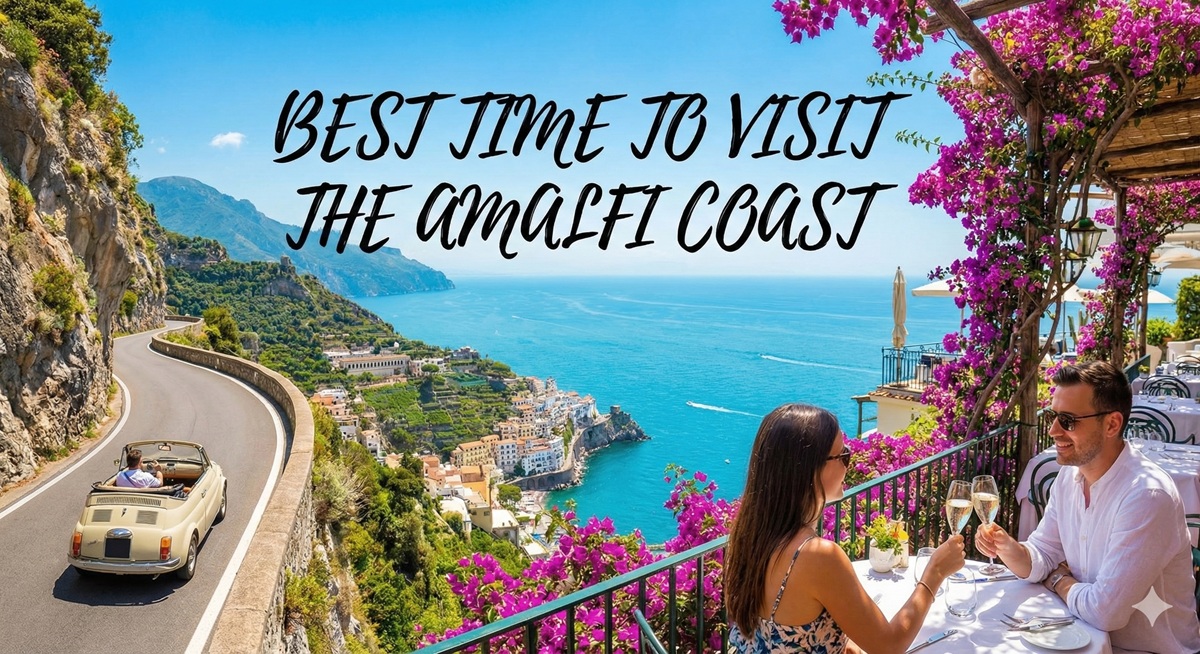
The short answer: May, June, or September.
The longer answer depends on what kind of trip you want, how you feel about crowds, whether beach swimming is essential, and how sensitive you are to price. Here’s the full picture.
The crowd reality
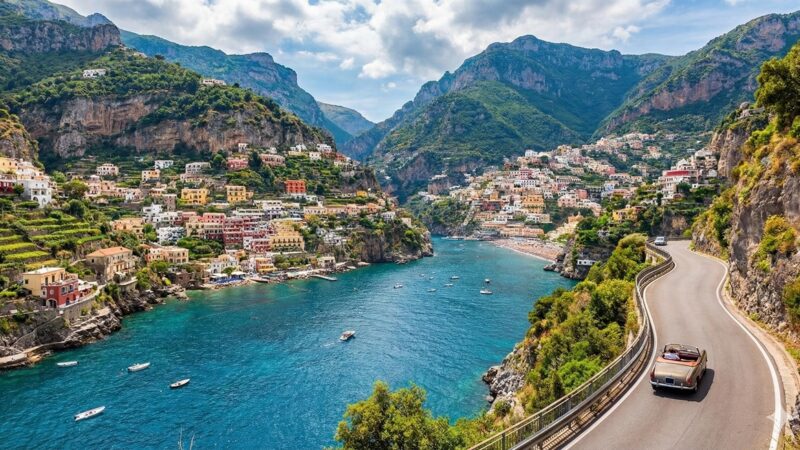
The Amalfi Coast sees around 5 million visitors a year. Most of them come in July and August. The coast has not expanded to accommodate this — it’s the same narrow roads, the same ferries, the same restaurants. Peak season doesn’t just mean higher prices; it means a fundamentally different experience.
If your idea of a perfect trip involves waking up early, walking to a harbour, and catching a ferry with space to breathe — do not go in August. If you’ve accepted that it’ll be busy and you’ve booked everything well in advance — August is still worth it.
Month-by-month breakdown
January and February — quiet, closed, genuinely beautiful
Weather: 10–14°C, some rain, occasional storms
Crowds: Very low
What’s open: Maybe 20–30% of hotels and restaurants
Swimming: No
Most of the coast shuts down. Positano and Amalfi town keep some things open; smaller towns like Praiano and Cetara are largely hibernating.
What you get in return: the coast entirely to yourself, dramatically low prices, and a melancholy beauty that some travellers find more compelling than the summer version. The towns look extraordinary in winter light. The Amalfi Cathedral has no queue.
Best for: Travellers who genuinely want solitude and don’t mind limited choices.
March — starting to stir
Weather: 12–16°C, some rain still
Crowds: Low
What’s open: Maybe 40–50% and increasing
Swimming: No
Things begin to reopen during March. Ferries start limited services. A good shoulder-season option if you’re flexible about what’s available.
April — very good
Weather: 15–19°C, occasional rain, mostly pleasant
Crowds: Low to moderate (Easter weekend excepted)
What’s open: Most things, all ferries operational
Swimming: Brave/cold
April is genuinely excellent. The coast is coming back to life — most restaurants and hotels are open, ferries are running, the hillsides are bright green and flowering. Temperatures are comfortable for walking and exploring.
The water is still cold (around 16–17°C) so swimming is for the hardy. But if beach swimming isn’t your priority, April is arguably the best month of the year.
Watch out for: Easter weekend, which brings Italian domestic tourists in large numbers. Prices jump. If you can avoid Holy Week, April is near-perfect.
May — one of the two best months
Weather: 19–23°C, warm and largely sunny
Crowds: Moderate — busy but not overwhelming
What’s open: Everything
Swimming: Yes (water warming to 19–20°C)
May hits the sweet spot. Everything is open. The weather is warm but not hot. Crowds are manageable — busy enough that the coast feels alive, quiet enough that you can actually get around without losing hours to the road.
Hotel prices are below peak but not dramatically so — book a couple of months ahead.
Best for: Most travellers. If you can only go at one time and want the best balance of everything, May is the answer.
June — strong, with a caveat
Weather: 23–27°C, sunny
Crowds: High by end of month
What’s open: Everything
Swimming: Yes (water at 22°C+)
Early to mid-June is excellent — essentially May with more reliable sun and warmer water. The coast is at its visual best.
From mid-June onwards, Italian school holidays begin and crowds increase noticeably. By late June, you’re approaching peak season conditions.
The move: Target early-to-mid June if possible.
July — the double-edged month
Weather: 27–31°C, reliably hot and sunny
Crowds: Very high
What’s open: Everything
Swimming: Yes, water around 24–25°C
Prices: Peak
July is objectively beautiful and objectively crowded. The sea is perfect for swimming. Every restaurant is fully booked. The road is gridlocked by 10am. Beach space is genuinely hard to find by mid-morning.
If July is what you have: book 4–6 months ahead for accommodation, pre-book any tours or boat trips, and start your days early. By 8am, the light is extraordinary and the towns are still relatively quiet. At 30°C+ with little shade on the coastal paths, a good sun hat is one of those things you’ll be glad you packed:
Best for: Beach-first travellers who’ve planned ahead and accept the trade-offs.
August — peak of everything
Weather: 28–32°C
Crowds: Maximum
Prices: Maximum
Swimming: Perfect
The same as July, intensified. Italian Ferragosto (15 August) brings the whole country on holiday simultaneously. The coast is at its absolute busiest.
Still worth it? For some people, yes. The atmosphere in the evenings — restaurants full, music from bars, warm air — is its own kind of magic. But it requires acceptance rather than resistance.
Not recommended for: Anyone who hasn’t booked well in advance, families with young children who need flexibility, first-time Amalfi Coast visitors who haven’t experienced the summer crowds elsewhere in Italy.
September — the other best month
Weather: 24–27°C, mostly sunny, some afternoon storms later in month
Crowds: High early, dropping significantly by mid-September
What’s open: Everything
Swimming: Yes, sea temperature still 24°C+
Prices: Dropping from mid-September
September is many regular visitors’ favourite month. The heat is slightly less intense than July/August. Italian schools go back in mid-September, which removes a significant portion of the crowds overnight. Prices drop. Yet the weather remains excellent and the sea is still warm.
Late September is arguably the best time of the entire year if you can manage it.
October — seriously underrated
Weather: 18–22°C, more variable, some rain days
Crowds: Low
Prices: Off-season
Swimming: Possible early October (sea still 21–22°C), less appealing by end of month
October gets overlooked and it shouldn’t. The light is golden, crowds are gone, prices drop substantially, and the coast takes on a different, quieter character. Most restaurants and hotels are still open through mid-October; some start closing in the final two weeks.
An October trip requires accepting that you might have a grey day or two and that some things won’t be open. In return, you get the Amalfi Coast almost to yourself.
November and December — closing season
By November, most of the coast is closing for winter. Worth visiting for a very specific kind of trip (quiet, off-grid, atmospheric) but not for a conventional holiday.
Summary table
| Month | Weather | Crowds | Swimming | Verdict |
|---|---|---|---|---|
| Jan–Feb | Cool | Empty | No | Atmospheric, limited |
| March | Mild | Very low | No | Emerging, good value |
| April | Warm | Low-mod | Cold | Excellent (avoid Easter) |
| May | Warm | Moderate | Yes | Best overall |
| June | Hot | Mod-high | Yes | Excellent early June |
| July | Hot | Very high | Perfect | Beautiful but crowded |
| August | Very hot | Maximum | Perfect | Only if well-prepared |
| September | Warm | High→Low | Yes | Best for latecomers |
| October | Mild | Low | Possible | Underrated gem |
| Nov–Dec | Cool | Empty | No | Quiet/limited |