Pyramids of Giza in Egypt

The first time I saw the Pyramids of Giza, I was caught off guard by how close they are to the city. One moment you are in Cairo traffic, the next you are staring at structures that are over four thousand years old. The scale only hits you when you get close and realise that each block is taller than a person. I went inside the Great Pyramid, down the narrow passage to the King’s Chamber, and emerged understanding why people become obsessed with ancient Egypt. The Sphinx was smaller than I expected but no less impressive against the pyramid backdrop. Go early to beat the heat and the tour buses.
The Pyramids of Giza
The Pyramids of Giza comprise three pyramids built in the fourth dynasty, situated on the Giza Plateau on the west bank of the Nile in northern Egypt. They were the mortuary complex for Egyptian rulers Menkaure, Khafre, and Khufu (Cheops). The Pyramids of Giza are the only surviving structure from the Seven Wonders of the Ancient World.
Secret passages were built into the pyramids in ancient times to deter tomb robbers, but all three tombs were eventually looted.
When you arrive at the complex, the scale takes a moment to register. The blocks are larger than they look in photographs. Allow plenty of time – there is more to see than most visitors expect.
Pyramid of Cheops – The Great Pyramid
The Great Pyramid of Giza is the largest of the three. The base stretches 230 metres and the pyramid stands 147 metres tall – equivalent to a 48-storey building. It took 20 years to build and used over 2 million limestone blocks. It was the tallest man-made structure in the world for 3,800 years.
Outside the Great Pyramid, be aware that men on camels will approach you for photographs – they charge a fee. The entrance passage is narrow and steep, leading to the Grand Gallery. It is not suitable for anyone with claustrophobia. The Queen’s Chamber is not open to visitors.
The King’s Chamber is at the centre of the pyramid and is open to the public. Markings remain on the wall from where workers slid the granite blocks into place. The sarcophagus is granite and open – the pharaoh’s mummy was removed long ago.
Near the Great Pyramid are three piles of rubble – the former tombs of Khufu’s wives and sisters.
Visit early in the morning to avoid the midday heat and the worst of the tour bus crowds.
The Sphinx
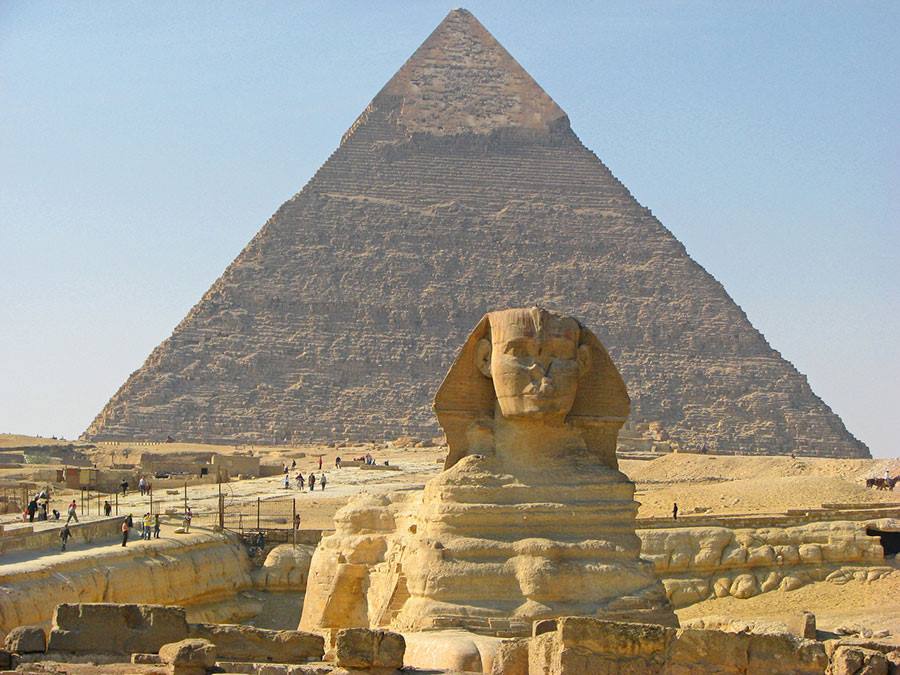
Sphinx and the Pyramid of Chephren
The Sphinx is a large limestone statue of a human-headed lion, traditionally believed to have been built as the guardian of the nearby tomb of Pharaoh Khafre. The statue has accumulated damage over the centuries. Visitors often note small holes and passageways in the body of the Sphinx. The site closes at sunset.
Near the Giza Plateau is the Solar Barge Museum. Ancient Egyptians buried a solar barge near the tomb of Pharaoh Khufu because they believed he would need it in the afterlife. In 1954, cedarwood parts were discovered in five pits near the tomb. The assembled boat measures 40 metres long and is considered the world’s oldest intact ship, known as the Khufu Ship.
Food in Egypt
Kushari
Egypt’s national dish – pasta, lentils, onions, and a thick tomato sauce, served with rice.
Fattah
Layers of meat, bread, and rice. Traditionally prepared for celebrations including a woman’s first birth and religious holidays.
Bram rice
Rice made with milk and stuffed with chicken liver.
Shawarma
A sandwich of beef, turkey, or goat meat in pita bread with tahini sauce.
Macaroni bechamel
Penne pasta with a layer of meat and onions under a béchamel sauce.
Ful medames
A staple dish of fava beans cooked with garlic, parsley, and lemon juice, served with pita bread and pickled vegetables.
Kibda
Fried beef liver, usually available from street food stalls.
Aish
Traditional Egyptian flatbread similar to pita. Aish baladi is the wholemeal version.
Practical information
Visit April-May or October-November for the most comfortable temperatures (20-30°C). June to September is very hot (35-40°C) – pack sunscreen and drink water regularly. November to February is the best season for Nile cruises. The Red Sea coast has warm weather year-round.
Keep passports and valuables secure. Crime at tourist sites is low, but use hotel safes for anything valuable.
Frequently Asked Questions
Do I need a visa to visit the Pyramids of Giza?
Most nationalities can obtain a visa on arrival at Egyptian airports for $25 USD, valid for 30 days. UK, US, EU, Australian, and Canadian citizens are eligible. Alternatively, you can apply for an e-visa online before travel, which is often faster and more convenient. The pyramids are located just outside Cairo, so you’ll need a visa to enter Egypt.
What is the best time to visit the Pyramids of Giza?
The best time is April-May or October-November when temperatures are moderate (20-30°C). Summer (June-September) is extremely hot (35-40°C), making outdoor exploration uncomfortable, though there are fewer crowds. Winter (December-February) is pleasant but can be busy. Visit early morning (8-9am) to avoid midday heat and tour bus crowds regardless of season.
What currency is used in Egypt and can I use US dollars?
Egypt uses the Egyptian Pound (EGP). US dollars and euros are widely accepted at tourist sites like the pyramids, but you’ll get better value using local currency. ATMs are available in Cairo and Giza. Bring small bills for tips (expected for guides, camel handlers, and bathroom attendants). Many vendors quote prices in dollars but payment in Egyptian pounds often gets better rates.
How much does it cost to visit the Pyramids of Giza?
Entry to the Giza pyramid complex costs around 200 EGP (approximately $6-7 USD). Entering the Great Pyramid’s interior requires an additional ticket (400 EGP). Student discounts are available with valid ID. Budget extra for guides (negotiable, 200-500 EGP), camel rides (100-200 EGP), and photos with locals in costume (20-50 EGP tip expected). Avoid unofficial guides and agree on prices beforehand.
Is it safe to visit the Pyramids of Giza?
The Giza pyramid complex is generally safe with heavy security and police presence protecting tourists. However, be wary of aggressive vendors and touts. Don’t accept “free” help or camel rides as payment will be demanded. Stick to official guides and entrances. Avoid visiting alone late in the day. The surrounding area has improved security since 2011, but check current travel advisories before visiting.
Can you go inside the Great Pyramid?
Yes, visitors can enter the Great Pyramid (Pyramid of Khufu/Cheops), but tickets are limited and sold separately from general admission. The passageway is narrow, steep, and claustrophobic, requiring climbing through tight spaces. It’s not recommended for those with claustrophobia, mobility issues, or respiratory problems. The King’s Chamber contains an empty sarcophagus. The experience is remarkable but physically demanding.