Antalya Turkey Holidays: Beaches & Resorts
Antalya caught me off guard. I had expected a generic beach resort town and found something far more interesting – a place where you can walk through a Roman gate built for Emperor Hadrian, swim in the Mediterranean, and explore one of the world’s best-preserved ancient theatres, all in the same day. The Turkish Riviera has been drawing tourists for decades, but Antalya manages to be more than just sun loungers and all-inclusive hotels.
I spent a week based in the old town, using Antalya as a hub for day trips to the remarkable ancient sites scattered along the coast. The combination of beaches, history, and Turkish hospitality – plus prices significantly lower than the Greek islands or Spanish coasts – makes Antalya Turkey holidays worth considering for anyone who wants more from a Mediterranean break than just a tan.
Kaleici: The Old Town
The historic heart of Antalya is a maze of narrow cobblestone streets winding down to an ancient harbour. Ottoman-era wooden houses lean against each other, many converted into boutique hotels and restaurants. It is touristy but genuinely atmospheric, and staying here puts you within walking distance of everything.
What to See
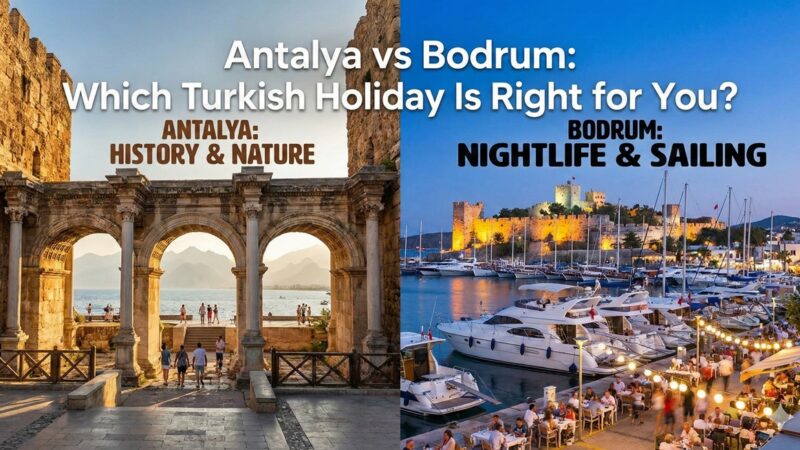
Hadrian’s Gate – The entrance to the old town is a triple-arched Roman gateway built in 130 AD to commemorate the emperor’s visit. The white marble has survived remarkably well. Walking through it still feels like entering another world, which is exactly what Hadrian intended.
The Old Harbour – Once a major Roman and Ottoman port, now lined with restaurants, cafes, and tour boats. The setting is beautiful – cliff walls rising above small boats bobbing in turquoise water. Sunset drinks here are obligatory.
Yivli Minare (Fluted Minaret) – The 38-metre minaret from the 13th century is Antalya’s symbol, visible from across the old town. The mosque below is still active.
Kesik Minare – A fascinating ruin that has been a Roman temple, a Byzantine church, and a mosque at different points in history. The truncated minaret gives it its name (kesik means “cut”).
Hidirlik Tower – A 2nd-century Roman tower at the edge of the old town, with views across the harbour and out to sea. Good spot for sunset.
Staying in Kaleici
The old town has dozens of small hotels in restored Ottoman houses, typically with courtyards, breakfast terraces, and quirky room layouts. Prices range from €40-150 (£35-130) per night depending on season and quality. The trade-off for character is that the streets are too narrow for cars – luggage involves some walking.
Beaches
Antalya has two main beach areas with completely different characters.
Konyaalti Beach
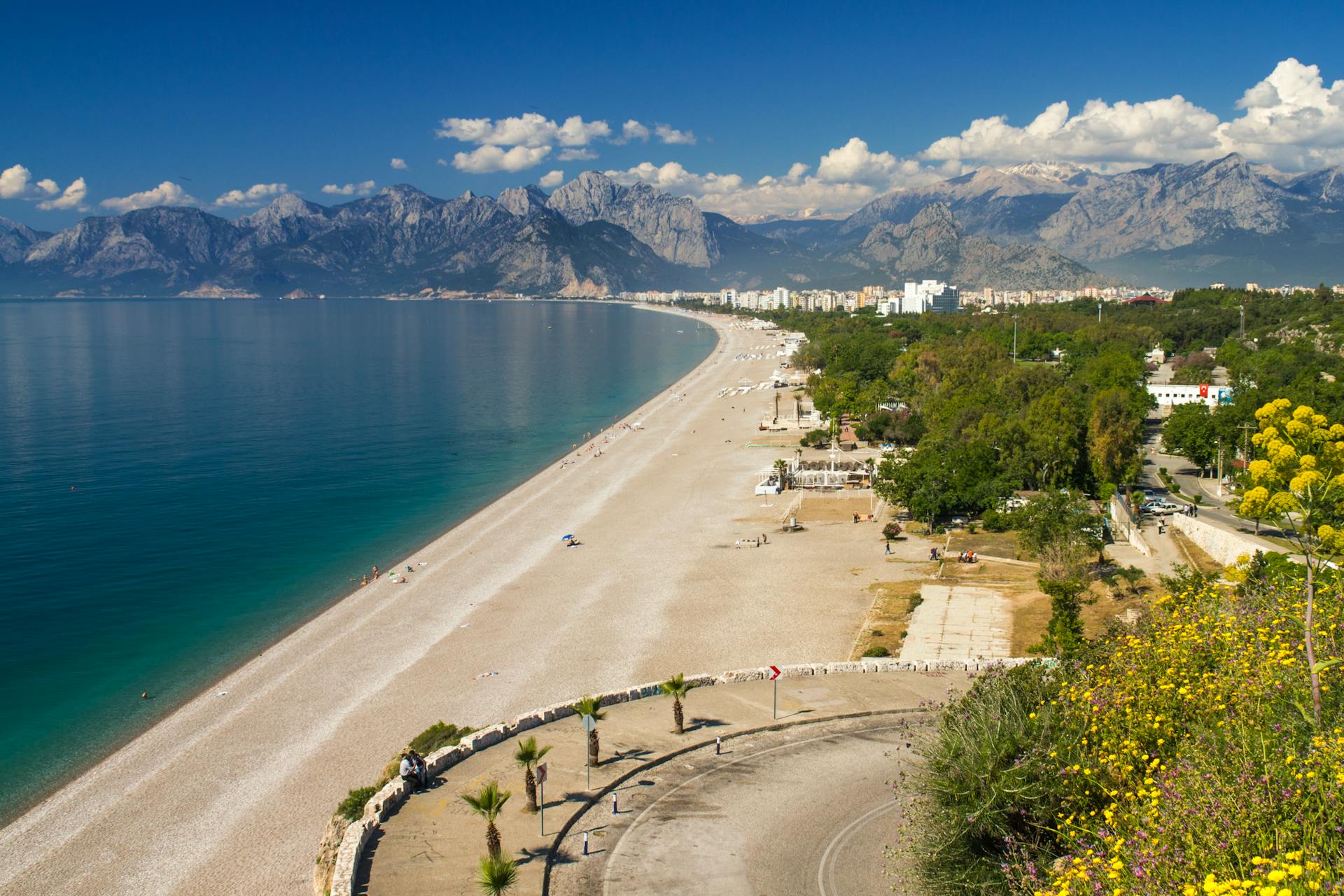
West of the old town, Konyaalti is a 7-kilometre pebble beach backed by the Taurus Mountains. The setting is dramatic – mountains rising directly behind the beach, the old town visible on the cliffs to the east. The beach is public with a long promenade, cafes, water sports, and sunbed rentals (₺100-150 / £3-5 per day).
The water is clean and clear, though the pebbles require water shoes for comfortable entry. The beach park behind has restaurants, playgrounds, and evening entertainment.
Lara Beach
East of the centre, Lara is a sandy beach lined with large all-inclusive resorts. If you want resort-style facilities and do not mind a more developed atmosphere, this is where to go. The beach is sandier and easier to walk on than Konyaalti, but the surrounding area is less interesting.
Beaches Beyond Antalya
The coastline has dozens of beaches worth a day trip:
Kaputas Beach – A small cove reached by steep stairs, with turquoise water between cliffs. Photogenic and often crowded in summer. About 90 minutes west of Antalya.
Cirali – A quieter village beach with a laid-back atmosphere and access to the Chimaera flames (natural gas vents burning on a hillside). Good for a night or two away from the city.
Patara – Turkey’s longest beach (18km), backed by dunes and ancient ruins. Part of a protected turtle nesting area, so no development on the beach itself. About two hours from Antalya.
Phaselis – An ancient city on a peninsula with three small harbours, now beaches. Swim among Roman ruins. An easy day trip.
Ancient Sites
The region around Antalya has exceptional archaeological sites – some of the best-preserved ancient ruins in the Mediterranean.
Aspendos
The theatre at Aspendos is the star attraction – one of the best-preserved Roman theatres in the world, still used for performances today. Built in the 2nd century AD, it seats 15,000 and the acoustics are remarkable. Standing at the top row, you can hear a coin dropped on the stage.
The rest of the site includes an aqueduct, stadium, and agora, but the theatre is why you come. About 50km east of Antalya; entry ₺200 (£5).
Perge
Extensive Roman ruins 17km northeast of Antalya – a stadium, baths, colonnaded streets, and a substantial agora. Less dramatic than Aspendos but larger and more varied. You can walk the main street that once connected the city gates, past the remains of shops and fountains. Entry ₺200 (£5).
Termessos
My favourite of the ruins, though it requires effort. This mountain-top city sits at 1,050 metres in a national park, reached by a steep 30-minute hike from the car park. The setting is extraordinary – a theatre carved into the mountainside with views across forested peaks, tombs scattered among the trees, the remains of temples and cisterns.
Alexander the Great besieged Termessos but never captured it. Standing at the theatre, looking out at the mountains, you understand why. About 30km northwest of Antalya; national park entry ₺60 (£1.50).
Antalya Museum
If you only visit one museum in Turkey outside Istanbul, this should be it. The archaeological collection covers 5,000 years of regional history, with exceptional Roman sculptures recovered from Perge, sarcophagi, mosaics, and a gallery of gods. The Hall of the Gods – life-sized statues of Zeus, Apollo, Athena, and others – is particularly impressive.
Allow 2-3 hours. Entry ₺340 (£9). Closed Mondays.
Waterfalls
Duden Waterfalls
Two waterfalls on the Duden River, both worth seeing.
Upper Duden – Set in a park with walking paths, caves behind the falls, and picnic areas. Pleasant for an afternoon. Entry ₺40 (£1).
Lower Duden – The river drops directly into the Mediterranean from 40-metre cliffs. Best seen from a boat tour (the falls are visible from the sea). The cliff-top park above offers views too.
Kursunlu Waterfall
A peaceful nature park about 20km from Antalya, with a waterfall cascading into pools surrounded by forest. Less dramatic than Duden but quieter and good for escaping the coast.
Food and Drink
Turkish food is excellent, and Antalya adds fresh seafood to the standard repertoire.
What to Eat
Pide – Turkish flatbread with various toppings, sometimes called Turkish pizza. The cheese and minced meat versions are most common.
Lahmacun – Thin crispy flatbread with spiced minced meat, rolled with salad and lemon.
Kebabs – Endless varieties. Adana (spiced minced meat) and sis (cubed meat) are the classics.
Meze – Small dishes served as starters or with drinks: hummus, ezme (spicy tomato dip), patlican salatasi (aubergine salad), dolma (stuffed vine leaves).
Fish – Fresh from the Mediterranean. Grilled sea bass (levrek) and sea bream (cipura) are common. Beach restaurants often let you choose your fish by weight.
Gozleme – Stuffed flatbreads cooked on a griddle, typically filled with cheese, spinach, or potato.
Budget ₺150-250 (£4-7) for a good local meal, ₺400-700 (£10-18) for fish and seafood.
Turkish Breakfast
The traditional Turkish breakfast is an event – a spread of cheese, olives, tomatoes, cucumbers, eggs, honey, jam, and fresh bread. Most hotels include it; kahvalti salonu (breakfast cafes) serve it all morning.
Drinking
Tea (cay) is offered constantly and refusing is almost rude. Turkish coffee is strong and served with grounds in the cup. Raki (anise spirit) is the traditional accompaniment to meze and fish.
Alcohol is widely available in tourist areas, though Antalya is more conservative than Istanbul. Efes is the standard Turkish beer; local wines are improving but inconsistent.
Practical Information
Getting There
Antalya Airport (AYT) receives direct flights from most European cities, including budget carriers. The airport is 13km from the city centre.
Airport transport:
- AntRay tram to city centre (₺20 / £0.50, 40 minutes)
- HAVAS bus to otogar (bus station)
- Taxi ₺400-500 (£10-13) to Kaleici
From Istanbul: flights take about an hour and are cheap if booked ahead. The bus takes 10+ hours.
Getting Around
AntRay tram – Connects the airport, otogar (bus station), city centre, and Konyaalti beach. Clean, efficient, and cheap.
Buses – Extensive network but confusing for visitors. The tram handles most tourist needs.
Dolmus – Shared minibuses on set routes, useful for beaches and nearby towns.
Antalya Kart – Rechargeable card for discounted public transport fares. Worth getting if you will use the tram multiple times.
For day trips to ruins and beaches, organised tours are the easiest option. Car rental is possible but Turkish driving can be challenging.
When to Visit
May-June and September-October – The best months. Warm enough for swimming, not oppressively hot, fewer crowds than peak summer.
July-August – Hot (35°C+) and busy. Fine for beach holidays but hard work for sightseeing.
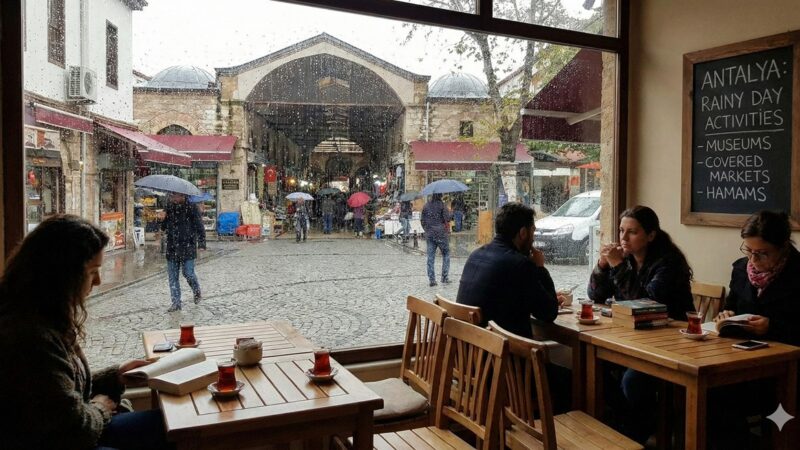
November-April – Cooler and quieter. Swimming is marginal but good for exploring ruins without heat or crowds. Some beach facilities close.
Costs
Antalya is good value compared to Western European beach destinations.
- Budget hotel: ₺800-1,500 (£20-40) per night
- Mid-range hotel: ₺2,000-4,000 (£50-100) per night
- Boutique hotel in Kaleici: ₺2,500-6,000 (£65-150) per night
- Local lunch: ₺150-300 (£4-8)
- Restaurant dinner: ₺400-800 (£10-20)
- Beer: ₺80-150 (£2-4)
- Aspendos entry: ₺200 (£5)
The Turkish Lira has been volatile; check current rates before travelling.
Power
Turkey uses Type F plugs (two round pins with grounding clips). Voltage is 220V. UK visitors need a travel adapter.
Frequently Asked Questions
Do I need a visa to visit Antalya, Turkey?
Visa requirements vary by nationality. UK, EU, and US citizens can obtain an e-Visa online before travel (around $50-60 USD for 90 days). Australian and Canadian citizens also need an e-Visa. Some nationalities can enter visa-free for shorter stays. Apply at www.evisa.gov.tr at least 48 hours before departure. Ensure your passport is valid for at least 6 months beyond your travel dates.
When is the best time to visit Antalya?
May-June and September-October are ideal – warm enough for swimming (24-28°C) without the extreme heat and crowds of peak summer. July-August are very hot (35°C+) and busy but perfect for beach holidays. November-April is cooler and quieter with temperatures around 15-20°C; swimming is possible but not guaranteed. April and May bring wildflowers to the ancient sites.
What currency is used in Antalya?
The Turkish Lira (TRY or ₺) is the official currency. Credit cards are widely accepted in hotels, restaurants, and shops, though some smaller establishments prefer cash. ATMs are common throughout the city. Exchange rates can be volatile, so check current rates. Euros and US dollars are sometimes accepted in tourist areas but at poor rates. Tipping 10% is appreciated but not obligatory.
What type of power plugs are used in Antalya?
Antalya uses Type F plugs (two round pins with grounding clips on the sides), also known as “Schuko” plugs. The voltage is 220V at 50Hz. UK visitors need a Type F adapter. US visitors need both an adapter and should check if their devices support 220V. Most modern phone and laptop chargers work with both voltages.
How expensive is Antalya compared to other Mediterranean destinations?
Antalya offers excellent value compared to Greek islands or Spanish coasts. Expect to pay ₺150-300 (£4-8) for local restaurant meals, ₺800-1,500 (£20-40) for budget hotels, and ₺2,500-6,000 (£65-150) for boutique hotels in the old town per night. Street food and local transport are very affordable. All-inclusive resorts offer good deals. The Turkish Lira’s volatility means prices fluctuate – check current exchange rates before budgeting.
Is Antalya safe for tourists?
Antalya is generally safe for tourists and welcomes millions of visitors annually. The city is well-policed, particularly in tourist areas like Kaleici and beaches. Standard precautions apply: watch belongings in crowded areas, use licensed taxis or ride apps, and be cautious of overly persistent touts. Solo female travellers should exercise normal caution, particularly at night. Turkey is more conservative than some European destinations, so dress modestly when visiting mosques or local neighbourhoods away from beach areas.