Memory Foam vs Inflatable Travel Pillow
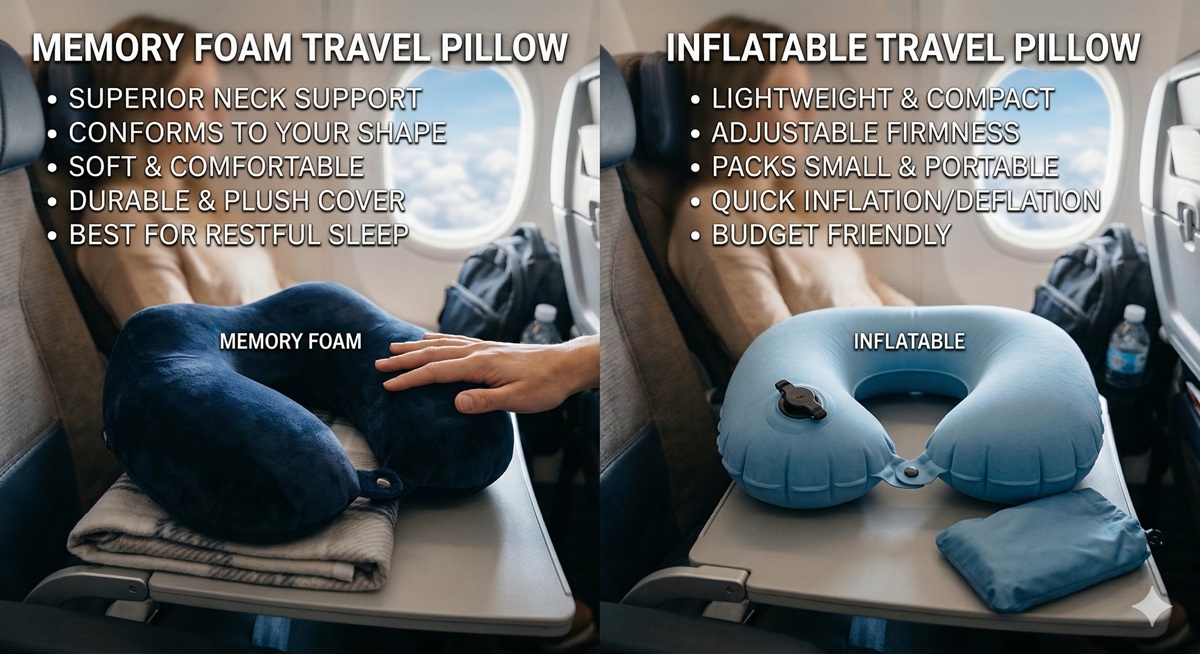
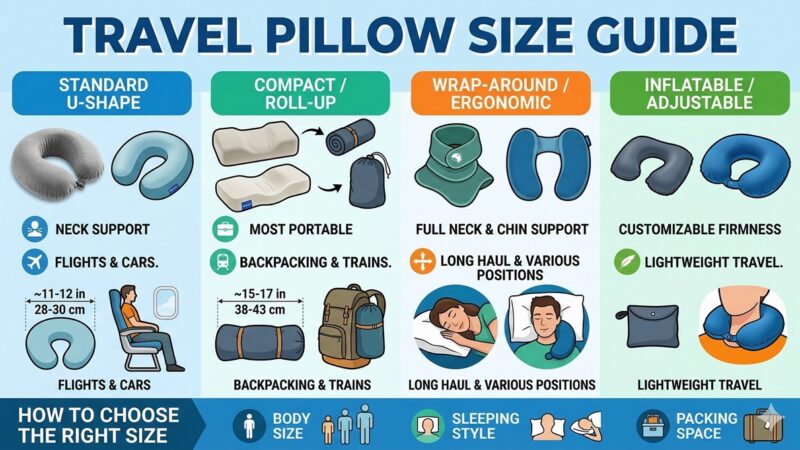
The two most common travel pillow materials — memory foam and inflatable — make completely different trade-offs. Memory foam prioritises comfort. Inflatable prioritises portability. There is no objectively better answer; there is only a better answer for your specific situation.
I’ve used both extensively across long-haul and short-haul routes. Here’s an honest breakdown of where each type wins and loses.
Memory Foam Travel Pillows
Memory foam is polyurethane foam treated to respond to heat and pressure. It softens slightly with body warmth and moulds to the shape pressing against it — in the case of a neck pillow, your neck and the side of your head.
How Memory Foam Performs
The key advantage of memory foam over other fills (polystyrene beads, polyester fibre) is that it recovers its shape after compression. You can squash it into a bag, and it bounces back. This durability means a good foam pillow lasts years rather than flattening after a few trips.
On a flight, the foam softens within the first 5–10 minutes as it absorbs body heat, then maintains a consistent cushioning surface for hours. It does not lose support gradually the way an inflatable can if the valve is not perfectly sealed. What you have at takeoff, you have at landing.
The trade-off is bulk. Memory foam cannot be compressed to a fraction of its size. The best compression bags for foam pillows reduce volume by about 50–70%, which still leaves you with something the size of a large cantaloupe. It clips to the outside of a carry-on bag, but it takes up real space.
Temperature
Memory foam retains heat. On a warm aircraft or during a long overnight flight, a foam pillow can feel clammy against your neck after a few hours. This is a real comfort issue on long-haul, not a minor quibble.
Some manufacturers address this with breathable covers (mesh panels, ventilated foam). If heat retention is a concern, look for these features rather than accepting a standard velour-covered foam pillow.
Best Memory Foam Options
The SNUGL is the strongest mid-range memory foam pillow — 70D VISCO-Elastic foam with an adjustable strap, tested across 20+ flights without losing its shape. At £20–30, it represents good value against premium options.
The Aidapt is a budget entry at under £12 — firm, basic, no frills. Good for testing whether travel pillows work for you before investing in something better.
The portable memory foam pillow sits between these at £15–25, with a compression bag and luggage clip that make it practical for carry-on travel.
Inflatable Travel Pillows
Inflatable pillows use an air-filled bladder — typically PVC or TPU — inside a fabric cover. You fill the bladder before use (either by mouth, manual pump, or built-in pump) and deflate it when done. Deflated, most fold to the size of a small wallet or roll to the size of a thick sock.
How Inflatables Perform
The honest truth: inflatable travel pillows are less comfortable than memory foam. The firmness of an inflatable at a given inflation level is uniform — there is no moulding to your neck shape, no gradual softening with body heat. You are leaning on a balloon.
The firmness is adjustable, which helps. Partially inflated gives a softer feel. Fully inflated provides firmer support. But neither end of that range matches what memory foam delivers naturally.
The main risk on long-haul flights is slow air loss. Most high-quality inflatable pillows have reliable valve seals, but cheap options can lose firmness gradually. You fall asleep on a well-inflated pillow and wake up on something that has partially deflated, with your head at an angle that strains your neck.
The Built-In Pump Advantage
The Purefly solved the main practical problem with inflatable pillows — blowing them up yourself in a crowded economy cabin, which is both awkward and unhygienic. The built-in pump inflates the pillow in about 20 seconds without any mouth contact.
If you are choosing an inflatable, a built-in pump is worth prioritising over one that requires manual inflation.
Temperature
Inflatables run cooler than memory foam because there is no material retaining heat — just air and a thin fabric cover. On long overnight flights where foam pillows can become uncomfortably warm, this is a genuine advantage. If you tend to overheat during sleep, an inflatable may suit you better for comfort reasons beyond just packability.
Best Inflatable Options
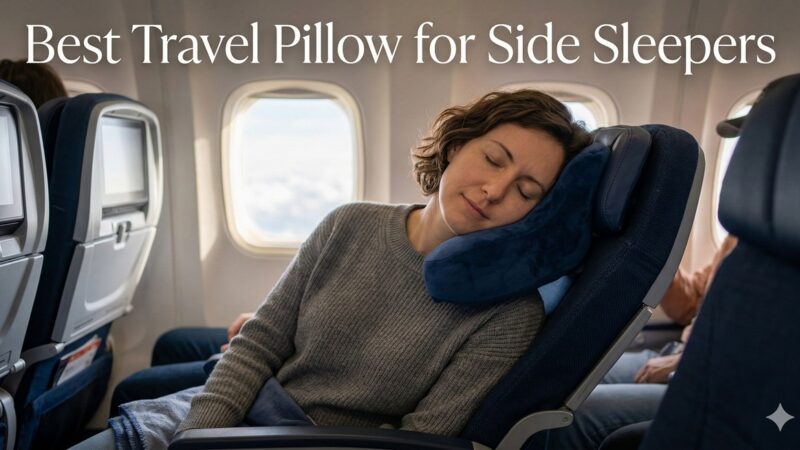
The Travelrest is the most distinctive inflatable option — it straps to the headrest and provides lateral body support rather than just neck cushioning. Particularly useful for side sleepers in aisle seats.
The Purefly is the most practical standard inflatable — built-in pump, velvet cover, adjustable firmness, compact. Best for those who want a traditional U-shaped inflatable without the blowing-up ritual.
The Trekology targets backpackers and campers specifically — ultra-compact and lightweight at 110g, designed to lay flat on sleeping mats. Less ideal for flight use but excellent for camping trips.
Head-to-Head Comparison
| Factor | Memory Foam | Inflatable |
|---|---|---|
| Comfort | Better | Adequate |
| Packability | Moderate (clips to bag) | Excellent (fits in pocket) |
| Weight | 200–440g | 110–230g |
| Temperature | Warmer | Cooler |
| Consistency | High (holds shape) | Variable (valve quality) |
| Adjustable firmness | No | Yes |
| Price range | £10–50 | £15–40 |
| Durability | Long (years) | Medium (depends on valve) |
Which Should You Choose?
Choose memory foam if:
- You are primarily concerned with comfort
- You have room in your carry-on for something cantaloupe-sized
- You will use the pillow repeatedly and want something durable
- You are doing long-haul overnight flights where sustained support matters
- You have found inflatables deflate or feel uncomfortable in the past
Choose inflatable if:
- Pack size is your main constraint — you travel with only a small backpack
- You run warm and prefer a cooler sleeping surface
- You want adjustable firmness
- You are primarily doing shorter flights where sustained comfort matters less
- Weight matters (backpackers, ultralight travellers)
Choose a scarf-style (Trtl) if neither quite fits:
The Trtl is a third category — not foam, not inflatable. Its internal plastic frame provides structured support at roughly the same packed size as a deflated inflatable pillow. For upright sleepers who want the smallest possible footprint with reliable support, it outperforms both foam and inflatable options.
Mid-Flight Comparison
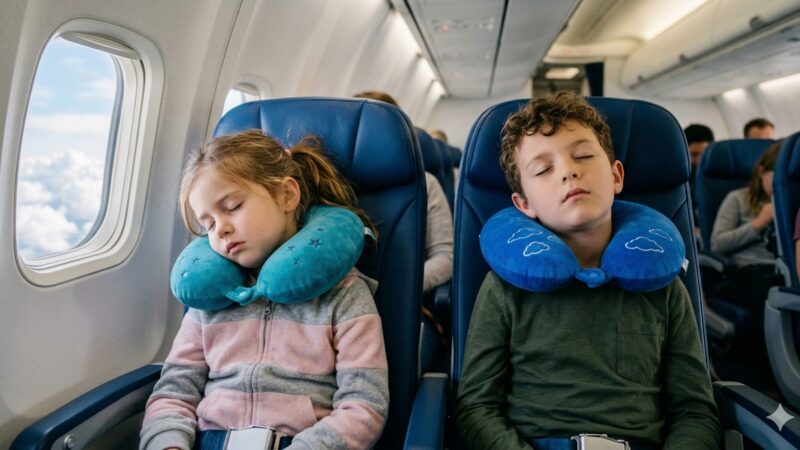
On a 10-hour flight, memory foam maintains consistent firmness from hour one to hour ten. Inflatables depend entirely on valve quality — with a good valve, they’re fine; with a cheap valve, you notice the difference by hour five.
On a 2-hour short-haul flight, both work equally well. The difference in sustained performance only becomes meaningful on flights where you’re genuinely trying to sleep for several hours.
Price Comparison
Both types span a similar price range, though the best-performing options differ in what you’re paying for.
Budget (under £15):
- Memory foam: Aidapt, generic brands — basic U-shape, functional
- Inflatable: basic valve designs — variable quality, some deflate during use
Mid-range (£15–35):
- Memory foam: SNUGL, Portable Memory Foam — quality foam, washable covers, carry bags
- Inflatable: Purefly, Travelrest — reliable valves, pump options
Premium (£35+):
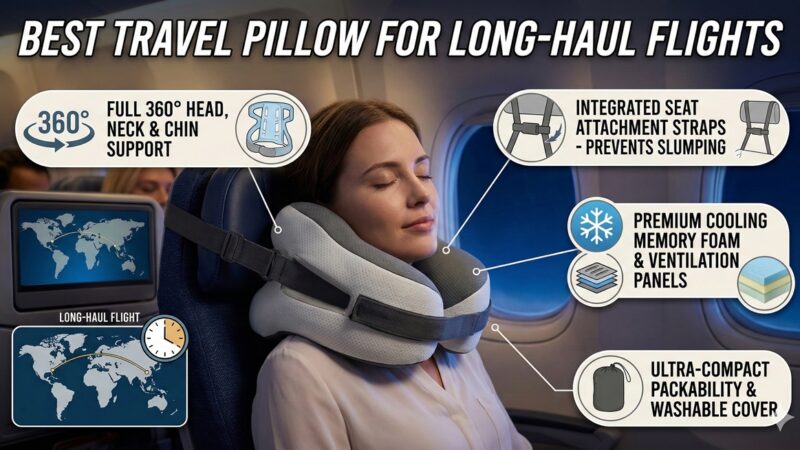
- Memory foam: Cabeau Evolution S3 — seat-strap attachment, luxury cover
- Inflatable: Sea to Summit Aeros — high-quality valve, premium fabric
Verdict
For most travellers doing long-haul flights who prioritise arriving without neck pain over saving bag space: memory foam.
For ultralight travellers, backpackers, or anyone whose primary concern is how much space a pillow takes up: inflatable.
For the best of both worlds in terms of compact packing with solid support: consider the Trtl as a third option that sidesteps this comparison entirely.
See our full guide to travel pillows and our long-haul flight recommendations for more specific picks by use case.