Best Castles in Europe: Tours & History
I have spent years chasing castles across Europe, from the fairytale spires of Bavaria to crumbling fortresses perched on Mediterranean cliffs. Each castle tells a different story – of kings and queens, sieges and ceremonies, architecture shaped by centuries of war and peace. Standing on the ramparts of Hohenwerfen as falcons circled overhead, or wandering the gilded halls of Versailles at closing time when the crowds had thinned, these experiences convinced me that Europe’s castles are worth the journey. Here are seven that left the strongest impression.
Neuschwanstein Castle, Germany
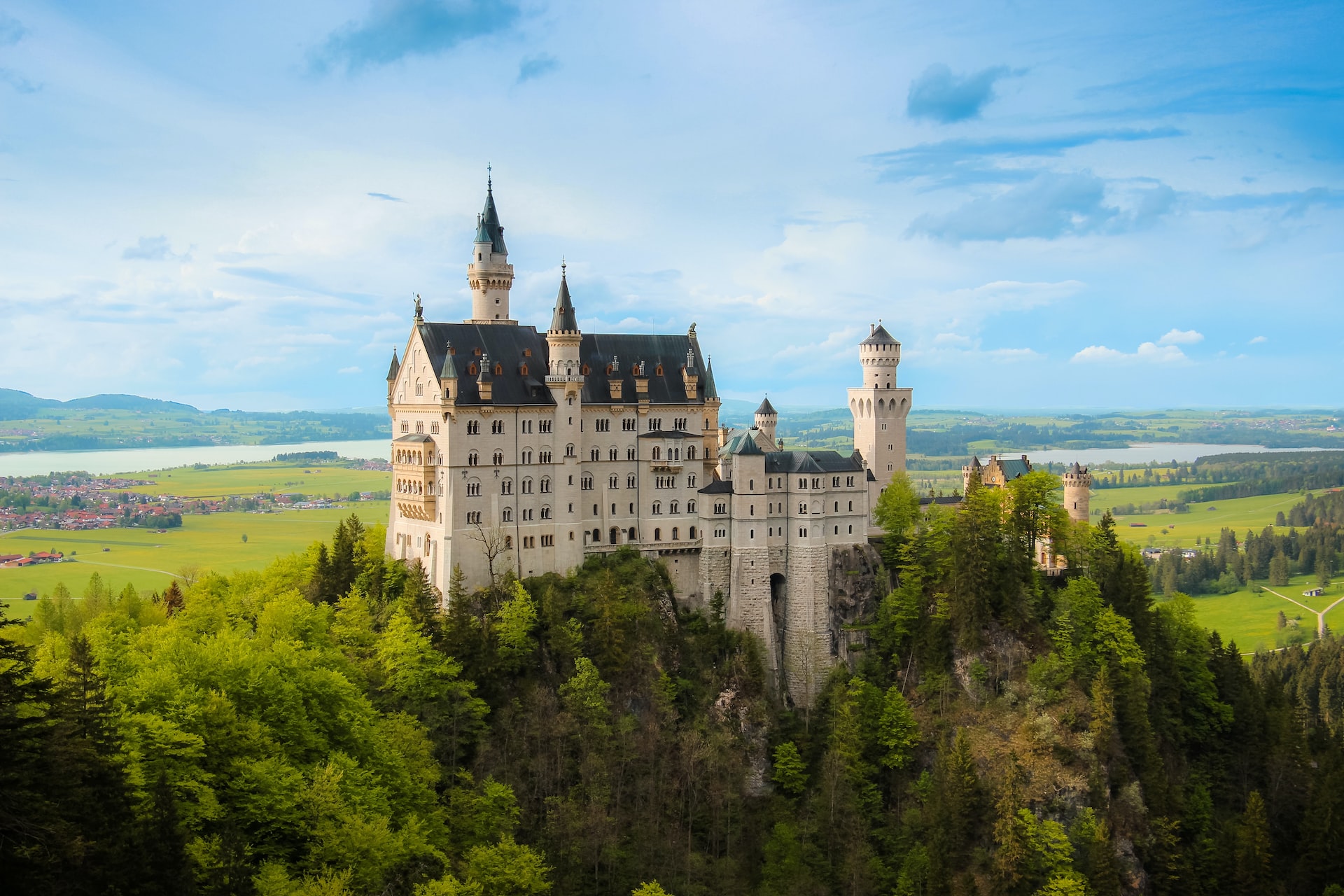
Neuschwanstein is the castle that launched a thousand postcards. Perched in the Bavarian Alps near Fussen, its white limestone towers rise from forested hillsides like something from a storybook. Walt Disney reportedly drew inspiration from it for Sleeping Beauty’s castle, and when you see it emerging from morning mist, the comparison makes sense.
The castle was commissioned by King Ludwig II of Bavaria in 1869 as a personal retreat. Ludwig was obsessed with Wagnerian opera and medieval legends, and Neuschwanstein reflects these passions in every detail. The Singers’ Hall reproduces a scene from Parsifal. The throne room, though never completed, was designed to evoke Byzantine grandeur. Ludwig enjoyed his creation for only 172 days before being declared insane and deposed. He died mysteriously three days later.
Visiting: The castle is only accessible by guided tour. Book tickets online in advance, especially in summer – the castle receives over 1.4 million visitors annually. Tours last 30-35 minutes and run every 5 minutes at peak times.
Entry: Adults EUR 15, under 18 free. Combined tickets with nearby Hohenschwangau Castle EUR 27.
Getting there: From Munich, take the train to Fussen (2 hours), then bus 73 or 78 to Hohenschwangau village. From there, walk uphill (30-40 minutes), take a horse-drawn carriage (EUR 8 uphill), or shuttle bus to Marienbrucke viewpoint.
Palacio da Pena, Sintra, Portugal
The first time I saw Pena Palace, I understood why people call it Europe’s most colourful castle. Its red and yellow towers, Moorish arches, and Gothic turrets clash in ways that should not work but somehow create something magical. Perched on a hilltop in the Sintra Mountains, visible from Lisbon on clear days, it looks like a castle designed by a child given unlimited crayons.
King Ferdinand II, a German prince who married into Portuguese royalty, built Pena between 1842 and 1854. He threw every architectural style he admired into the design – Manueline, Moorish, Gothic, Renaissance – creating a palace that functions as a catalogue of European architecture. The interior is equally eclectic, preserved largely as the royal family left it when they fled to Brazil in 1910.
The surrounding park covers 200 hectares of exotic trees, hidden grottoes, and walking trails. Budget at least half a day to explore both palace and grounds.
Visiting: Arrive early. By mid-morning in summer, queues snake around the building. Consider buying tickets online to skip the entrance line.
Entry: Palace and park EUR 14, park only EUR 8. Under 18 and over 65 receive discounts.
Getting there: From Lisbon, take the train to Sintra (40 minutes, EUR 2.30), then bus 434 to the palace (EUR 7 return). Walking from Sintra town centre takes about an hour uphill through the forest – beautiful but strenuous.
Guaita Tower, San Marino
San Marino, the world’s oldest republic, clings to Monte Titano in the Italian Apennines. Three towers crown its ridgeline, and Guaita, the oldest, has watched over the tiny nation since the 11th century. Walking the path between the towers on a clear day, with the Adriatic glittering in the distance and the Italian plains stretching to the horizon, feels like stepping into a medieval painting.
Guaita’s walls are 10 metres thick at the base, tapering to 5 metres at the top. The tower served as a prison until the 1970s, and you can still see the cells where inmates were held. From the battlements, the views extend across Romagna to the sea – on exceptional days, you can see Croatia across the Adriatic.
The walk connecting all three towers (Guaita, Cesta, and Montale) takes about an hour and ranks among Europe’s most scenic short hikes. Only Guaita and Cesta are open to visitors; Montale is privately owned.
Visiting: The tower is small and can feel crowded at peak times. Early morning or late afternoon offers the best experience and light for photography.
Entry: EUR 4.50 for Guaita alone, EUR 6.50 combined ticket for Guaita and Cesta (which houses a weapons museum). Under 10 free.
Getting there: San Marino has no airport or train station. Take a bus from Rimini (30 minutes, about EUR 5) or drive. The historic centre is pedestrianised – park below and take the cable car (EUR 2.80 one way) or walk up.
Palace of Versailles, France
Versailles is not a castle in the traditional sense – it is a statement of absolute power made stone and gold. Louis XIV transformed his father’s hunting lodge into a palace so vast that the entire French court, some 10,000 people, lived within its walls. Walking through the Hall of Mirrors at sunset, when the chandeliers catch the fading light and the gardens stretch endlessly beyond the windows, you understand why this became the template for royal residences across Europe.
The palace contains over 2,300 rooms, though only a fraction are open to visitors. The King’s State Apartments, the Queen’s Chambers, and the Hall of Mirrors form the main circuit. Beyond the palace, 800 hectares of gardens include fountains, the Grand Canal, and the Petit Trianon where Marie Antoinette retreated from court life.
The crowds are intense – Versailles receives over 8 million visitors annually. Going on a weekday, arriving at opening time, or visiting during the Grandes Eaux fountain shows (when most visitors are in the gardens) improves the experience considerably.
Visiting: The palace is closed on Mondays. Tuesday and Sunday are busiest. Book timed entry tickets online to skip the main queue.
Entry: Palace EUR 18, Palace + Gardens EUR 21 (required on fountain show days), Gardens only EUR 10 on show days (free otherwise). Under 18 and EU residents under 26 free.
Getting there: Take RER Line C from central Paris to Versailles Chateau Rive Gauche (40-60 minutes, included in Navigo pass or about EUR 4). The palace is a 10-minute walk from the station.
Hohenwerfen Fortress, Austria
Hohenwerfen rises from the Salzach Valley like something from a fantasy novel – a fortress of grey stone perched on a wooded outcrop, the snow-capped Alps forming a dramatic backdrop. It has served as a military stronghold, a hunting retreat, and a state prison over its 900-year history. Today, it offers one of Austria’s most atmospheric castle experiences.
The fortress was built in 1077 by the Archbishop of Salzburg to control the valley below. Its strategic importance meant constant improvements over the centuries – the walls you see today date mostly from the 16th century. The interior preserves a weapons collection, a torture chamber, and the original chapel.
The highlight for many visitors is the falconry show. Eagles, hawks, and vultures soar from the castle walls and dive past the audience – an experience that feels genuinely medieval. The shows run daily during opening season (April to November).
Visiting: The fortress is closed from November to March. A funicular saves the 20-minute uphill walk (included in ticket price). Allow 2-3 hours for the fortress and falconry show.
Entry: Adults EUR 14.50 (includes funicular), falconry show included in entry. Family tickets available.
Getting there: The fortress is 40 km south of Salzburg. By car, take the A10 motorway. By train, take the regional service to Werfen station (40 minutes from Salzburg), then walk 15 minutes to the funicular base station.
Alcazar of Segovia, Spain
The Alcazar of Segovia looks like a ship’s prow cutting through the Castilian plains, its towers rising from a rocky spur where two rivers meet. This silhouette reportedly inspired the castle in Disney’s Snow White, and standing before it you can see why – the proportions seem too perfect to be real.
The site has been fortified since Roman times, but the current structure dates from the 12th century onwards. Alfonso X held court here, Isabella I was crowned Queen of Castile within these walls, and the Royal Artillery School occupied the building for centuries. A fire in 1862 destroyed much of the interior, but the subsequent restoration recreated the ornate ceilings and throne rooms that visitors see today.
The Torre de Juan II offers the best views. Climbing the 152 spiral stairs brings you to a rooftop terrace overlooking Segovia’s cathedral, the Roman aqueduct in the distance, and the endless Castilian plateau beyond.
Visiting: Arrive early to avoid tour groups. The palace circuit takes about an hour; add 30 minutes if climbing the tower.
Entry: Palace EUR 9, Palace + Tower EUR 12. Under 5 free.
Getting there: Segovia is an easy day trip from Madrid. High-speed trains take 27 minutes to Segovia-Guiomar station (then bus 11 to centre). Regular trains take 2 hours but arrive closer to the old town. The Alcazar is a 15-minute walk from Segovia’s main square.
Culzean Castle, Scotland
Culzean (pronounced “Cullane”) clings to the Ayrshire cliffs overlooking the Firth of Clyde, with views to the Isle of Arran and, on clear days, Ireland. It feels more like a stately home than a defensive fortress – and that is exactly what architect Robert Adam intended when he transformed a 16th-century tower house into this Georgian masterpiece between 1777 and 1792.
The castle belonged to the Kennedy clan for centuries before passing to the National Trust for Scotland. The oval staircase is Adam’s showpiece – a sweeping spiral of pale stone that would not look out of place in a Jane Austen adaptation. The circular saloon offers panoramic sea views, and the armoury displays an impressive weapons collection.
The grounds are equally appealing. A walled garden, deer park, swan pond, and miles of woodland trails surround the castle. The estate’s 260 hectares make it one of Scotland’s most visited country parks.
Visiting: The castle can be combined with a day exploring Burns country – the poet’s birthplace in Alloway is 20 minutes north.
Entry: Adults GBP 16.50, children GBP 8.50 (National Trust for Scotland members free). Grounds only GBP 11.
Getting there: Culzean is 20 km south of Ayr. By car, follow the A719 coast road. Without a car, take a bus from Ayr to Culzean (seasonal service). The nearest train station is Maybole, 6 km away.
Planning Your Castle Tour
These seven castles span six countries, but several can be combined into regional itineraries. Neuschwanstein and Hohenwerfen work together on an Alpine route from Munich to Salzburg. Versailles is an obvious Paris day trip. Pena Palace pairs with Lisbon, and the Alcazar fits neatly into a Madrid-Segovia-Toledo circuit.
For the best experience, book tickets online where available, arrive early, and consider visiting in shoulder season (April-May or September-October) when crowds thin and the light is beautiful for photography.
Frequently Asked Questions
Do I need to book tickets in advance for European castles?
Yes, especially for popular castles like Neuschwanstein and Versailles. Neuschwanstein receives over 1.4 million visitors annually and tours sell out quickly in summer. Versailles requires timed entry tickets. Booking online saves time and guarantees entry. Less visited castles like Guaita Tower and Culzean often allow walk-up entry.
How much does it cost to visit Neuschwanstein Castle?
Adults pay EUR 15 for entry to Neuschwanstein. Under 18s enter free. A combined ticket with nearby Hohenschwangau Castle costs EUR 27. The castle is only accessible by guided tour which lasts 30-35 minutes and must be booked online in advance.
Can you visit Versailles in one day?
Yes, but it requires planning. The palace contains over 2,300 rooms though only a fraction are open to visitors. Allow 3-4 hours for the palace interior and another 2-3 hours for the gardens. Arrive at opening time, book tickets online, and avoid Tuesdays (closed) and weekends (busiest). Wednesday and Friday evenings are less crowded.
Which European castle is best for families with children?
Neuschwanstein appeals to children because of its fairytale appearance and Disney connection. Hohenwerfen Fortress offers daily falconry shows with eagles and hawks (April-November). Pena Palace in Portugal captivates children with its bright colours and extensive park with hidden grottoes and walking trails.
What is the most colourful castle in Europe?
Pena Palace in Sintra, Portugal is Europe’s most colourful castle with red and yellow towers, Moorish arches, and Gothic turrets. King Ferdinand II built it between 1842 and 1854, combining Manueline, Moorish, Gothic, and Renaissance architectural styles in one eclectic palace.
When is the best time to visit European castles?
Shoulder season (April-May or September-October) offers the best combination of good weather, smaller crowds, and beautiful light for photography. Summer brings peak crowds and higher prices. Some castles like Hohenwerfen close from November to March. Book online where possible and arrive early regardless of season.
Related Guides
- Europe Travel Guide
- France Travel Guide
- Spain Travel Guide
- Portugal Travel Guide
- Search flights & hotels on lastminute.com