UK to US Plug Adapter: Complete Guide for UK Travellers
I learned about US voltage the hard way — plugging my UK hair straighteners into a New York hotel outlet and watching them slowly die over five minutes. The adapter worked fine; the voltage difference killed the device. Since then I’ve travelled to the US dozens of times and figured out exactly what UK travellers need. The short version: your phone and laptop chargers will work with just a UK to US plug adapter. Hair dryers and many high-wattage appliances probably won’t without a converter, and converters are rarely worth the hassle. And if you own a Dyson Airwrap — read the section on that before you pack it, because no adapter or converter will save it.
Quick version: a Type B adapter (£3–15) is all you need for phones and laptops. Anything with a heating element — read the relevant section below. Dyson Airwrap owners: there’s a section for you, and it starts with “no”.
Quick Summary
| Specification | UK | USA |
|---|---|---|
| Plug Type | Type G (three rectangular pins) | Type A/B (two flat pins) |
| Voltage | 230V | 120V |
| Frequency | 50Hz | 60Hz |
What this means: You need an adapter to physically fit your UK plug into US sockets. Whether you also need a voltage converter depends on your specific device.
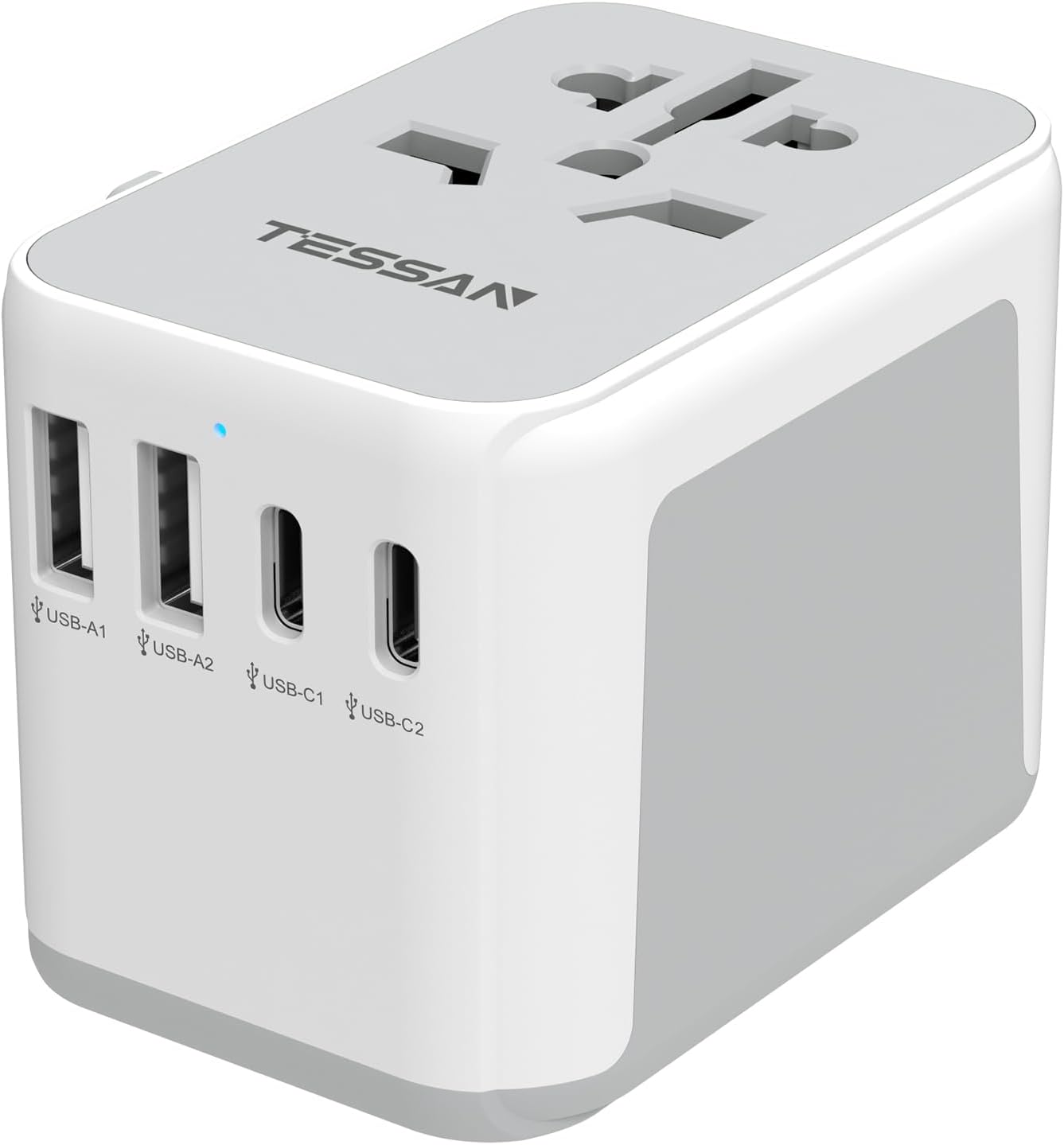
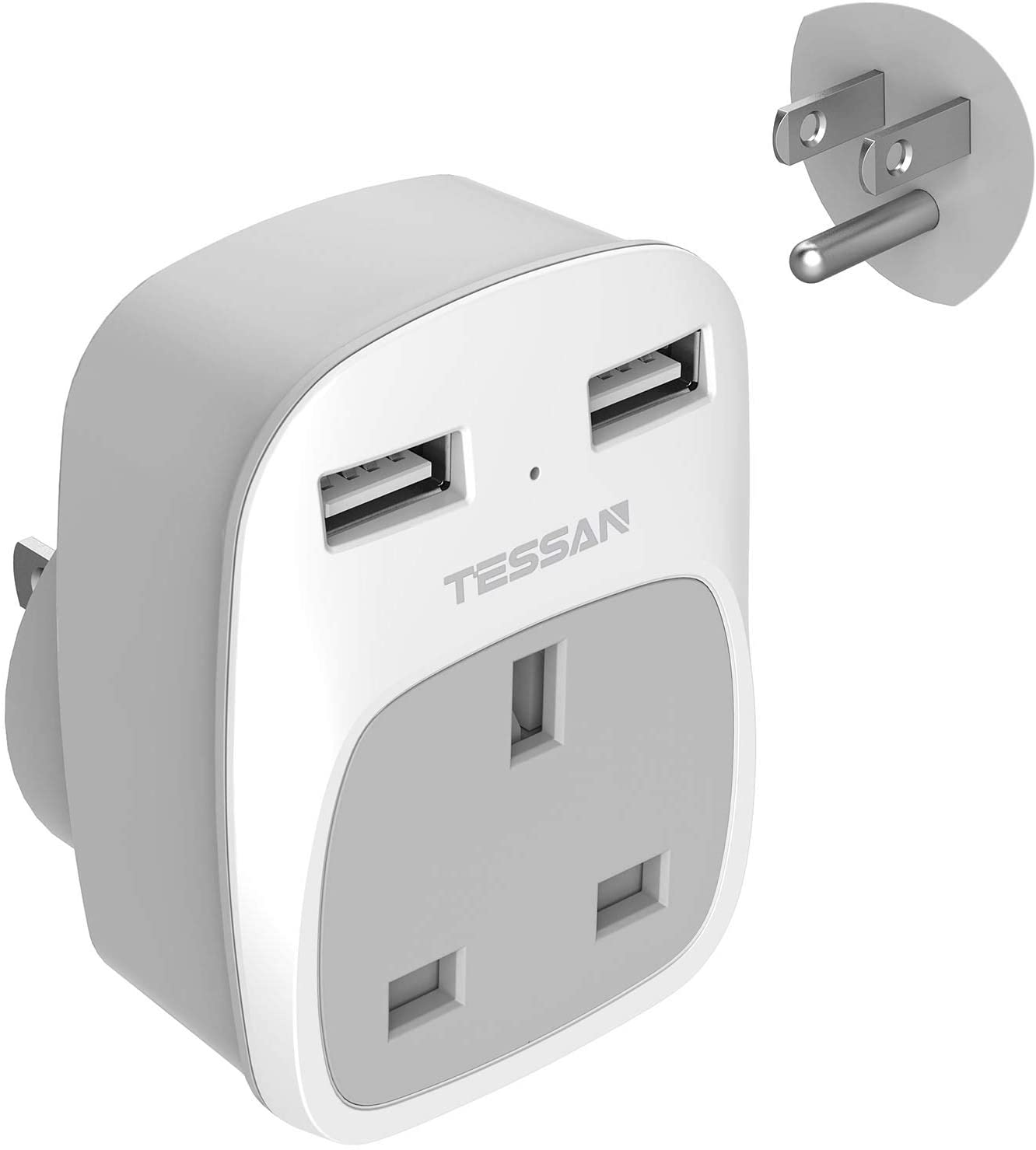
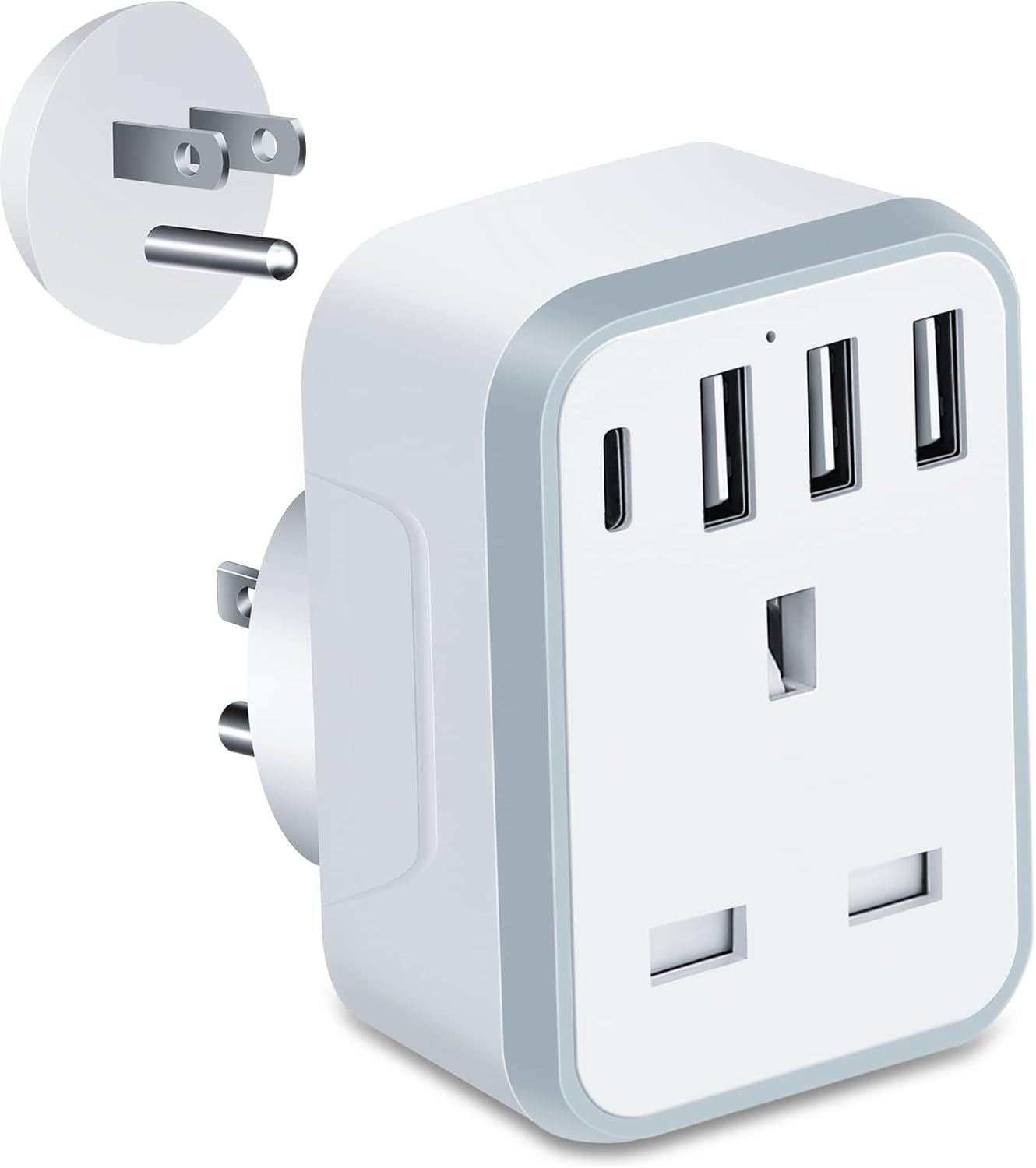
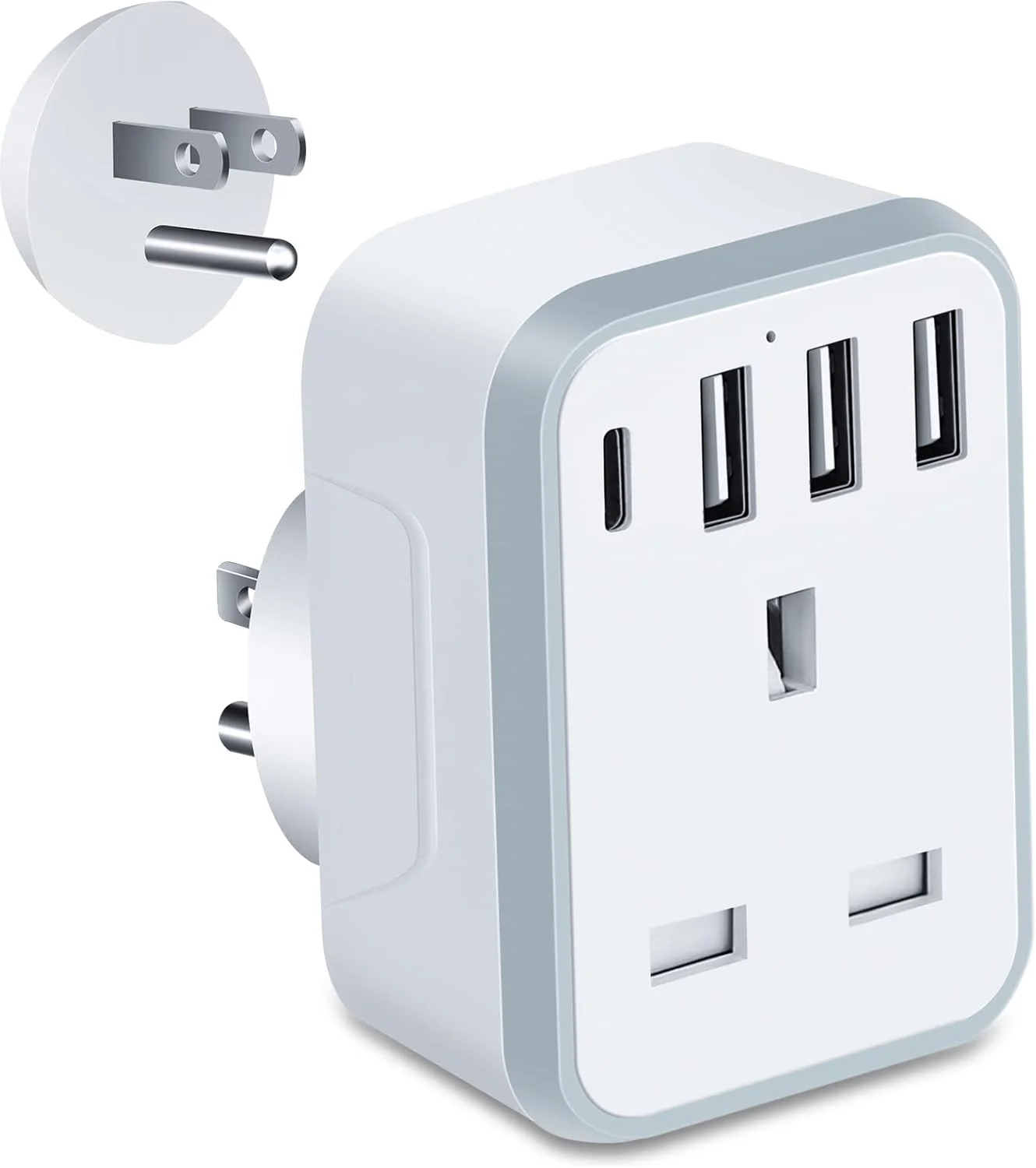
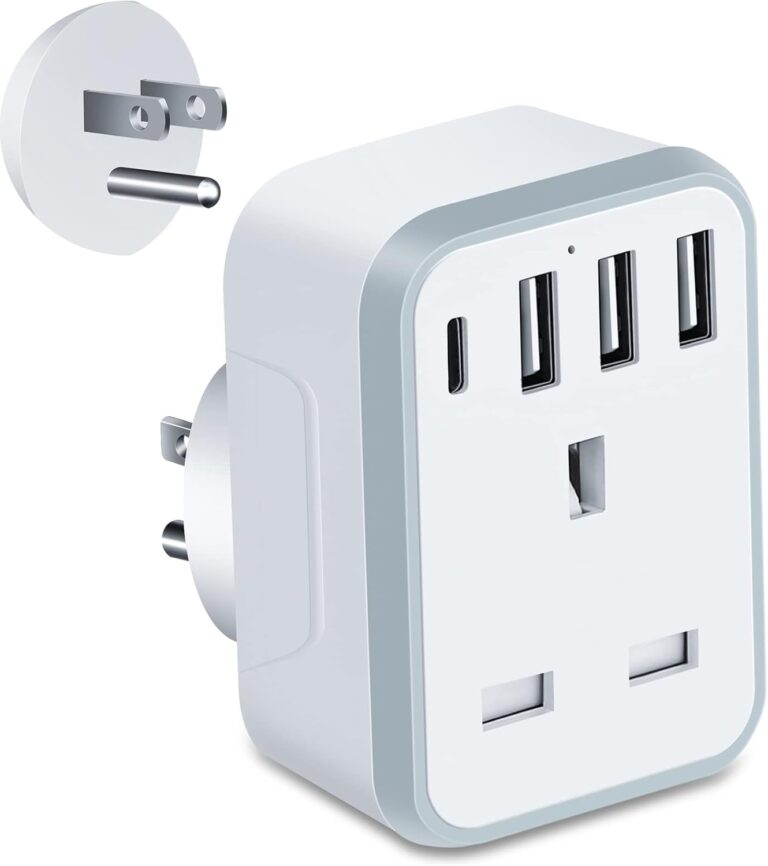
Best UK to US Plug Adapter with USB Ports
US Plug Types
Type A: Two flat parallel blades. The basic American plug — been around since 1904 but prohibited in new US construction since 1965. Still common in older hotels and buildings.
Type B: Two flat parallel blades plus a round grounding pin. Standard in modern US buildings. The ground pin is slightly longer than the flat blades, so the device is earthed before the power pins make contact.
Type B sockets accept both Type A and Type B plugs. A Type B adapter is therefore the more versatile choice — it works everywhere. UK plugs (Type G) don’t fit either — you need a plug adapter.
One thing that surprises UK travellers: US sockets feel less secure than UK ones. American sockets have uninsulated pin shanks and don’t recess into the wall the way UK sockets do. This is normal — it’s just a different design standard. It can make heavy adapters feel wobbly, particularly in older hotels.
Voltage: The Important Detail
The US runs on 120V; the UK runs on 230V. This matters more than the plug shape.
Dual-voltage devices (100-240V): Safe with just an adapter. Check the label on the power brick or the device itself — look for text reading “INPUT: 100-240V 50/60Hz”. This range covers every country’s mains voltage from Japan (100V) to the UK (230V). The device handles the difference automatically.
Single-voltage UK devices (220-240V only): Need a voltage converter as well as an adapter, or shouldn’t be used in the US at all. Hair dryers, curling irons, and high-wattage appliances often fall into this category. A converter for a 2,000W hair dryer would weigh 4-7 kg — often heavier than the appliance itself, and rarely the right answer.
Always check the label before plugging in. The voltage rating is usually embossed on the plug body or printed in small text on the charger brick — it’s worth squinting at it before you pack.
What About the Frequency Difference?
The UK uses 50Hz, the US uses 60Hz. This rarely matters for UK travellers. Modern dual-voltage chargers (phones, laptops, tablets) handle both frequencies without issue. The only devices where frequency can matter are synchronised clocks and motors designed specifically for 50Hz — a UK clock might run slightly fast in the US. For anything you’re actually likely to pack, the frequency difference is not a concern.
Will My Device Work in the US?
This is the question every article should answer but most don’t. Here’s what I’ve actually used and researched:
Phones, Laptops, and Tablets
All modern phone, laptop, and tablet chargers are dual-voltage (100-240V) — Apple, Samsung, Google, Dell, HP, Lenovo, all of them. Check your charger label to confirm, but I’ve genuinely never found a modern smartphone or laptop charger that wasn’t. A UK to US plug adapter is all you need.
GHD Straighteners
Most current GHD models are dual-voltage (110-230V) and work fine in the US with just an adapter. That covers the Mk4, Mk5 Gold, Mk6 Eclipse, and Mk7 Platinum. The one exception is the older model 3.1b, which is not dual-voltage. If you have an older pair, check the label on the cable before packing.
Dyson Airwrap — UK Version
No. Do not attempt to use a UK Dyson Airwrap in the USA.
The UK Dyson Airwrap is single-voltage (220-240V only). No adapter will make it work in the US, because the voltage problem remains regardless of the plug shape. Dyson also explicitly states that using a voltage converter with the Airwrap damages the motor and voids the warranty. The Airwrap’s motor runs at speeds that are incompatible with converter-produced power. The only way to use a Dyson Airwrap in the US is to buy a US model (110-120V) designed for American power. Leave the UK Airwrap at home.
This is the most common expensive mistake UK travellers make in the US. The short answer: no. There is no workaround.
Electric Toothbrushes
This is where the “adapter only” advice that most guides give falls apart. It depends heavily on the model.
- Oral-B iO Series (iO 7, iO 8, iO 9, iO 10): Dual-voltage — works in the US with just an adapter. Lower models (iO 3–iO 6) use a single-voltage charger — check the label on the charging base.
- Sonicare DiamondClean 9300 and 9900 charger: Dual-voltage — works in the US with just an adapter.
- Budget Oral-B models (e.g. Pro 1, Pro 2, Pro 3): Chargers are typically NOT dual-voltage. Check the label on the charging stand.
- Budget Sonicare models: Check the label on the charging base.
If in doubt, check the charger base for the voltage rating — it’s the charger that plugs in, not the toothbrush itself. A charger labelled “100-240V” is fine; one labelled “220-240V” is not.
CPAP Machines
Most modern CPAP machines are universal voltage (100-240V / 50-60Hz), so a Type B adapter is all you need. Check your specific model’s label or manual to confirm. Airlines treat CPAP machines as medical equipment, so you can use them on the aircraft and they don’t count toward your carry-on allowance.
Electric Shavers
Most modern electric shavers (Philips, Braun, Panasonic) are dual-voltage. Check the label on the charging base. Many newer models also charge via USB-C, which sidesteps the voltage question entirely.
Hair Dryers and Curling Irons
UK hair dryers and curling irons are typically 220-240V and 1,200-2,200W — single-voltage, which means they won’t work properly in the US without a converter. A converter that can handle 2,000W weighs 4-7 kg and costs £30-60, which is more than most travel hair dryers and not something you want in your luggage. For most people:
- Use the hotel’s hair dryer — US hotels almost always provide them
- Buy a dual-voltage travel hair dryer (they’re widely available, 1000-1200W, often fold flat)
- Buy a cheap one on arrival — Target and Walmart sell basic hair dryers from $20-30
Converters are a last resort for hair appliances, not the first answer.
UK Electric Kettles and Irons
No, and a converter isn’t worth trying. UK kettles typically draw 2,000-3,000W, and a converter rated for that wattage weighs more than the kettle. Buy in the US if you need one, or use the hotel kettle.
Choosing a UK to US Plug Adapter
Basic Adapter (No USB)
Simple, light, cheap (£3-8). Does the job if you’re just charging one or two devices from your regular UK chargers. Get a Type B (grounded) adapter — it works in all US sockets and maintains the earth connection for devices that need it. See our full travel adapter guide for wider destination coverage.
Why Type B matters: UK devices with metal casings (some appliances, older equipment) use the earth connection in the Type G plug for safety. A Type B adapter preserves that earth connection. A Type A (ungrounded) adapter doesn’t. When in doubt, use Type B — it’s always the safer choice and works everywhere.
Adapter with USB Ports
The most practical option for most travellers (£8-15). One adapter handles your laptop via the UK socket while USB ports charge your phone and tablet simultaneously. Look for one that includes USB-C as well as the older USB-A ports.
Multi-Pack
Worth getting 2-3 basic adapters so you can charge multiple devices from different sockets in the room simultaneously.
GaN Adapters — For Multi-Device Travellers
A newer option worth knowing about: GaN (gallium nitride) travel chargers combine multiple USB-C and USB-A ports with interchangeable plug heads, including Type B for the US. These replace your individual device chargers and your adapter with a single unit, typically 65W-100W. Worth considering if you’re travelling with a laptop, phone, and tablet and want to free up sockets and cut down on cables.
Brands like UGREEN (65W, approximately £25-35) and TESSAN offer solid options at mid-range prices. The premium end (OneAdaptr, Satechi) goes to £60-80 for 100W+ multi-port units. Not worth it for a week’s holiday, but it makes a real difference on longer stays or if you’re working remotely.
Power Strip Strategy for Longer Stays
One practical tip I’ve never seen written up properly: if you’re staying somewhere for more than a few days, bring one adapter and a small UK power strip. Plug the adapter into the US socket once and run all your UK devices through the strip. You avoid the “wobbling heavy adapter” problem in worn US hotel sockets, and you can charge everything from one spot. This works because you’re not changing the voltage — just converting the physical plug once.
Adapter Costs
| Type | Price Range | Where to Buy |
|---|---|---|
| Basic Type B adapter | £3-8 | Amazon, Poundland, Primark |
| Adapter with USB ports | £8-15 | Amazon, Currys, John Lewis |
| GaN charger with US plug | £20-40 | Amazon, Currys |
| Premium GaN 100W+ | £50-80 | Amazon, specialist retailers |
| Voltage converter (if genuinely needed) | £25-60 | Amazon, specialist electronics |
Buy before you travel — airport prices are typically 3-4x higher.
Hair Appliances: The Problem (and Dyson Airwrap in Full)
UK hair dryers, straighteners, and curling irons are often single-voltage (220-240V only). Plugging them into US 120V outlets without a converter means they’ll run at half power — your hair dryer will blow lukewarm air and take forever, your straighteners may not reach temperature.
For most hair appliances the answer is simple: use the hotel’s hair dryer (US hotels almost universally provide them), buy a dual-voltage travel dryer before you go (from around £20), or pick one up on arrival from Target or Walmart for $20-30. GHD users don’t need to worry — most models are dual-voltage. Dyson Airwrap users: leave it at home.
A voltage converter for a hair dryer is heavy, awkward to pack, and unreliable at these wattages. The practical alternatives above are a better answer in almost every situation.
Where Else UK to US Adapters Work
US-style plugs (Type A/B) are also used in:
- Canada
- Mexico
- Most of Central America
- Most of the Caribbean
- Parts of South America
- Japan (same plug shape but 100V — most dual-voltage devices handle this fine)
If your US trip includes Canada or Mexico, the same adapter works throughout. For a full breakdown of plug types by country, see our worldwide plug types guide.
Cruise ships: US-based cruise ships almost always have US-standard sockets (Type A/B) in cabins. A UK to US adapter works on board. Some ships also have European (Type C/F) sockets or UK sockets in certain cabin categories — check with your cruise line before you pack.
What to Pack
For a typical trip:
- 1-2 UK to US adapters (Type B)
- Your regular phone/laptop chargers (confirm dual-voltage, but they almost certainly are)
- Dual-voltage hair appliance — or plan to use the hotel’s
For longer stays or remote working:
- GaN charger with US plug head (replaces multiple chargers and an adapter)
- Small UK power strip (lets you charge all UK devices from one adapter)
Leave at home:
- UK Dyson Airwrap (single-voltage — no solution in the US)
- UK hair dryer if it’s single-voltage (use hotel’s or buy in US)
- UK kettle or iron (buy in US if needed)
Common Mistakes
The most common mistake is assuming all devices are dual-voltage. Most are, but budget toothbrush chargers and older kitchen appliances often aren’t. Check the label before you pack, not after you’ve plugged in.
Second is confusing adapters with converters. An adapter changes the plug shape; a converter changes the voltage. They’re different products and do different things. Buying an adapter and expecting it to solve a voltage problem is why hair dryers die in New York hotel rooms.
Don’t assume a converter fixes everything, either. Converters have wattage limits and can damage sensitive electronics. The Dyson Airwrap is the obvious example — a converter actually damages the motor, which is why Dyson explicitly warns against using one.
Two smaller ones: don’t bring a single-voltage UK hair dryer (it won’t work properly and the converter to run it weighs more than a dedicated travel dryer would), and don’t buy your adapter at the airport. They’re £3 online. At the terminal, expect to pay three or four times that.
Safety Tips
Check device voltage before plugging in. The label is on the power brick or plug body. If it says “220-240V only” and you’re in the US, don’t plug it in.
Use a Type B (grounded) adapter for anything with a metal casing. Don’t overload adapters with high-wattage devices. A warm adapter under load is normal; one that’s hot to the touch is overloaded — unplug it and let it cool. Unplug adapters overnight in older hotel sockets where connections can be loose.
Do not use a voltage converter with the Dyson Airwrap. Dyson explicitly warns it damages the motor.
Frequently Asked Questions
What plug adapter do I need for the US from the UK?
You need a UK to US plug adapter that converts Type G (three rectangular pins) to Type A/B (two flat parallel pins). Choose a grounded Type B adapter for 3-pin UK plugs — it works in all US sockets and maintains the safety earth connection.
Is the voltage different between UK and US?
Yes. The UK uses 230V at 50Hz; the US uses 120V at 60Hz. The voltage difference is significant — devices designed for 230V will not work correctly at 120V, and dual-voltage devices (100-240V) are needed to bridge the gap with just an adapter.
Does the frequency difference (50Hz vs 60Hz) matter?
For most devices, no. Modern dual-voltage chargers handle both frequencies automatically. The only practical effect for UK travellers is that a UK synchronised clock might run slightly fast in the US — not something most people bring on holiday.
Can I charge my phone in the USA with a UK charger?
Yes, with a plug adapter. All modern smartphone chargers — Apple, Samsung, Google, OnePlus — are dual-voltage (100-240V) and work anywhere in the world. Check your charger brick or cable label to confirm; it will say “INPUT: 100-240V 50/60Hz”. If it only says “220-240V”, it’s single-voltage and won’t work correctly.
Can I use my Dyson Airwrap in America?
No. The UK Dyson Airwrap is single-voltage (220-240V) and cannot be used in the US. A voltage converter won’t help — Dyson explicitly states it damages the motor and voids the warranty. The only option is to buy a US-voltage Dyson Airwrap if you need it in America.
Will my GHD straighteners work in the USA?
Most GHD models, including the Mk4, Mk5 Gold, Mk6 Eclipse, and Mk7 Platinum, are dual-voltage (110-230V) and work in the US with just an adapter. The exception is the older model 3.1b, which is not dual-voltage. Check your GHD label to confirm.
Do I need a grounded adapter for the US?
Type B (grounded) adapters are the safer choice for any device with a metal casing, as they maintain the earth connection present in UK Type G plugs. Double-insulated devices (marked with a square-within-square symbol) don’t require an earth connection. When in doubt, use Type B — it works in all US sockets and is always the safer option.
Will my electric toothbrush work in the USA?
It depends on the model. Oral-B iO Series models iO 7 and above have dual-voltage chargers and work in the US with just an adapter — models iO 3 through iO 6 use a single-voltage charger. Sonicare DiamondClean 9300 and 9900 chargers are dual-voltage. Budget models from both brands often are not — check the label on the charging base before you pack.
Can I use my CPAP machine in the USA?
Most modern CPAP machines — including models from ResMed, Philips Respironics, and Fisher & Paykel — are universal voltage (100-240V / 50-60Hz) and work in the US with just a Type B adapter. Check the label on your power supply to confirm. Airlines treat CPAP machines as medical equipment: they can be used on board and don’t count toward your carry-on allowance.
Do I need a voltage converter for my UK hair dryer in the US?
You’d need one to use it at all, but they’re heavy and impractical for most hair dryers. A voltage converter capable of handling a 2,000W hair dryer weighs approximately 4-7 kg — often more than the dryer itself. The better options are to use the hotel’s hair dryer (nearly all US hotels provide them), buy a dual-voltage travel dryer before you go, or pick up a cheap one on arrival for $20-30.
Why is my travel adapter getting hot?
A mild warmth under load is normal, particularly for adapters with built-in USB ports charging multiple devices simultaneously. If the adapter becomes uncomfortably hot to the touch, it’s being overloaded — disconnect any high-wattage devices, let it cool completely, and avoid running it at full capacity continuously. Never leave a hot adapter plugged in overnight or while you’re out of the room.
Can I use a UK power strip in the US with one adapter?
Yes, and it’s a practical strategy for longer stays. Plug a single UK to US adapter into the wall, then run a UK power strip from it. This lets you charge multiple UK devices from one outlet without dealing with several adapters. You’re only converting the plug shape, not the voltage — so this only works for devices that are already dual-voltage.
Where can I buy a UK to US plug adapter?
Online from Amazon (widest selection, best prices), or in-store at Currys, John Lewis, Argos, or Primark. Poundland often stocks basic adapters. Avoid airport shops — prices are typically 3-4x higher than online. US retailers like Target and Walmart sell US-to-UK adapters (the other direction) — don’t buy from them thinking they’re the same.
Where else can I use my UK to US adapter?
UK to US adapters also work in Canada, Mexico, most of Central America and the Caribbean, and Japan (same plug shape; 100V voltage — most dual-voltage devices handle this fine).