Morocco Holidays: Marrakech & Travel Guide
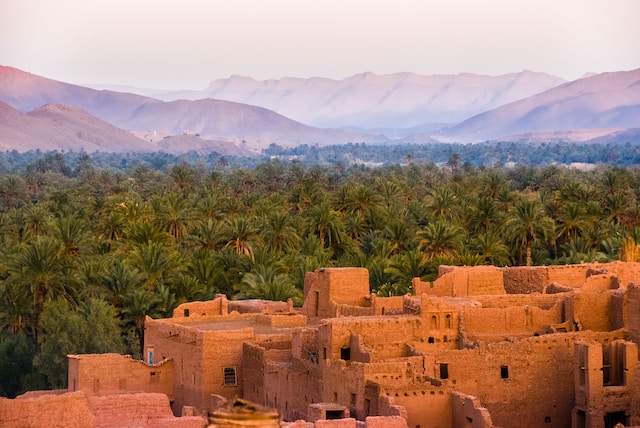
Morocco holidays overwhelmed me in the best way. I landed in Marrakech expecting chaos and got exactly that – snake charmers in the main square, motorbikes weaving through crowds, the call to prayer echoing across rooftops, and the constant pressure of the medina trying to sell me something. Within hours I understood why people either fall in love with Morocco or flee. I fell hard.
I spent two weeks travelling from Marrakech through the Atlas Mountains to the Sahara, then north to Fes. The variety packed into a country the size of California is remarkable – imperial cities with thousand-year-old medinas, Berber villages clinging to mountain slopes, surf towns on the Atlantic coast, and endless desert where the silence is absolute. Morocco is Africa’s easiest entry point for first-time visitors, but it rewards those who push beyond the obvious.
Marrakech
The red city is where most visitors start, and it wastes no time making an impression. The medina – the old walled city – is a labyrinth of narrow alleyways, souks, and riads (traditional houses with interior courtyards). Getting lost is inevitable and part of the experience.
Jemaa el-Fna
The main square is Marrakech’s heart, transforming throughout the day. Mornings are quiet; afternoons bring juice sellers, henna artists, and snake charmers; evenings explode into a night market of food stalls, musicians, and storytellers. The energy is exhausting and addictive.
Eat at the food stalls – grilled meats, tagines, snails, sheep heads if you are adventurous. Point at what looks good; most dishes cost 30-60 MAD (£2.50-5). The orange juice sellers are famous and cheap (4 MAD / £0.35).
The Souks
The covered markets spread north from Jemaa el-Fna in a maze of specialised sections – leather here, spices there, metalwork, carpets, pottery. Navigation is impossible; just wander. The further from the square, the more authentic the prices.
Bargaining is expected and essential. Start at 30-40% of the asking price and work up. Walking away often brings the price down further. Never start negotiating unless you intend to buy.
Riads
Traditional houses built around central courtyards, many now converted to guesthouses. Staying in a riad is the classic Marrakech experience – tiled fountains, rooftop terraces, mint tea on arrival. Prices range from 400-2,000 MAD (£35-175) per night for a double room with breakfast.
What to See
Bahia Palace – A 19th-century palace with stunning zellige tilework, carved cedar ceilings, and peaceful gardens. Entry 70 MAD (£6).
Ben Youssef Madrasa – A former Islamic college with intricate decoration covering every surface. One of North Africa’s finest examples of Moorish architecture. Entry 70 MAD (£6).
Majorelle Garden – A blue Art Deco garden created by French painter Jacques Majorelle and later owned by Yves Saint Laurent. Small but beautiful, and a cool retreat from the medina heat. Entry 150 MAD (£13).
Koutoubia Mosque – The largest mosque in Marrakech, with a minaret visible across the city. Non-Muslims cannot enter, but the gardens and exterior are worth seeing.
Fes
Morocco’s spiritual and intellectual capital, Fes has the world’s largest car-free urban area – a medieval medina of 9,000 narrow streets that has barely changed in centuries. It is harder to navigate than Marrakech, more intense, and ultimately more rewarding.
Fes el-Bali
The old medina is a UNESCO World Heritage Site and genuinely disorienting. Streets narrow to shoulder width, donkeys are the only transport, and the combination of smells – spices, leather, sewage, bread – shifts constantly. Hiring a guide (150-300 MAD / £13-26 for a half day) is worth considering for the first exploration.
The Tanneries
Fes is famous for its leather tanneries, where hides are dyed in stone vats using methods unchanged for centuries. The Chouara Tannery is the largest and most photogenic – the coloured dye vats seen from surrounding terraces are iconic. Shops offer rooftop access (usually free if you look around their leather goods). The smell is intense; they hand out mint leaves to hold under your nose.
What to See
Bou Inania Madrasa – A 14th-century religious school with exceptional carved stucco, zellige tilework, and wood carving. One of the few religious buildings in Fes open to non-Muslims. Entry 30 MAD (£2.60).
Nejjarine Museum of Wood Arts & Crafts – A beautifully restored caravanserai (merchant’s inn) housing traditional woodwork. The building is as impressive as the exhibits. Entry 60 MAD (£5).
Al-Qarawiyyin – The world’s oldest continuously operating university, founded in 859 AD. Non-Muslims cannot enter, but you can glimpse the courtyard from the doors.
The Sahara Desert
The Moroccan Sahara, specifically the Erg Chebbi dunes near Merzouga, is the classic desert experience – orange sand dunes rising to 150 metres, camel treks at sunset, and nights sleeping in desert camps under more stars than you have ever seen.
Getting There
Merzouga is about 9 hours from Marrakech by car, typically done as a two or three-day trip with overnight stops in the Dades or Todra Gorges. The drive crosses the High Atlas via the Tizi n’Tichka pass (spectacular mountain scenery) and follows the “Route of a Thousand Kasbahs” through fortified villages.
Most visitors book organised tours (from 1,200 MAD / £105 for a basic two-day trip to 3,500 MAD / £305 for more comfortable options). Driving yourself is possible but tiring.
The Desert Experience
Standard trips include a camel ride to a desert camp for the night, dinner around a fire, and sunrise over the dunes. Basic camps have shared tents and simple facilities; luxury camps have private tents with proper beds and sometimes bathrooms.
The silence of the desert at night is profound. The stars, far from any light pollution, are extraordinary.
Alternatives
Erg Chigaga – Larger dunes south of Zagora, harder to reach and less visited. Better for those wanting solitude.
Zagora – Closer to Marrakech (6 hours), with smaller dunes and a more accessible overnight option.
The Atlas Mountains
The High Atlas runs across Morocco, separating the coast from the desert. The peaks reach over 4,000 metres; Toubkal is the highest in North Africa at 4,167 metres.
Day Trips from Marrakech
The Ourika Valley is the easiest escape from Marrakech – a 90-minute drive into the foothills with Berber villages, waterfalls, and cooler air. Many visitors combine it with lunch at a riverside restaurant.
The Imlil Valley, gateway to Toubkal, offers more dramatic scenery and better hiking. Day walks from Imlil to nearby villages are manageable; climbing Toubkal takes two days with a mountain refuge overnight.
Berber Villages
The mountain communities are traditional and largely unchanged – mud-brick houses, terraced agriculture, and a way of life that has persisted for centuries. Hiring a local guide supports the communities and helps navigation.
Essaouira
A laid-back coastal town three hours from Marrakech, Essaouira is the antidote to medina intensity. The blue-and-white medina is small and easy to navigate, the ramparts overlook Atlantic waves, and the beaches stretch for miles.
The town is known for wind – kitesurfing and windsurfing are popular – and seafood. The port serves fresh grilled fish at harbour-side stalls for 50-80 MAD (£4-7) per plate.
Essaouira works as a day trip from Marrakech or a two-night break from the chaos.
Food and Drink
Moroccan food is flavourful and distinctive.
What to Eat
Tagine – The signature dish: slow-cooked stew in a conical clay pot. Lamb with prunes and almonds, chicken with preserved lemon and olives, and vegetable versions are common.
Couscous – Steamed semolina with vegetables and meat, traditionally served on Fridays.
Pastilla – Sweet and savoury pie, traditionally made with pigeon (now often chicken), layered with almonds, cinnamon, and flaky pastry.
Harira – Thick tomato-based soup with lentils and chickpeas, served during Ramadan and available year-round.
Mechoui – Slow-roasted lamb, pulled from the bone and eaten with cumin and salt.
Street food is cheap and good – try msemen (flatbread), sfenj (doughnuts), and the ubiquitous grilled meats.
Mint Tea
Moroccan mint tea (atay) is everywhere, served very sweet. Refusing it is impolite. The pouring ritual – from height to create froth – is part of the ceremony.
Alcohol
Morocco is Muslim, and alcohol is not widely available outside tourist areas and licensed restaurants. Bars exist in the new cities (ville nouvelle) but not in medinas. The local beer is Flag Speciale; Moroccan wine is improving. Expect to pay 40-60 MAD (£3.50-5) for a beer in a restaurant.
Budget 80-150 MAD (£7-13) for a restaurant meal, 30-60 MAD (£2.60-5) for street food.
Practical Information
Getting Around
Trains – The ONCF network connects Casablanca, Marrakech, Fes, Rabat, and Tangier. Comfortable, reliable, and cheap (Marrakech to Fes costs around 200 MAD / £17.50 second class, 8 hours).
Buses – CTM and Supratours run comfortable long-distance services. Cheaper local buses exist but are slower and less comfortable.
Grand taxis – Shared taxis that run fixed routes between cities, leaving when full. Cheap and efficient once you understand the system.
Within cities – Petit taxis (small coloured taxis) for trips within towns. Negotiate the price before getting in or insist on the meter.
When to Visit
March to May – Spring, with warm days, cooler nights, and manageable medina temperatures. Good time for desert and mountains.
September to November – Similar to spring, with fewer crowds than peak season.
June to August – Hot, particularly in Marrakech (40°C+) and the desert. The coast and mountains are more comfortable.
December to February – Cooler and good for desert trips. Snow on the High Atlas; skiing is possible.
Costs
Morocco is affordable compared to Europe.
- Budget riad/hostel: 200-500 MAD (£17-44) per night
- Mid-range riad: 600-1,200 MAD (£52-105) per night
- Street food meal: 30-60 MAD (£2.60-5)
- Restaurant meal: 80-150 MAD (£7-13)
- Coffee: 10-15 MAD (£0.90-1.30)
- Marrakech to Fes train: 200 MAD (£17.50)
Visas
UK, US, Canadian, EU, and Australian citizens do not need a visa for stays up to 90 days. Passport must be valid for at least 6 months.
Safety
Morocco is generally safe for tourists. The main concerns are persistent touts (especially in Marrakech and Fes), scams involving “guides” who appear uninvited, and petty theft. Women travelling alone may experience harassment – unwanted attention is common but rarely threatening.
Trust your instincts, be firm with touts, and keep valuables secure.
Power
Morocco uses Type C and E plugs (two round pins). Voltage is 220V. UK visitors need a travel adapter.
Frequently Asked Questions
Do I need a visa for Morocco from the UK?
No. UK, US, Canadian, EU, and Australian citizens do not need a visa for stays up to 90 days. Passport must be valid for at least 6 months.
What is the best time to visit Morocco?
March to May and September to November offer warm days and cooler nights. Summer is extremely hot in Marrakech (40°C+). The coast and mountains are more comfortable year-round.
Is Morocco safe for tourists?
Generally safe. Main concerns are persistent touts, uninvited guides, and petty theft. Women travelling alone may experience unwanted attention. Be firm with touts and trust your instincts.
What currency is used in Morocco?
Moroccan Dirham (MAD). Roughly 12.3 MAD to £1. Cash is essential in medinas and souks.
What plugs are used in Morocco?
Type C and E plugs (two round pins) at 220V. UK visitors need a travel adapter.
Should I bargain in Morocco?
Yes, bargaining is expected in souks and markets. Start at 30-40% of the asking price and work up. Never start negotiating unless you intend to buy.
Related
- Morocco Plug Adapter
- Egypt
- Spain
- Portugal
- Search flights & hotels on lastminute.com